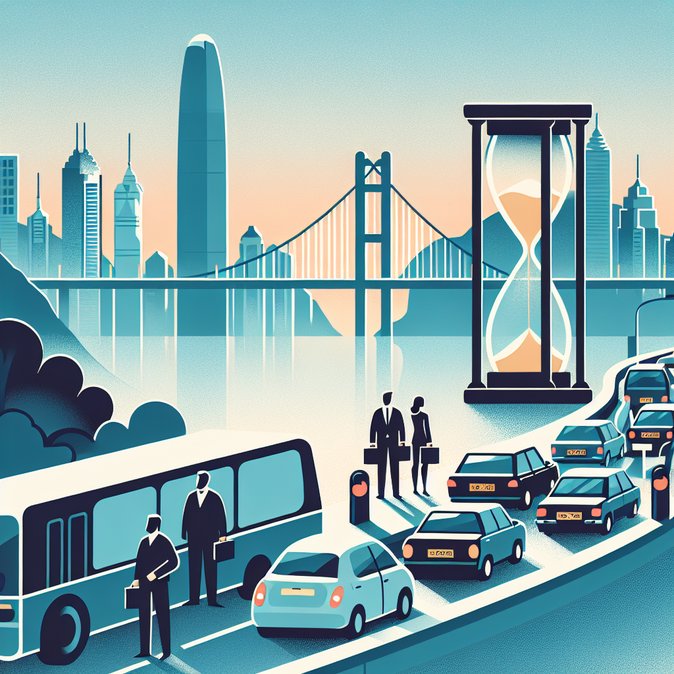
Hong Kong’s long-awaited reciprocal car-travel arrangement with neighbouring Guangdong made its first major debut over the Lunar New Year long weekend, with about 600 mainland motorists driving straight into the city’s urban districts via the Hong Kong–Zhuhai–Macao Bridge (HZMB). Transport and Logistics Secretary Mable Chan told reporters on 21 February that the pilot – formally known as the “Southbound Travel for Guangdong Vehicles (Entry into Urban Area) Scheme” – had already attracted more than 3,000 online applications during its first six weeks, and 1,700 motorists had secured bookings through the government’s e-portal. Launched on 28 December 2025, the programme mirrors the ‘Northbound’ scheme rolled out in 2023 that lets Hong Kong private cars enter Guangdong. Guangdong residents with eligible right-hand-drive vehicles may now obtain a one-time permit to spend up to three consecutive days in Hong Kong without hiring a local chauffeur or loading their cars on trucks. Daily quotas are initially capped at 100 vehicles, but Chan hinted that the ceiling could be reviewed once operational data and congestion studies are complete. Early indicators point to robust pent-up demand: weekend slots were almost fully reserved during the nine-day Lunar New Year ‘golden week’ on the mainland, while weekday bookings hovered at roughly 70 % of capacity. The Immigration and Customs posts on the HZMB processed the additional traffic smoothly, helped by dedicated e-lanes and mandatory advance insurance purchased through a cross-border digital platform. Officials said average clearance time per vehicle was under 15 minutes.
![600 Guangdong drivers enter Hong Kong under new south-bound private-car scheme]()
Motorists who find the web of cross-border paperwork daunting can turn to VisaHQ’s Hong Kong team (https://www.visahq.com/hong-kong/), which offers one-stop assistance for China visas, international driving permits, insurance extensions and document translations. The service is already helping both corporate fleets and individual travellers fast-track the forms required under the Southbound scheme, ensuring that drivers spend less time on red tape and more time on the road.
For corporate mobility managers, the development is more than symbolic. Guangdong-based executives can now drive themselves to client meetings in Central or Tsim Sha Tsui, inspect Hong Kong warehouses or catch flights at Chek Lap Kok without changing vehicles in Zhuhai. Freight forwarders also see opportunities to attach light courier services to passenger cars, shaving a day off express-parcel lead times. Yet businesses should note the fine print. Cars must return to the mainland within 72 hours; overstaying will trigger fines and a one-year suspension. Parking is restricted to recognised public facilities, and motorists must carry real-time third-party insurance that covers HK$5 million in liability. Industry groups are lobbying for longer stays and a higher quota, arguing that the scheme could eventually rival the Northbound programme, which handled more than 600,000 Hong Kong vehicles in 2025. Chan stressed that authorities would “consolidate the foundation first” before any expansion. In the interim, relocation consultancies recommend booking slots at least two weeks ahead, reminding travellers that Lunar New Year, Easter and major trade-fair periods will see the fastest sell-outs.

Motorists who find the web of cross-border paperwork daunting can turn to VisaHQ’s Hong Kong team (https://www.visahq.com/hong-kong/), which offers one-stop assistance for China visas, international driving permits, insurance extensions and document translations. The service is already helping both corporate fleets and individual travellers fast-track the forms required under the Southbound scheme, ensuring that drivers spend less time on red tape and more time on the road.
For corporate mobility managers, the development is more than symbolic. Guangdong-based executives can now drive themselves to client meetings in Central or Tsim Sha Tsui, inspect Hong Kong warehouses or catch flights at Chek Lap Kok without changing vehicles in Zhuhai. Freight forwarders also see opportunities to attach light courier services to passenger cars, shaving a day off express-parcel lead times. Yet businesses should note the fine print. Cars must return to the mainland within 72 hours; overstaying will trigger fines and a one-year suspension. Parking is restricted to recognised public facilities, and motorists must carry real-time third-party insurance that covers HK$5 million in liability. Industry groups are lobbying for longer stays and a higher quota, arguing that the scheme could eventually rival the Northbound programme, which handled more than 600,000 Hong Kong vehicles in 2025. Chan stressed that authorities would “consolidate the foundation first” before any expansion. In the interim, relocation consultancies recommend booking slots at least two weeks ahead, reminding travellers that Lunar New Year, Easter and major trade-fair periods will see the fastest sell-outs.