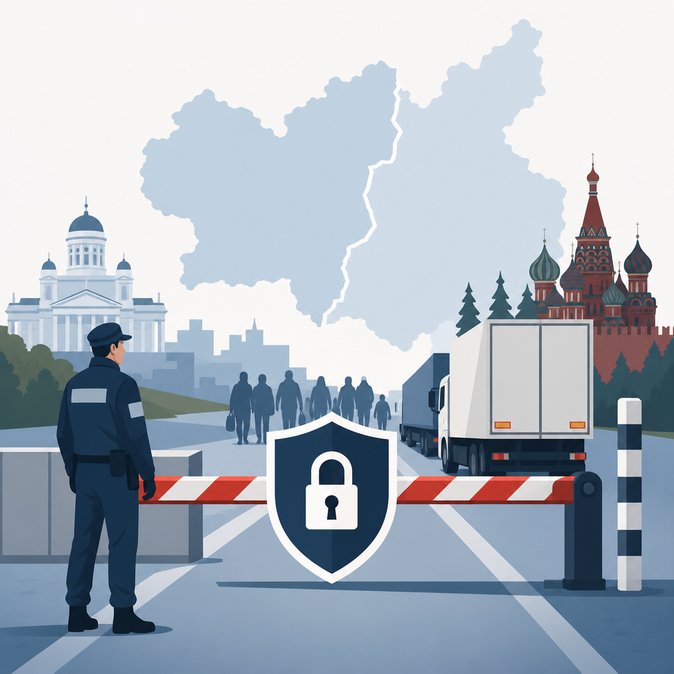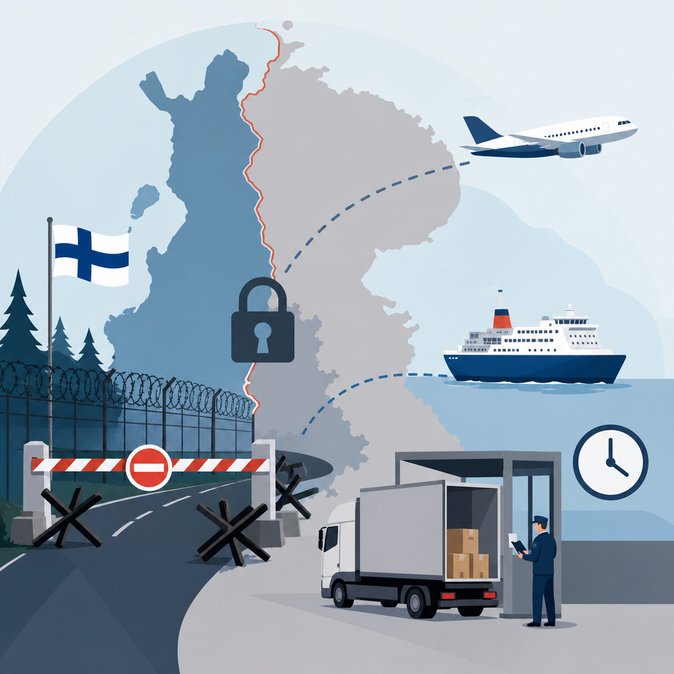
The Finnish Government confirmed on 27 May 2026 that it has launched a fast-track legislative project to prolong the Act on Temporary Measures to Combat Instrumentalised Migration—better known as the Border Security Act—beyond its current sunset date of 31 December 2026. The Interior Ministry said the bill will be drafted over the summer and tabled in Parliament in September. The Act allows Finland to restrict or suspend the reception of asylum applications at specific crossing points when a foreign power is deemed to be using migratory flows for political pressure. Finland’s eastern land border with Russia has been totally closed to passenger traffic since December 2023, with successive cabinet decrees renewing the shut-down. Although the security situation is described as “tense but stable,” Interior Minister Mari Rantanen told reporters that hybrid pressure “could return with little warning,” making a legal back-stop indispensable. Authorities estimate that more than 1,300 would-be asylum seekers were channelled to the border in late 2023, straining reception capacity and forcing charter transfers to facilities hundreds of kilometres away. For corporate mobility managers, the continuation of the closure means that all business travel between Finland and Russia will have to continue to route through Helsinki Airport, maritime ports or third-country hubs such as Istanbul and Belgrade. Freight moves by rail are unaffected, but road-haulage firms must still use designated commercial corridors operating under separate bilateral permits. Customs officials have warned of continued spot checks on dual-use goods, adding transit time for high-tech shipments. Multinational employers with Russian staff stationed in Finland should note that the Border Security Act permits snap closures of individual crossing points for up to six months without full cabinet approval. In practice this could complicate emergency repatriations or urgent family visits. Immigration counsel recommend keeping D-visa options open for employees who may need to re-enter Finland quickly after travel outside the Schengen Area.
![Finland weighs further extension of Border Security Act, keeping land frontier with Russia shut]()
Employers and individual travellers trying to stay ahead of these evolving restrictions can simplify visa and permit arrangements through VisaHQ, which provides real-time guidance, document checklists and application handling for Finnish entries—visit https://www.visahq.com/finland/ to see how the service can help keep cross-border movements on schedule even amid sudden rule changes.
With EU negotiations on a revised Schengen Borders Code still unresolved, Helsinki’s unilateral extension underlines wider fragmentation inside the passport-free zone. Companies should monitor not only Finnish decisions but also parallel internal-border checks in neighbouring Norway and Sweden, which could affect Nordic commuter traffic during the second half of 2026.

Employers and individual travellers trying to stay ahead of these evolving restrictions can simplify visa and permit arrangements through VisaHQ, which provides real-time guidance, document checklists and application handling for Finnish entries—visit https://www.visahq.com/finland/ to see how the service can help keep cross-border movements on schedule even amid sudden rule changes.
With EU negotiations on a revised Schengen Borders Code still unresolved, Helsinki’s unilateral extension underlines wider fragmentation inside the passport-free zone. Companies should monitor not only Finnish decisions but also parallel internal-border checks in neighbouring Norway and Sweden, which could affect Nordic commuter traffic during the second half of 2026.