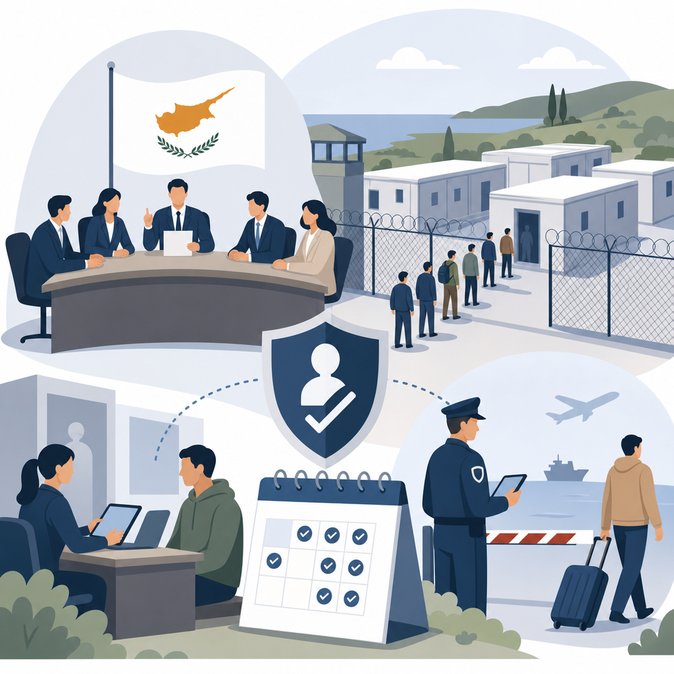
Cyprus’s Council of Ministers has adopted the EU’s new Common International Protection Procedure Regulation and, with immediate effect, designated the Pournara First Reception, Screening and Identification Centre outside Nicosia as a border-procedure site. Under the decision, announced on 28 May 2026, asylum seekers transferred to Pournara will legally be treated as if they have **not yet entered** Cypriot territory – even though the camp lies inland. Their claims must now be examined within twelve weeks; those deemed unfounded or posing security risks face accelerated return. The move aligns Cyprus with forthcoming EU Pact on Migration and Asylum rules that oblige frontline states to carry out fast-track border determinations for applicants from so-called ‘safe’ countries of origin or with manifestly ill-founded claims. Government sources told Philenews that the change will allow authorities to separate low-merit cases earlier, ease pressure on urban reception centres and shorten processing times for genuine refugees.
![Cabinet reclassifies Pournara camp as official ‘border asylum-processing facility’]()
For organisations and individuals needing guidance on how the new reception rules intersect with visa or residence-permit strategies, VisaHQ’s Cyprus desk can help. Through our digital platform (https://www.visahq.com/cyprus/) we offer document checks, appointment scheduling and real-time compliance advice, making it easier for businesses, NGOs and private clients to navigate everything from tourist visas to long-term relocation while the asylum landscape continues to evolve.
For businesses and NGOs that rely on international talent or work with vulnerable groups, the reclassification has practical consequences. Asylum applicants relocated to Pournara will be barred from leaving the facility and from engaging in paid work until their procedure ends; employers should therefore avoid issuing job offers or internship letters until legal status is resolved. Companies providing services inside the camp – such as catering, sanitation or language training – will need special security clearance and vehicle permits similar to those required at the island’s airports. Immigration advisers note that the policy could also affect family-reunification timelines: relatives outside Cyprus may have to wait longer for decisions if the principal applicant is routed through the border procedure. Organisations planning humanitarian visits should anticipate stricter visitor lists and expect ID checks at the camp’s perimeter fence. While rights groups have urged the government to guarantee adequate living conditions, officials insist that medical units, Wi-Fi hubs and legal-aid kiosks have been upgraded ahead of the regulatory switch.

For organisations and individuals needing guidance on how the new reception rules intersect with visa or residence-permit strategies, VisaHQ’s Cyprus desk can help. Through our digital platform (https://www.visahq.com/cyprus/) we offer document checks, appointment scheduling and real-time compliance advice, making it easier for businesses, NGOs and private clients to navigate everything from tourist visas to long-term relocation while the asylum landscape continues to evolve.
For businesses and NGOs that rely on international talent or work with vulnerable groups, the reclassification has practical consequences. Asylum applicants relocated to Pournara will be barred from leaving the facility and from engaging in paid work until their procedure ends; employers should therefore avoid issuing job offers or internship letters until legal status is resolved. Companies providing services inside the camp – such as catering, sanitation or language training – will need special security clearance and vehicle permits similar to those required at the island’s airports. Immigration advisers note that the policy could also affect family-reunification timelines: relatives outside Cyprus may have to wait longer for decisions if the principal applicant is routed through the border procedure. Organisations planning humanitarian visits should anticipate stricter visitor lists and expect ID checks at the camp’s perimeter fence. While rights groups have urged the government to guarantee adequate living conditions, officials insist that medical units, Wi-Fi hubs and legal-aid kiosks have been upgraded ahead of the regulatory switch.