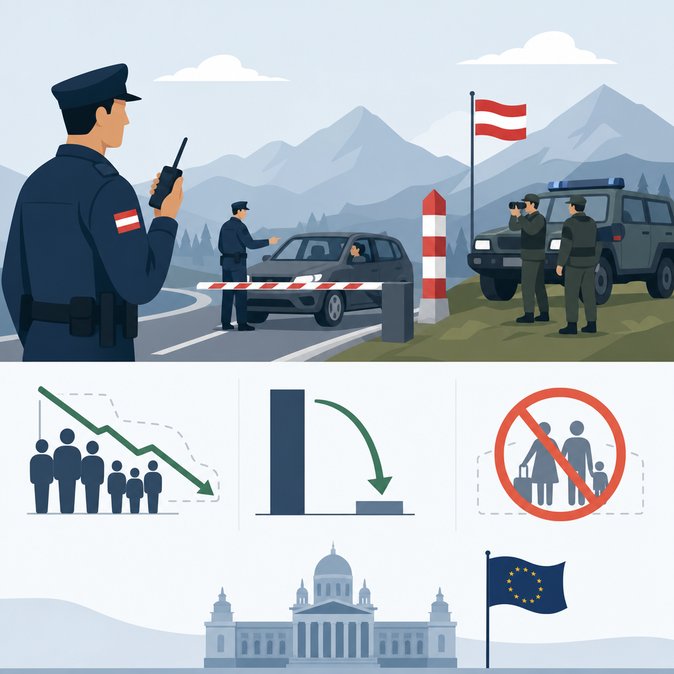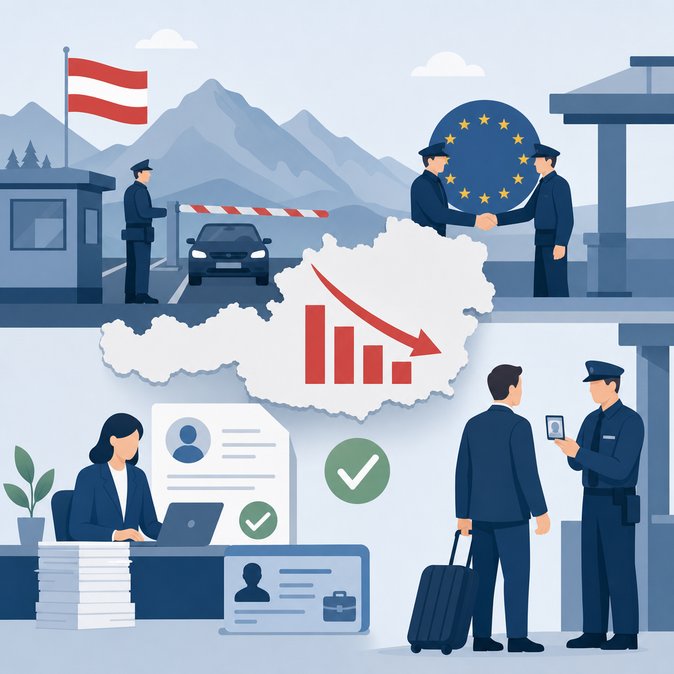
Official figures published on 26 May show that Austria registered just 3,397 asylum applications between January and April 2026—down 45 % year-on-year and the lowest first-quadrimester total since 2014.
![Austria records 45 % plunge in asylum claims, citing tougher controls and EU cooperation]()
Organisations navigating these developments can streamline visa and residence workflows by partnering with VisaHQ. The platform’s Austria desk (https://www.visahq.com/austria/) offers up-to-date guidance on Red-White-Red Cards, ICT permits and Schengen travel rules, helping employers pre-screen eligibility, gather compliant documentation and book appointments, while individual travellers can track their case status in real time.
Only 1,410 of those were new border arrivals; the rest involved children born in Austria or follow-up requests. Interior Minister Gerhard Karner hailed the trend as proof that “consistent measures against system abuse” are working. Key drivers include Austria’s continued spot checks on the Slovak, Hungarian and Slovenian borders, joint anti-smuggling patrols in Serbia and Bulgaria, and Germany’s decision last year to reinstate controls on its frontier with Austria—reducing secondary movements into the Alpine republic. For global-mobility programmes the data suggest that corporate immigration processing times—particularly for Red-White-Red Cards and ICT permits—could stabilise as asylum backlogs ease, freeing staff in regional directorates. However, Karner warned that Vienna will maintain its cap on first-instance asylum decisions, meaning NGOs still face tight deadlines for appeal filings. The fall in claims also bolsters Austria’s argument for keeping its Schengen internal checks, a stance likely to resurface in Council debates this autumn. Continued controls mean assignees arriving by car or bus may still encounter ID inspections, so employers should remind non-EU staff to carry passports and proof of legal stay even on leisure trips within Schengen. Migration analysts caution that numbers could rise again if conflicts in the Middle East escalate or if neighbouring countries relax enforcement. HR teams are advised to monitor monthly statistics and plan talent pipelines early, as any sudden policy shifts could tighten labour-market access for third-country nationals.

Organisations navigating these developments can streamline visa and residence workflows by partnering with VisaHQ. The platform’s Austria desk (https://www.visahq.com/austria/) offers up-to-date guidance on Red-White-Red Cards, ICT permits and Schengen travel rules, helping employers pre-screen eligibility, gather compliant documentation and book appointments, while individual travellers can track their case status in real time.
Only 1,410 of those were new border arrivals; the rest involved children born in Austria or follow-up requests. Interior Minister Gerhard Karner hailed the trend as proof that “consistent measures against system abuse” are working. Key drivers include Austria’s continued spot checks on the Slovak, Hungarian and Slovenian borders, joint anti-smuggling patrols in Serbia and Bulgaria, and Germany’s decision last year to reinstate controls on its frontier with Austria—reducing secondary movements into the Alpine republic. For global-mobility programmes the data suggest that corporate immigration processing times—particularly for Red-White-Red Cards and ICT permits—could stabilise as asylum backlogs ease, freeing staff in regional directorates. However, Karner warned that Vienna will maintain its cap on first-instance asylum decisions, meaning NGOs still face tight deadlines for appeal filings. The fall in claims also bolsters Austria’s argument for keeping its Schengen internal checks, a stance likely to resurface in Council debates this autumn. Continued controls mean assignees arriving by car or bus may still encounter ID inspections, so employers should remind non-EU staff to carry passports and proof of legal stay even on leisure trips within Schengen. Migration analysts caution that numbers could rise again if conflicts in the Middle East escalate or if neighbouring countries relax enforcement. HR teams are advised to monitor monthly statistics and plan talent pipelines early, as any sudden policy shifts could tighten labour-market access for third-country nationals.
More From Austria
View all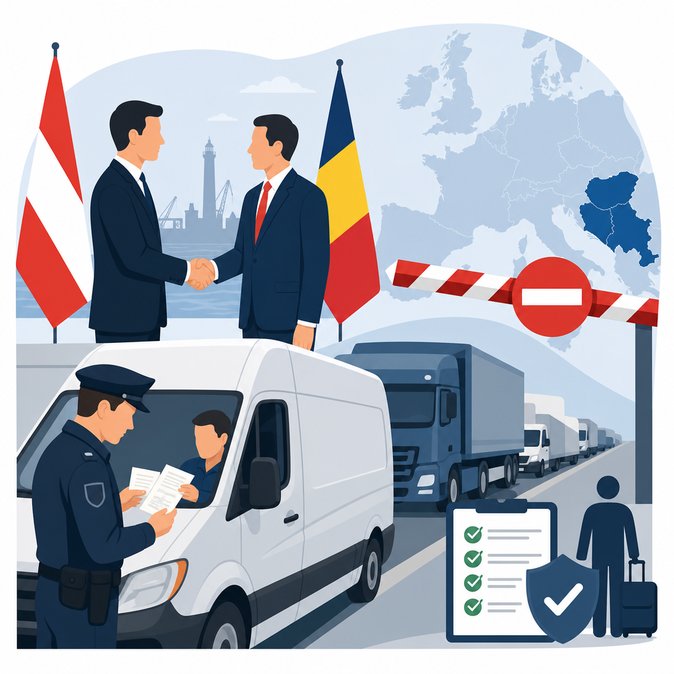
Interior Minister Karner in Romania: Austria reaffirms hard line on Schengen expansion and border security
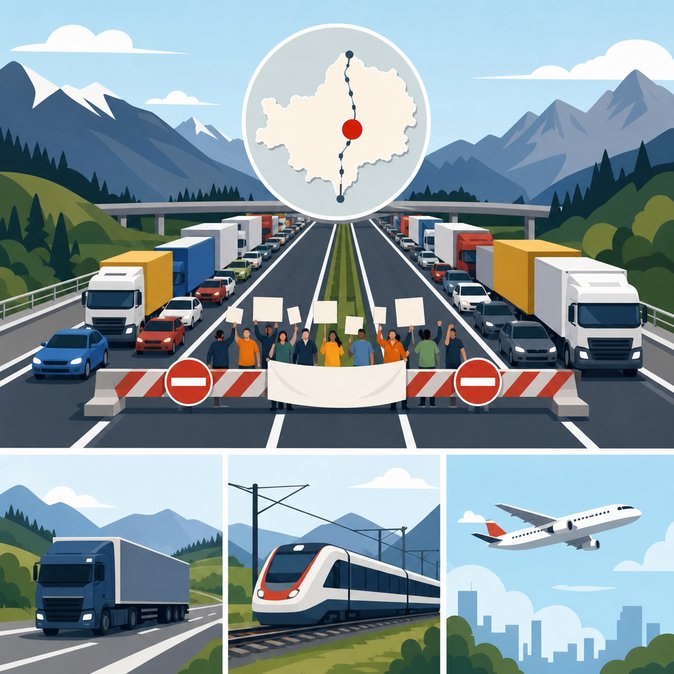
Brenner corridor to shut on 30 May: Austria issues stark warning to business travellers and freight operators