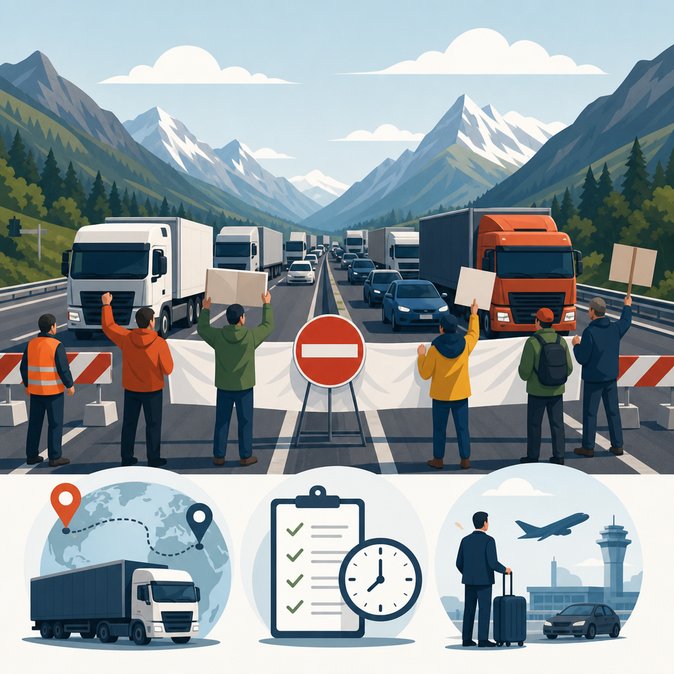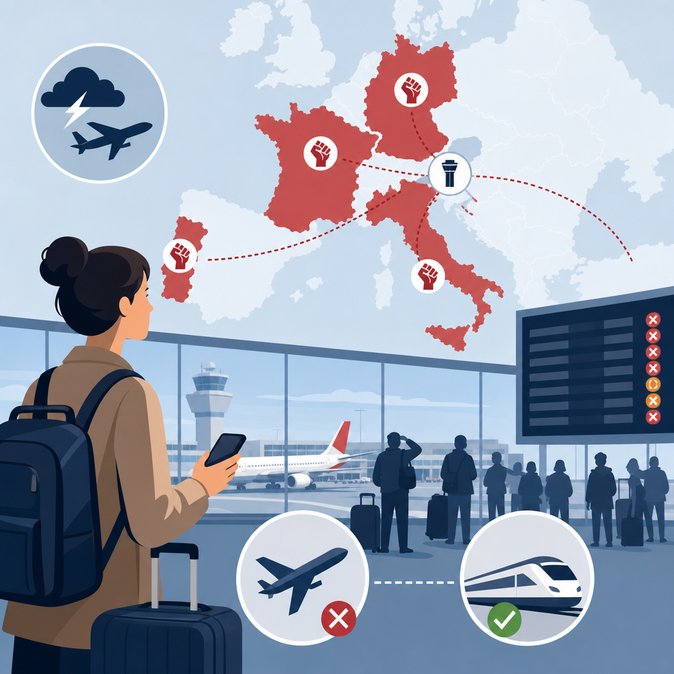
Time Out’s pan-European strike bulletin, updated on 26 May 2026, paints a worrying picture for anyone flying in or out of Austria in June. While Vienna International Airport itself is not currently the focus of industrial action, the article lists stoppages at key hubs that funnel large numbers of Austrian business travellers—including Paris CDG (ground staff), Milan Malpensa (security), several Spanish airports (handling agents) and a nationwide strike by Portuguese transport unions on 3 June. Why does this matter to mobility managers based in Austria? Vienna’s Lufthansa Group carriers depend heavily on feeder traffic and shared crews. A strike at Frankfurt, for instance, commonly triggers on-the-day cancellations of Austrian Airlines rotations and missed connections for Red-White-Red Card applicants returning from visa-run trips. Likewise, the CDG stoppage threatens delays on the high-yield Vienna-Paris route used by life-science and luxury-goods executives. The best defence, Time Out suggests, is proactive monitoring. Travellers should subscribe to airline apps for push alerts and confirm that their travel insurance covers “extraordinary circumstances”. Under EU261 rules, carriers must still provide duty of care (meals, accommodation) even if compensation is waived for strikes beyond their control.
![June strike calendar: what Austrian air travellers need to know]()
If those last-minute changes require a new or revised travel document, VisaHQ can take the stress out of the process. Through its Austria portal (https://www.visahq.com/austria/), mobility teams can instantly check Schengen entry rules, arrange expedited passport or visa services, and monitor application status in real time—ensuring that sudden reroutes or date shifts don’t strand executives without the paperwork they need.
For corporate programmes the article’s granular date list is a useful triage tool. It allows HR teams to decide whether to advance meetings, switch to rail (e.g., Nightjet services to Italy) or activate virtual-meeting policies. Crucially, the piece reminds passengers that strike ballots can be called off at 24 hours’ notice—meaning flexible tickets may preserve travel options at minimal cost. Given Europe’s tight summer capacity, Austrian firms should also pre-book alternative routings via Budapest or Prague, both reachable by rail in under four hours. These airports can serve as valuable back-up gateways when Vienna’s schedule is collateral damage in a wider continental walk-out.

If those last-minute changes require a new or revised travel document, VisaHQ can take the stress out of the process. Through its Austria portal (https://www.visahq.com/austria/), mobility teams can instantly check Schengen entry rules, arrange expedited passport or visa services, and monitor application status in real time—ensuring that sudden reroutes or date shifts don’t strand executives without the paperwork they need.
For corporate programmes the article’s granular date list is a useful triage tool. It allows HR teams to decide whether to advance meetings, switch to rail (e.g., Nightjet services to Italy) or activate virtual-meeting policies. Crucially, the piece reminds passengers that strike ballots can be called off at 24 hours’ notice—meaning flexible tickets may preserve travel options at minimal cost. Given Europe’s tight summer capacity, Austrian firms should also pre-book alternative routings via Budapest or Prague, both reachable by rail in under four hours. These airports can serve as valuable back-up gateways when Vienna’s schedule is collateral damage in a wider continental walk-out.