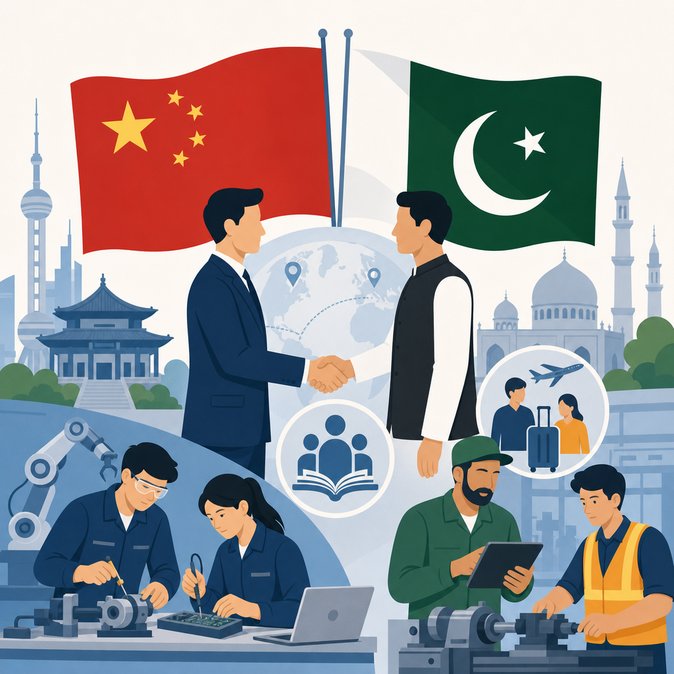
During Pakistani Prime Minister Shehbaz Sharif’s state visit, officials gathered at Alibaba Group’s Hangzhou campus on 24 May to ink a long-term cooperation agreement aimed at bolstering cloud computing, logistics and cross-border e-commerce between the two countries. While the headline items focus on data centres and artificial-intelligence tools, mobility specialists say the pact’s trade-facilitation chapter could streamline the movement of Pakistani technicians and Chinese implementation teams under the Belt & Road Initiative’s digital corridor. Alibaba chairman Joe Tsai pledged to help Pakistan digitise customs clearance, payment gateways and SME export platforms.
![Pakistan and China Sign Landmark Alibaba Deal in Hangzhou, Pledging Digital Infrastructure and Trade Facilitation]()
Business travelers who plan to take advantage of these new corridors will find that VisaHQ can further simplify the experience; the company’s portal (https://www.visahq.com/china/) offers real-time updates on Chinese entry rules, step-by-step application support and expedited processing options, making it easier for project teams to secure the visas they need on short notice.
Chinese and Pakistani negotiators confirmed that a joint committee will map out “green-lane” entry arrangements for accredited engineers, product specialists and start-up founders who need to shuttle frequently between Karachi, Islamabad and tech hubs such as Hangzhou and Shenzhen. These measures dovetail with Beijing’s recently expanded 30-day visa-free policy for business visitors from Belt & Road partner countries, potentially accelerating project mobilisation. For multinational firms that rely on Sino-Pak manufacturing chains—textiles, electronics assembly and agricultural tech—the prospect of faster on-site troubleshooting and prototyping is significant. Industry associations expect the agreement to trigger a spike in bilateral business-travel demand; airlines already report near-full load factors on the Karachi-Urumqi and Islamabad-Beijing routes through July. Compliance teams should monitor forthcoming guidelines on recognition of Pakistani professional qualifications in China and vice-versa, as well as any new fast-track application channels embedded in the National Immigration Administration’s “12367” platform.

Business travelers who plan to take advantage of these new corridors will find that VisaHQ can further simplify the experience; the company’s portal (https://www.visahq.com/china/) offers real-time updates on Chinese entry rules, step-by-step application support and expedited processing options, making it easier for project teams to secure the visas they need on short notice.
Chinese and Pakistani negotiators confirmed that a joint committee will map out “green-lane” entry arrangements for accredited engineers, product specialists and start-up founders who need to shuttle frequently between Karachi, Islamabad and tech hubs such as Hangzhou and Shenzhen. These measures dovetail with Beijing’s recently expanded 30-day visa-free policy for business visitors from Belt & Road partner countries, potentially accelerating project mobilisation. For multinational firms that rely on Sino-Pak manufacturing chains—textiles, electronics assembly and agricultural tech—the prospect of faster on-site troubleshooting and prototyping is significant. Industry associations expect the agreement to trigger a spike in bilateral business-travel demand; airlines already report near-full load factors on the Karachi-Urumqi and Islamabad-Beijing routes through July. Compliance teams should monitor forthcoming guidelines on recognition of Pakistani professional qualifications in China and vice-versa, as well as any new fast-track application channels embedded in the National Immigration Administration’s “12367” platform.