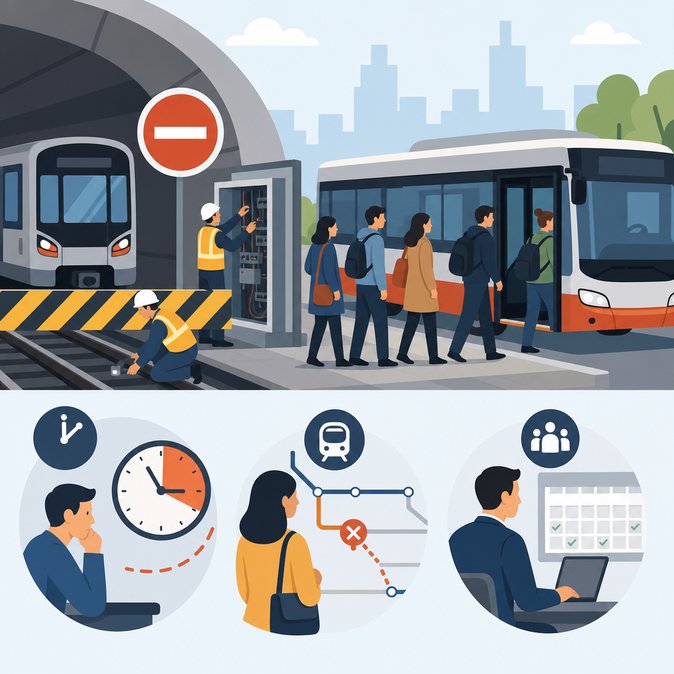
Travellers heading to Brussels’ western business parks or Erasmus Hospital early on Sunday, 24 May, faced an unannounced hurdle: STIB-MIVB shut down the Erasme–Gare de l’Ouest section of Metro Line 5 from 05:00 until 12:30 to allow track and signalling modernisation. Replacement shuttle buses ran every ten minutes, but door-to-door journeys were taking up to 25 minutes longer. For international staff caught up in such disruptions, paperwork should be the least of their worries: VisaHQ’s streamlined service (https://www.visahq.com/belgium/) lets travellers and mobility teams verify Belgian entry rules and secure visas online, so they can focus on rescheduling meetings rather than chasing embassy appointments. The intervention is part of a multi-year €68-million project to upgrade the 1970s-era signal system on Lines 1 and 5 to Communications-Based Train Control (CBTC), which will eventually allow shorter headways and 20 % additional capacity during peak periods. Engineers used the six-hour window to install new interlocking cabinets and test fibre-optic links without exposing staff to live rail voltage. Although STIB published the closure on its works portal earlier this month, last week’s nationwide strike and a flood of public-sector alerts buried the notice for many commuters. Corporate mobility managers reported several missed Eurostar connections at Midi station and delayed pharmaceutical-plant shifts in Anderlecht. HR teams have been advised to circulate the full schedule—additional Sunday closures will follow on 7 and 21 June—and to consider taxi vouchers for time-critical assignments. From a compliance perspective, the works underline Belgium’s push toward smart, high-frequency metro operations ahead of the launch of Schuman Josaphat railway link extensions in 2027. Employers relying on Brussels public transport should update mobility budgets and traveller-tracking tools to reflect the stepped-closure calendar.