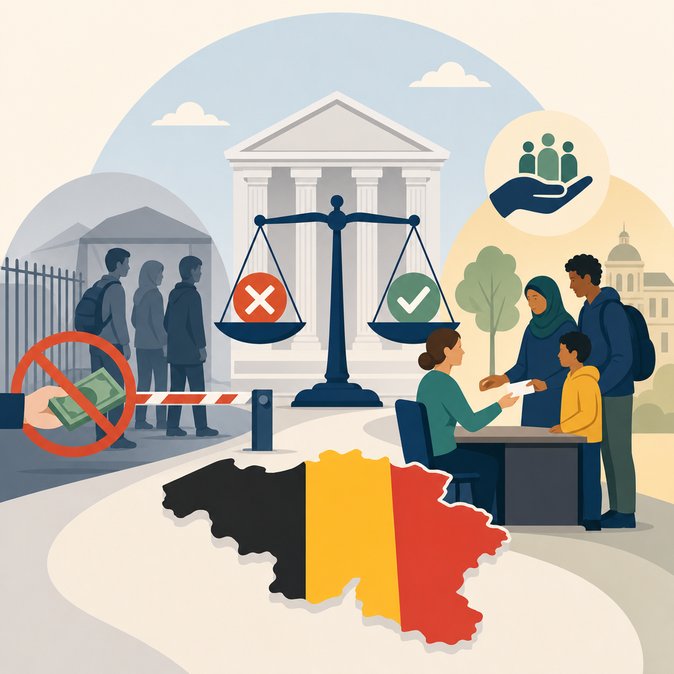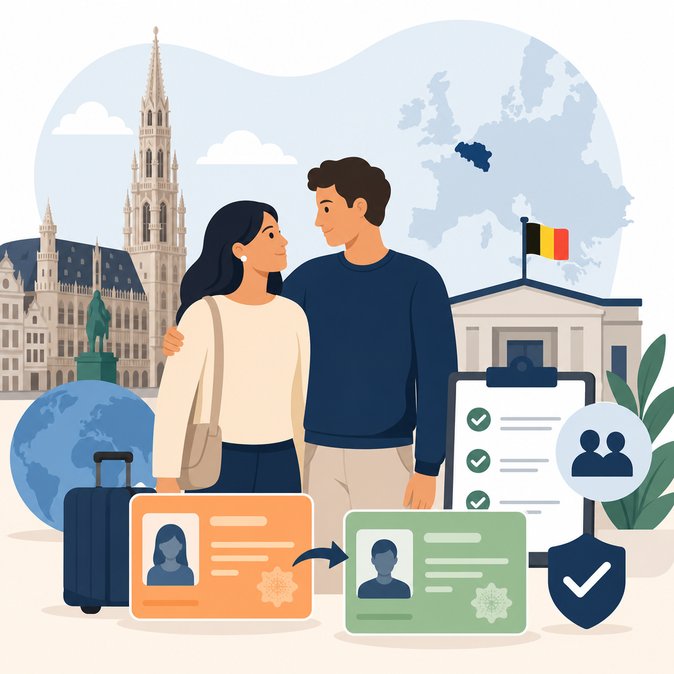
Belgium has long stood out in Europe for allowing unmarried international couples to build a life together without first tying the knot. A feature article published by The Brussels Times on 22 May 2026 lifts the lid on the country’s “statutory cohabitation visa” and the bureaucratic steps that follow once a foreign partner sets foot on Belgian soil.
![Belgium offers partner-residence route without marriage: Statutory Cohabitation Visa explained]()
Couples who want help deciphering those steps can turn to VisaHQ, which offers up-to-date guidance on Belgian entry requirements, document checklists and application filing, all accessible through https://www.visahq.com/belgium/ Whether applicants need a short-stay Type-C visa or a long-stay Type-D, VisaHQ’s platform walks them through each form, highlights embassy fee changes and can arrange courier pickup, saving valuable time before the move.
Unlike the well-known 90-day fiancée route in the United States, Belgium’s framework lets partners arrive on a short-stay Type-C (or, more prudently, a long-stay Type-D) visa, register at the local commune and sign a legal cohabitation declaration. Doing so triggers issuance of the orange card (annex 19 ter) – a temporary stay permit – while authorities verify the relationship, conduct a police address check and assess income and health-insurance cover. Once the file is approved, the foreign partner receives a five-year F-card, with the possibility of a permanent F+ card after five continuous years of residence. To qualify, both partners must generally be at least 21 (18 if they have already lived together a year) and prove the relationship is “stable and lasting” – for example by showing 12 months of co-habitation, two years of documented contact plus at least 45 days spent together, or a common child. Financially, the Belgian sponsor must earn at least €2,408.79 net per month (110 % of the guaranteed minimum wage), with a 10 % surcharge per dependent. A clean criminal record and Schengen-compliant travel insurance remain mandatory. For mobility managers and global-talent teams, the scheme offers an attractive alternative to marriage-based family-reunification rules in neighbouring countries such as Germany and the Netherlands, which typically demand a wedding certificate or impose tighter relationship evidence. HR should, however, alert employees to practical pitfalls: inconsistent town-hall instructions, prolonged waits for the definitive F-card (during which travel outside Belgium is barred) and income-threshold hikes each January. Companies that cover immigration costs may wish to budget for apostilles, translations and multiple commune appointments. From a policy perspective, Belgium’s approach reflects a broader EU trend towards recognising diverse family forms while still tightening economic-self-sufficiency tests. Immigration advisers expect additional guidance later this year once federal authorities complete a review of fraud‐prevention controls, particularly around sham relationships. Until then, the statutory cohabitation visa remains one of Europe’s more flexible pathways for relocating couples who prefer commitment without matrimony.

Couples who want help deciphering those steps can turn to VisaHQ, which offers up-to-date guidance on Belgian entry requirements, document checklists and application filing, all accessible through https://www.visahq.com/belgium/ Whether applicants need a short-stay Type-C visa or a long-stay Type-D, VisaHQ’s platform walks them through each form, highlights embassy fee changes and can arrange courier pickup, saving valuable time before the move.
Unlike the well-known 90-day fiancée route in the United States, Belgium’s framework lets partners arrive on a short-stay Type-C (or, more prudently, a long-stay Type-D) visa, register at the local commune and sign a legal cohabitation declaration. Doing so triggers issuance of the orange card (annex 19 ter) – a temporary stay permit – while authorities verify the relationship, conduct a police address check and assess income and health-insurance cover. Once the file is approved, the foreign partner receives a five-year F-card, with the possibility of a permanent F+ card after five continuous years of residence. To qualify, both partners must generally be at least 21 (18 if they have already lived together a year) and prove the relationship is “stable and lasting” – for example by showing 12 months of co-habitation, two years of documented contact plus at least 45 days spent together, or a common child. Financially, the Belgian sponsor must earn at least €2,408.79 net per month (110 % of the guaranteed minimum wage), with a 10 % surcharge per dependent. A clean criminal record and Schengen-compliant travel insurance remain mandatory. For mobility managers and global-talent teams, the scheme offers an attractive alternative to marriage-based family-reunification rules in neighbouring countries such as Germany and the Netherlands, which typically demand a wedding certificate or impose tighter relationship evidence. HR should, however, alert employees to practical pitfalls: inconsistent town-hall instructions, prolonged waits for the definitive F-card (during which travel outside Belgium is barred) and income-threshold hikes each January. Companies that cover immigration costs may wish to budget for apostilles, translations and multiple commune appointments. From a policy perspective, Belgium’s approach reflects a broader EU trend towards recognising diverse family forms while still tightening economic-self-sufficiency tests. Immigration advisers expect additional guidance later this year once federal authorities complete a review of fraud‐prevention controls, particularly around sham relationships. Until then, the statutory cohabitation visa remains one of Europe’s more flexible pathways for relocating couples who prefer commitment without matrimony.