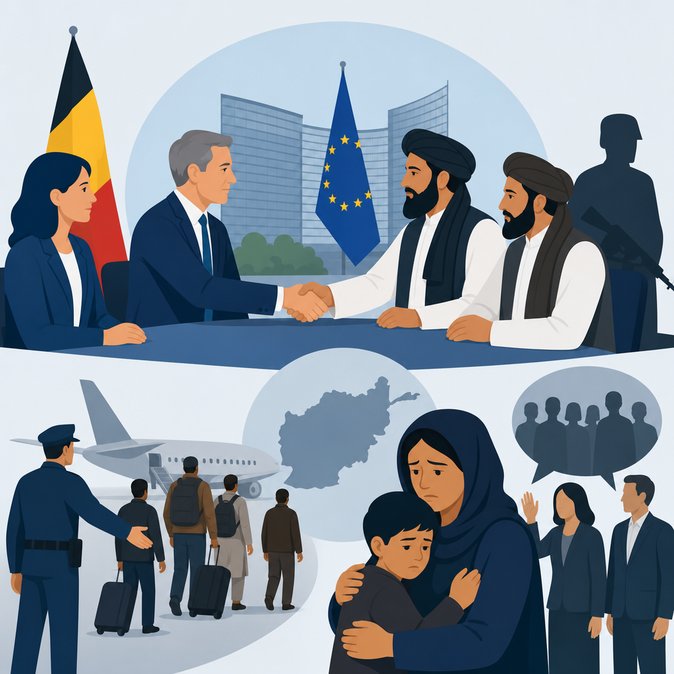
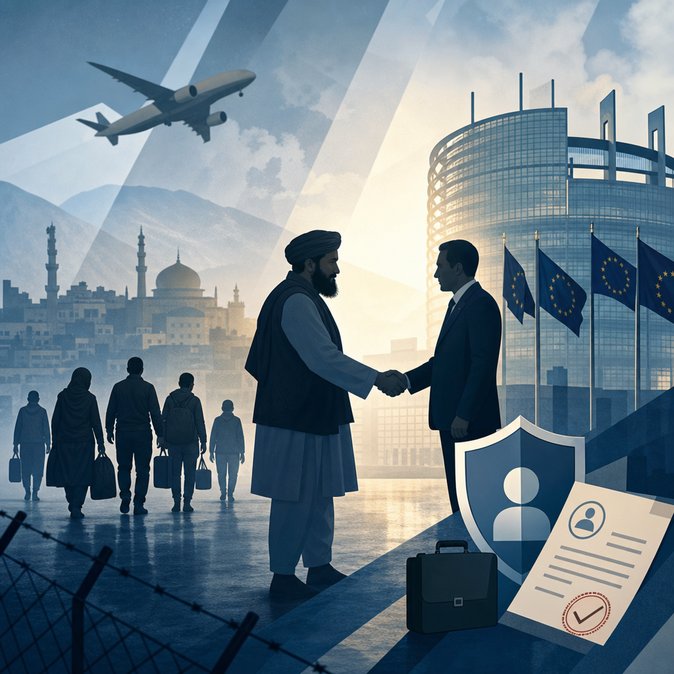
The European Commission confirmed on 14 May 2026 that it is preparing to invite Taliban representatives to Brussels for ‘technical discussions’ on the return of Afghan nationals who are deemed to have no legal right to remain in EU member-states. The talks—co-ordinated with Sweden and backed by Belgium’s Immigration Office—would be the first time that Taliban officials travel to the de facto EU capital since the group regained control of Afghanistan in August 2021. Belgium has been closely involved in the file. In January, a joint EU–Belgian delegation, led by Immigration Office Director-General Freddy Roosemont, travelled to Kabul to explore co-operation on return logistics. Belgian Asylum and Migration Minister Anneleen Van Bossuyt later described a follow-up meeting in Brussels as “an important and necessary next step” to unblock stalled returns and to ease the pressure on Europe’s asylum systems. Belgium lodged almost 3 000 new Afghan asylum claims in 2025—making Afghans the country’s second-largest applicant group.
![EU faces backlash over plan to host Taliban officials in Brussels for deportation talks]()
For those trying to keep pace with these rapidly shifting Belgian immigration rules, VisaHQ’s Belgium portal (https://www.visahq.com/belgium/) aggregates real-time policy updates and provides hands-on assistance with humanitarian, work and transit visa applications—giving companies and travellers an extra layer of certainty as the regulatory landscape evolves.
Human-rights organisations reacted sharply. Amnesty International Belgium warned that “no credible monitoring mechanism exists to guarantee the safety of returnees,” citing UN reports that forcibly returned Afghans face arbitrary detention and gender-based violence. The European Parliament’s Committee on Civil Liberties (LIBE) announced an urgent hearing for late May to question Migration Commissioner Magnus Brunner about the legal basis for issuing ‘exceptional visas’ to a regime the EU does not recognise. For global mobility managers, the move signals that Brussels is willing to use pragmatic engagement—even with internationally isolated authorities—to accelerate deportations. Companies employing Afghan nationals in Belgium should monitor the debate: a stricter return environment could make humanitarian residence permits harder to obtain and may raise reputational questions for firms sponsoring Afghan talent. Travellers can also expect renewed document checks on flights transiting through Brussels Airport once any Taliban delegation arrives, as Belgium’s Federal Police typically upgrade security for high-profile visits. If the talks go ahead, they could set a precedent for similar EU negotiations with other non-recognised governments—potentially reshaping Europe’s wider returns architecture and adding a new layer of geopolitical risk to mobility planning.
For those trying to keep pace with these rapidly shifting Belgian immigration rules, VisaHQ’s Belgium portal (https://www.visahq.com/belgium/) aggregates real-time policy updates and provides hands-on assistance with humanitarian, work and transit visa applications—giving companies and travellers an extra layer of certainty as the regulatory landscape evolves.
Human-rights organisations reacted sharply. Amnesty International Belgium warned that “no credible monitoring mechanism exists to guarantee the safety of returnees,” citing UN reports that forcibly returned Afghans face arbitrary detention and gender-based violence. The European Parliament’s Committee on Civil Liberties (LIBE) announced an urgent hearing for late May to question Migration Commissioner Magnus Brunner about the legal basis for issuing ‘exceptional visas’ to a regime the EU does not recognise. For global mobility managers, the move signals that Brussels is willing to use pragmatic engagement—even with internationally isolated authorities—to accelerate deportations. Companies employing Afghan nationals in Belgium should monitor the debate: a stricter return environment could make humanitarian residence permits harder to obtain and may raise reputational questions for firms sponsoring Afghan talent. Travellers can also expect renewed document checks on flights transiting through Brussels Airport once any Taliban delegation arrives, as Belgium’s Federal Police typically upgrade security for high-profile visits. If the talks go ahead, they could set a precedent for similar EU negotiations with other non-recognised governments—potentially reshaping Europe’s wider returns architecture and adding a new layer of geopolitical risk to mobility planning.