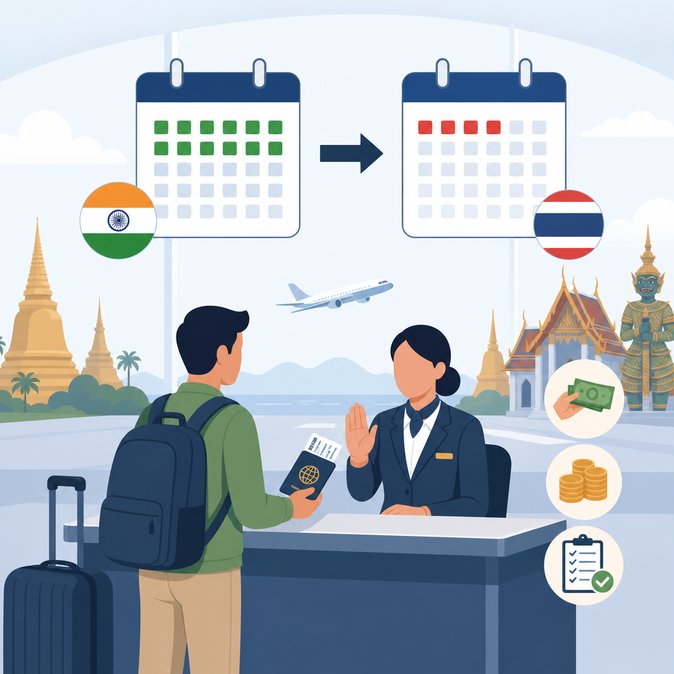
Thailand has ended the 60-day automatic visa-free entry that Indians and 92 other nationalities had enjoyed since mid-2024. A Cabinet resolution passed on 19 May was published on 21 May 2026, giving travellers 15 days to prepare for the change. Under the new rules, most of the 93 affected nationalities—including India—will receive only a 30-day exemption, while India specifically moves from the visa-exempt list to the Visa-on-Arrival (VOA) scheme. For Indian holiday-makers and companies that routinely send employees to Bangkok for meetings or regional assignments, the shift means extra paperwork at the border, longer airport queues and a ฿2,000 (≈ ₹4,500) fee payable on arrival. Travellers must also carry proof of funds (10,000 baht per person), confirmed accommodation and a return or onward ticket.
![Thailand cuts visa-free stay to 30 days, shifts India back to Visa-on-Arrival]()
To cut through this new maze of documentation, VisaHQ’s India portal (https://www.visahq.com/india/) can generate customised checklists, let you pre-fill Thailand’s VOA forms online and even arrange courier pick-up for supplementary paperwork—handy for both holiday-makers and HR teams that manage frequent flyers.
Extensions beyond 30 days must now be justified at a local immigration office instead of being automatic. Thai authorities say the rollback targets visa abuse, illegal work and transnational crime that flourished under the generous 60-day scheme. They insist the policy is “nationality-neutral”, but industry voices warn India’s fast-growing outbound leisure segment may think twice about weekend getaways, especially with airfares already up by 18 % year-on-year. Indian tour operators advise clients to pre-fill VOA forms online, budget extra airport time and consider alternative destinations such as Indonesia or Vietnam, which still offer 30-day visa-free access for Indians. Corporates planning short projects in Thailand should review assignment lengths, as multiple VOA runs in the same calendar year could raise red flags with immigration officers. From a mobility-programme standpoint, companies may wish to shift long-term assignees to Thailand’s Smart Visa or Long-Term Resident (LTR) programmes, which remain unchanged. In the short term, HR teams should update travel policy checklists, brief travellers on cash/insurance requirements and monitor further regulatory tweaks promised as part of Bangkok’s wider immigration overhaul.

To cut through this new maze of documentation, VisaHQ’s India portal (https://www.visahq.com/india/) can generate customised checklists, let you pre-fill Thailand’s VOA forms online and even arrange courier pick-up for supplementary paperwork—handy for both holiday-makers and HR teams that manage frequent flyers.
Extensions beyond 30 days must now be justified at a local immigration office instead of being automatic. Thai authorities say the rollback targets visa abuse, illegal work and transnational crime that flourished under the generous 60-day scheme. They insist the policy is “nationality-neutral”, but industry voices warn India’s fast-growing outbound leisure segment may think twice about weekend getaways, especially with airfares already up by 18 % year-on-year. Indian tour operators advise clients to pre-fill VOA forms online, budget extra airport time and consider alternative destinations such as Indonesia or Vietnam, which still offer 30-day visa-free access for Indians. Corporates planning short projects in Thailand should review assignment lengths, as multiple VOA runs in the same calendar year could raise red flags with immigration officers. From a mobility-programme standpoint, companies may wish to shift long-term assignees to Thailand’s Smart Visa or Long-Term Resident (LTR) programmes, which remain unchanged. In the short term, HR teams should update travel policy checklists, brief travellers on cash/insurance requirements and monitor further regulatory tweaks promised as part of Bangkok’s wider immigration overhaul.