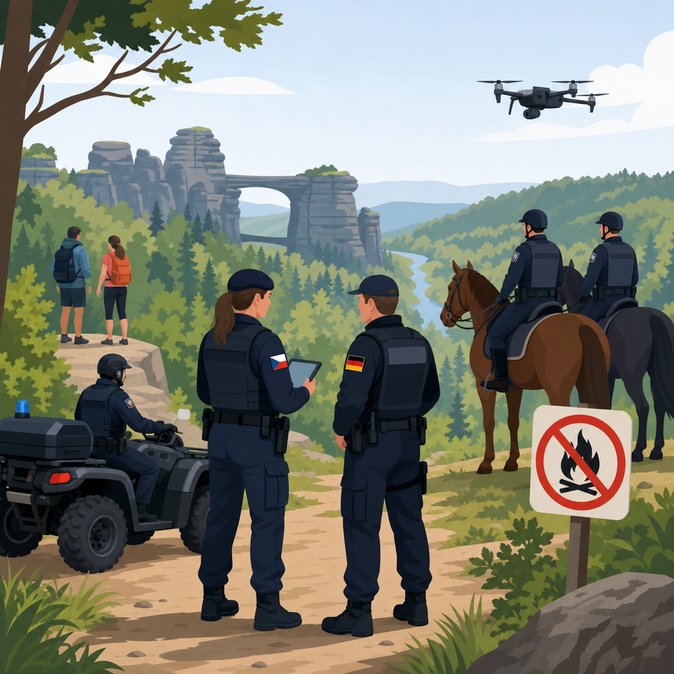
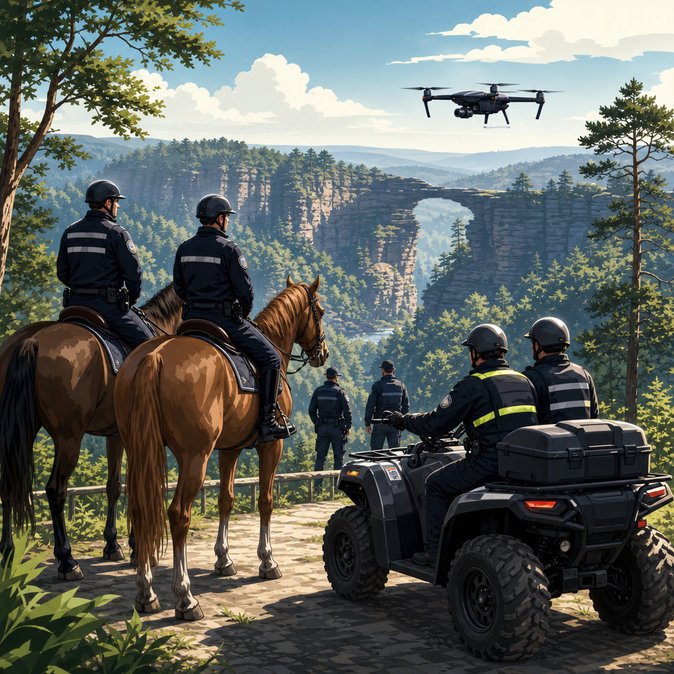
Every Ascension Day, known in Germany as "Vatertag", thousands of beer-toting day-trippers pour across the Saxon border into Czech Switzerland National Park. After several fire incidents linked to revelry in previous years, Czech and Saxon authorities decided to act decisively in 2026. Beginning at 13:00 on 14 May, two dozen officers from the Czech special-purpose police unit, mounted police from Liberec and Prague, and an equal number of Saxon counterparts fanned out along the cross-border hiking routes from Hřensko to Schmilka. Rangers equipped with drones monitored camp-fire hotspots, while officers on quad-bikes patrolled forest tracks inaccessible to cars.
![Czech–German joint patrols flood Czech Switzerland to pre-empt Vatertag excesses]()
Travelers may also find it useful to check visa requirements ahead of any Vatertag outing: VisaHQ’s online platform (https://www.visahq.com/czech-republic/) quickly confirms whether non-EU visitors need a Czech or multi-entry Schengen visa, and can streamline group applications so organizers avoid last-minute paperwork surprises.
The preventive deployment is part of a wider trend: national parks on both sides of the frontier are moving from purely environmental management toward hybrid “visitor-mobility management”. With the Schengen border virtually invisible, law-enforcement agencies must improvise ways to enforce Czech fire bans and German public-order rules in mixed visitor flows. This year’s strategy blends soft-touch policing—informing hikers about bans on fireworks and off-trail wandering—with instant fines and a portable breath-test station. For tour operators and corporate travel planners the message is straightforward: Vatertag outings into Czech Switzerland are still possible, but group leaders need to brief clients on strict no-fire, no-pyrotechnics rules. Companies scheduling incentive trips should also factor in longer processing times at the Hřensko parking lots, where joint patrols occasionally run ad-hoc alcohol checks on bus drivers. Park management reports that cloudy weather kept visitor numbers below the five-year average, yet joint patrols will continue throughout the early-summer holiday corridor. The model is likely to be replicated in the Krkonoše and Šumava parks, where Polish and Austrian visitor surges pose similar fire-risk concerns. From a policy perspective the operation underscores how borderless travel in the Schengen zone is prompting a shift from border checkpoints to integrated, on-site mobility policing. The Czech Interior Ministry is expected to codify this approach in forthcoming amendments to the Protected Areas Act, allowing rangers to issue electronic penalties directly to foreign visitors’ mobile phones.
Travelers may also find it useful to check visa requirements ahead of any Vatertag outing: VisaHQ’s online platform (https://www.visahq.com/czech-republic/) quickly confirms whether non-EU visitors need a Czech or multi-entry Schengen visa, and can streamline group applications so organizers avoid last-minute paperwork surprises.
The preventive deployment is part of a wider trend: national parks on both sides of the frontier are moving from purely environmental management toward hybrid “visitor-mobility management”. With the Schengen border virtually invisible, law-enforcement agencies must improvise ways to enforce Czech fire bans and German public-order rules in mixed visitor flows. This year’s strategy blends soft-touch policing—informing hikers about bans on fireworks and off-trail wandering—with instant fines and a portable breath-test station. For tour operators and corporate travel planners the message is straightforward: Vatertag outings into Czech Switzerland are still possible, but group leaders need to brief clients on strict no-fire, no-pyrotechnics rules. Companies scheduling incentive trips should also factor in longer processing times at the Hřensko parking lots, where joint patrols occasionally run ad-hoc alcohol checks on bus drivers. Park management reports that cloudy weather kept visitor numbers below the five-year average, yet joint patrols will continue throughout the early-summer holiday corridor. The model is likely to be replicated in the Krkonoše and Šumava parks, where Polish and Austrian visitor surges pose similar fire-risk concerns. From a policy perspective the operation underscores how borderless travel in the Schengen zone is prompting a shift from border checkpoints to integrated, on-site mobility policing. The Czech Interior Ministry is expected to codify this approach in forthcoming amendments to the Protected Areas Act, allowing rangers to issue electronic penalties directly to foreign visitors’ mobile phones.