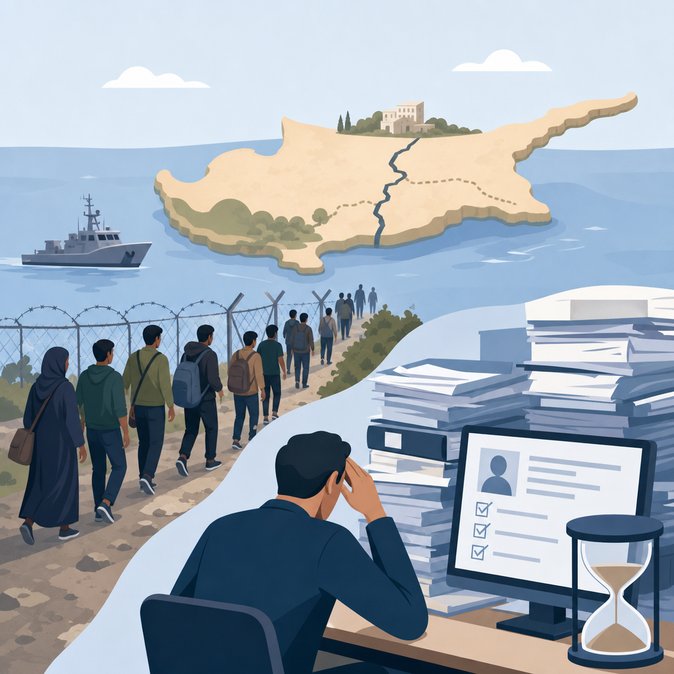
Fresh figures released on 17 May 2026 on UNHCR’s Europe "Sea & Land Arrivals" portal reveal that 4,784 people have reached Cyprus irregularly since 1 January—most flying to the northern part of the island and then crossing the Green Line into government-controlled areas. The update confirms Cyprus’s status as one of the EU’s busiest per-capita asylum frontiers despite its small population of 1.2 million. The data set, which the UN refugee agency updates daily, separates arrivals by sea and land. While sea crossings to the government-controlled south remain sporadic thanks to stepped-up coast-guard patrols, land crossings through the UN-patrolled buffer zone continue at roughly 45–60 people a day. Migrants—mainly from Syria, Nigeria and the Democratic Republic of Congo—take advantage of the Republic’s inability to enforce asylum rules north of the cease-fire line. Human-rights groups have long urged Cyprus and the EU to create a dedicated screening mechanism at the buffer zone rather than relying on ad-hoc police transfers to Pournara reception centre outside Nicosia. The government counters that a physical barrier would contravene the 1974 cease-fire arrangements and complicate UN peace-keeping operations. For employers, the trend has practical implications.
![UNHCR dashboard shows 4,784 irregular land arrivals to Cyprus so far in 2026]()
At this juncture, many companies choose to outsource the administrative maze to experts; VisaHQ, through its Cyprus portal (https://www.visahq.com/cyprus/), offers end-to-end support on visa, work-permit and residence applications, ensuring HR teams stay compliant even as regulations fluctuate.
Processing backlogs mean that work-permit conversions can take six months or more, limiting labour-market access for recognised refugees and prolonging state accommodation costs. Sectors already facing shortages—hospitality and agriculture in particular—must plan for continued tight staffing this summer. With arrivals already 12 % higher than the same period last year, policy analysts expect Nicosia to double down on its recent diplomacy with Beirut and Damascus, seeking readmission accords that could deter departures. Mobility managers should monitor potential rule changes, especially those affecting the Green Line Regulation and requirements for third-country nationals transiting the buffer zone.

At this juncture, many companies choose to outsource the administrative maze to experts; VisaHQ, through its Cyprus portal (https://www.visahq.com/cyprus/), offers end-to-end support on visa, work-permit and residence applications, ensuring HR teams stay compliant even as regulations fluctuate.
Processing backlogs mean that work-permit conversions can take six months or more, limiting labour-market access for recognised refugees and prolonging state accommodation costs. Sectors already facing shortages—hospitality and agriculture in particular—must plan for continued tight staffing this summer. With arrivals already 12 % higher than the same period last year, policy analysts expect Nicosia to double down on its recent diplomacy with Beirut and Damascus, seeking readmission accords that could deter departures. Mobility managers should monitor potential rule changes, especially those affecting the Green Line Regulation and requirements for third-country nationals transiting the buffer zone.