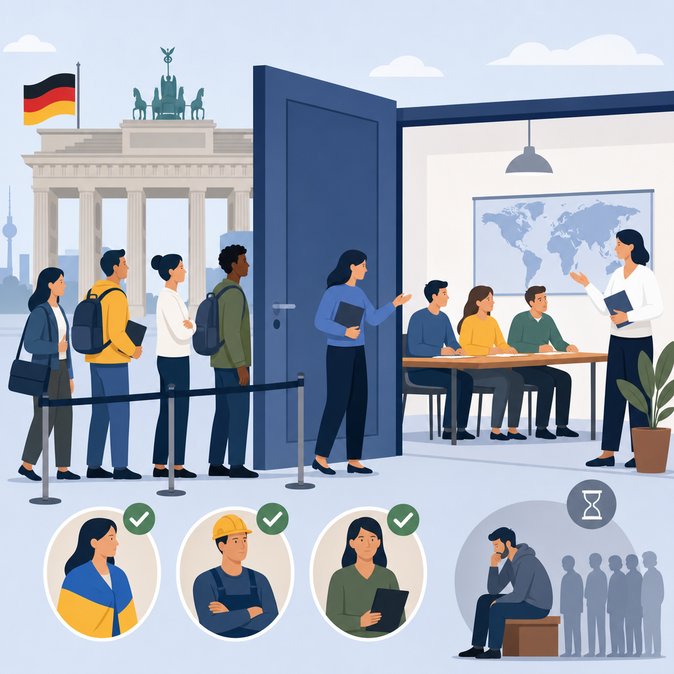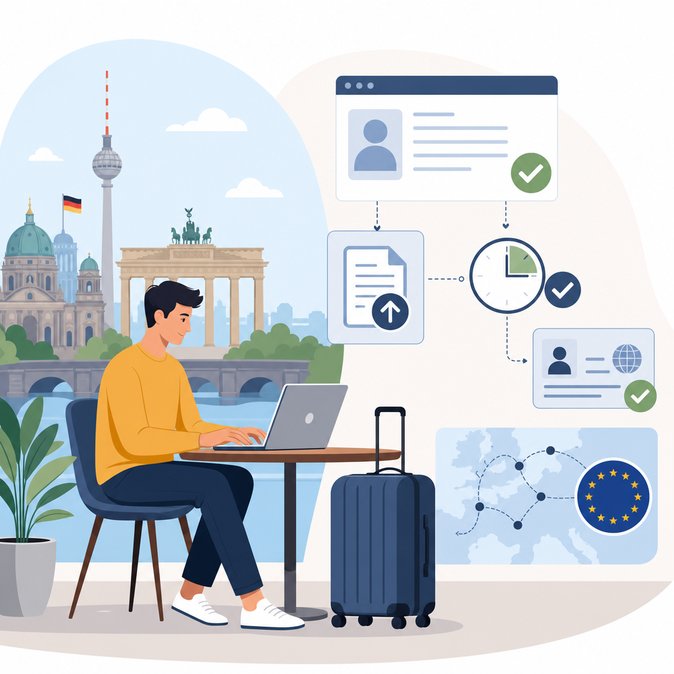
Germany still lacks an official “digital-nomad visa,” but as of 16 May 2026 the country has quietly equipped two existing residence categories with faster, largely online application routes that make it markedly easier for remote professionals to base themselves in Berlin, Munich or Cologne. An in-depth guide published the same day on the specialist portal German Online Tests summarises the changes: freelancers in liberal professions can now submit most documentation—letters of intent from German clients, proof of funds and health insurance—via new regional e-portals used by many Ausländerbehörden.
![Germany Opens Digital-Nomad Door Wider with Freelance Visa and Opportunity Card Upgrades]()
For anyone who would rather not decode the fine print alone, VisaHQ’s Germany hub (https://www.visahq.com/germany/) offers a clear checklist of required documents and a concierge option that can liaise with Ausländerbehörden on your behalf, making both the freelance permit and Chancenkarte processes far less daunting.
Processing targets of four to eight weeks mirror those already in place for EU Blue Cards. Meanwhile the year-old Chancenkarte (Opportunity Card) for qualified job-seekers now explicitly covers remote workers who can show either A1 German or B2 English. Holders may work up to 20 hours per week while looking for full-time roles, providing a safety net for nomads who want to test the waters before committing. Language rules remain light: no formal German is required for the freelance permit, though A1–B1 helps with tax offices. The Opportunity Card maintains its flexible points system in which basic German or good English unlocks eligibility. Tax and social-security guidance in the update reminds newcomers that 183 days in Germany triggers worldwide income tax, so early registration with the Finanzamt is vital. Why does it matter for mobility managers? First, companies that engage contractors abroad can now place them in Germany without shouldering full employer-of-record costs—provided the contractors secure the freelance permit themselves. Second, the Opportunity Card creates a pipeline: nomads who enter on a job-search status can convert to EU Blue Cards once they land an offer, shortening time-to-productivity for hard-to-fill tech roles. Immigration lawyers welcome the digitisation drive but caution that rules vary by city and that the abolition of the free “remonstration” appeal (July 2025) means first-time accuracy counts. Applicants over 45 must still prove adequate pension cover, and health-insurance policies are scrutinised closely. Yet the direction of travel is unmistakable: Germany is pivoting from cautious gatekeeper to proactive talent magnet, and remote-work visas—formal or de-facto—are rapidly becoming part of the toolbox.

For anyone who would rather not decode the fine print alone, VisaHQ’s Germany hub (https://www.visahq.com/germany/) offers a clear checklist of required documents and a concierge option that can liaise with Ausländerbehörden on your behalf, making both the freelance permit and Chancenkarte processes far less daunting.
Processing targets of four to eight weeks mirror those already in place for EU Blue Cards. Meanwhile the year-old Chancenkarte (Opportunity Card) for qualified job-seekers now explicitly covers remote workers who can show either A1 German or B2 English. Holders may work up to 20 hours per week while looking for full-time roles, providing a safety net for nomads who want to test the waters before committing. Language rules remain light: no formal German is required for the freelance permit, though A1–B1 helps with tax offices. The Opportunity Card maintains its flexible points system in which basic German or good English unlocks eligibility. Tax and social-security guidance in the update reminds newcomers that 183 days in Germany triggers worldwide income tax, so early registration with the Finanzamt is vital. Why does it matter for mobility managers? First, companies that engage contractors abroad can now place them in Germany without shouldering full employer-of-record costs—provided the contractors secure the freelance permit themselves. Second, the Opportunity Card creates a pipeline: nomads who enter on a job-search status can convert to EU Blue Cards once they land an offer, shortening time-to-productivity for hard-to-fill tech roles. Immigration lawyers welcome the digitisation drive but caution that rules vary by city and that the abolition of the free “remonstration” appeal (July 2025) means first-time accuracy counts. Applicants over 45 must still prove adequate pension cover, and health-insurance policies are scrutinised closely. Yet the direction of travel is unmistakable: Germany is pivoting from cautious gatekeeper to proactive talent magnet, and remote-work visas—formal or de-facto—are rapidly becoming part of the toolbox.