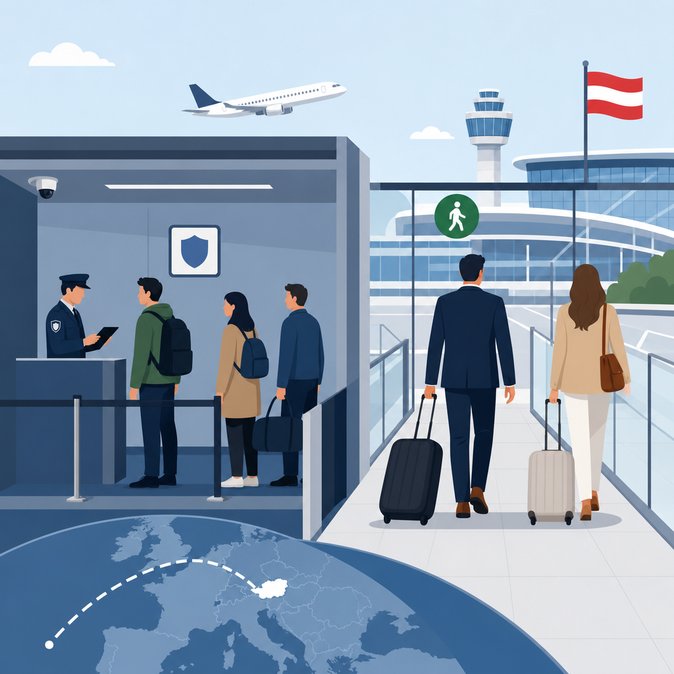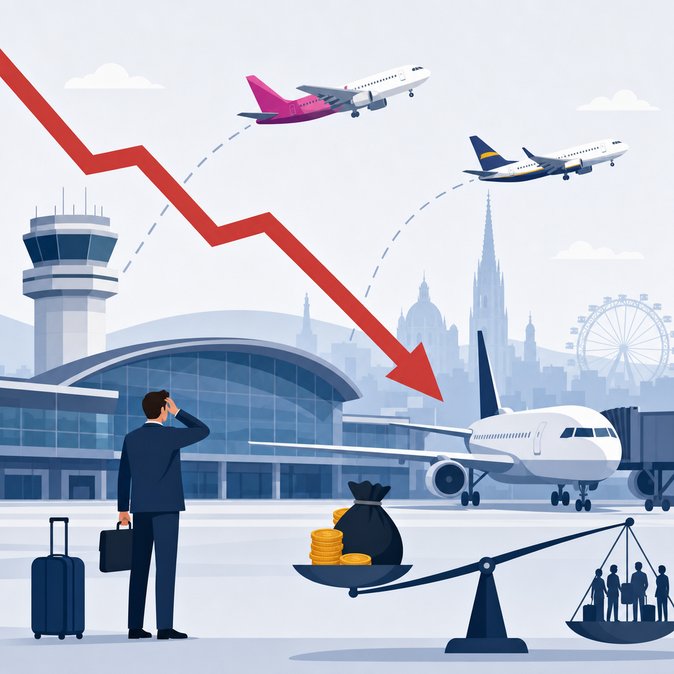
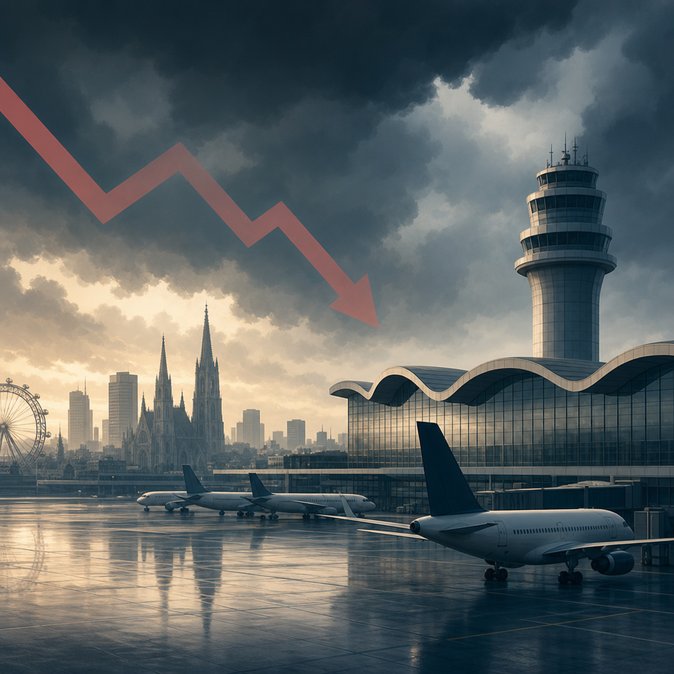
Traffic figures released on 15 May 2026 by specialist portal Aviation.Direct reveal that Vienna Airport handled 8.2 % fewer passengers in April year-on-year, despite solid gains at the operator’s subsidiaries in Malta (+12 %) and Košice (+66 %). The headline number masks two structural challenges: the almost complete withdrawal of Wizz Air, which has closed its Viennese base, and a sharp capacity cut by Ryanair. Both carriers blame Schwechat’s higher charges and what they call an inflexible slot policy. The impact is stark: local origin-and-destination traffic fell 8.7 %, while transit flows—a pillar of the airport’s hub model—shrank 7.2 % as Middle-East connections collapsed under regional security worries. Austrian Airlines has attempted to backfill capacity with larger Airbus 321neos, but analysts warn that without the price-stimulating effect of low-cost carriers, Vienna risks losing travellers to nearby Bratislava and Prague. From a global-mobility perspective, fewer direct links means longer door-to-door times for assignees and higher relocation costs for corporates headquartered in Austria. HR teams may need to build in additional layovers for moves to secondary European cities that were previously served nonstop by Wizz Air (e.g. Skopje, Tirana, Podgorica).
![Passenger slump at Vienna Airport exposes fee strategy and low-cost exodus]()
To ease at least one pain point of international assignments, VisaHQ can take charge of the visa and passport formalities for staff entering or leaving Austria. Its dedicated Austria portal (https://www.visahq.com/austria/) provides up-to-date requirement checks, digital application tools and courier options, allowing HR departments to redeploy time and resources toward travel planning rather than paperwork.
Procurement departments negotiating corporate fares should expect higher average ticket prices as market concentration increases. The Airport Group’s board maintains its full-year guidance, betting that strong cargo yields and growth abroad will offset the Viennese downturn. Yet Austrian business associations are calling for a review of the fee schedule to lure back low-cost capacity, warning that weakened connectivity could deter foreign direct investment. Any tariff revision would require approval by the Transport Ministry, which is currently revisiting the national aviation strategy—another topic slated for debate in Parliament next week.
To ease at least one pain point of international assignments, VisaHQ can take charge of the visa and passport formalities for staff entering or leaving Austria. Its dedicated Austria portal (https://www.visahq.com/austria/) provides up-to-date requirement checks, digital application tools and courier options, allowing HR departments to redeploy time and resources toward travel planning rather than paperwork.
Procurement departments negotiating corporate fares should expect higher average ticket prices as market concentration increases. The Airport Group’s board maintains its full-year guidance, betting that strong cargo yields and growth abroad will offset the Viennese downturn. Yet Austrian business associations are calling for a review of the fee schedule to lure back low-cost capacity, warning that weakened connectivity could deter foreign direct investment. Any tariff revision would require approval by the Transport Ministry, which is currently revisiting the national aviation strategy—another topic slated for debate in Parliament next week.