Austria woke up on 17 April 2026 to an alarming bulletin from the International Energy Agency (IEA): if tankers continue to be blocked in the Strait of Hormuz, Europe’s kerosene stocks will run dry in about 40 days. In a late-night interview, IEA-director Fatih Birol called the situation “the biggest energy crisis we have ever faced,” adding that flight cancellations could begin “within weeks.”
![IEA warns Europe has only six weeks of jet-fuel reserves, Vienna Airport activates contingency plans]()
Amid this uncertainty, many travellers and companies are scrambling to reroute journeys or add unexpected stopovers. VisaHQ’s Austria portal (https://www.visahq.com/austria/) can simplify that process by instantly confirming visa requirements, handling rush applications and providing expert guidance—helping passengers adapt quickly as airlines revise schedules and alternative hubs emerge.
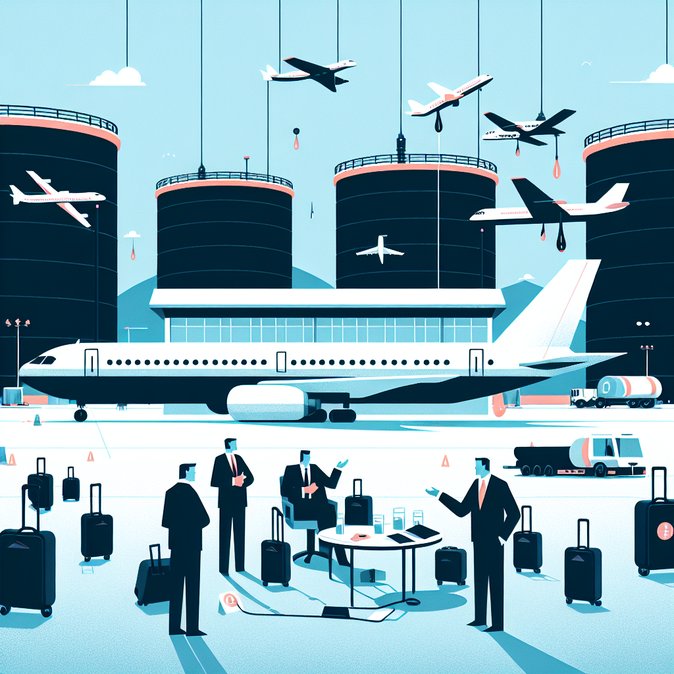
Although the warning concerns the whole continent, it immediately triggered action in Austria’s aviation sector. Flughafen Wien AG confirmed to ORF that its fuel farm at Vienna-Schwechat holds roughly 12 days of operating stock; emergency contracts with OMV and MOL would allow rail-tank deliveries from refineries in Schwechat and Bratislava, but only at 70 % of normal demand. Austrian Airlines, Ryanair and Wizz Air have been asked to file revised flight plans prioritising essential long-haul connections and repatriation charters should rationing become necessary. At government level, the Transport and Energy Ministries convened a joint crisis cell together with the Chamber of Commerce. Draft measures circulating on 17 April include a temporary waiver of the mineral-oil tax for sustainable aviation fuel (SAF) blends to stretch conventional supplies, and the activation of the national stock-holding agency to release 120,000 tonnes of Jet A-1 that are currently part of Austria’s strategic reserve. Vienna is also lobbying Brussels for coordinated EU purchasing similar to the COVID-era vaccine contracts to avoid a bidding war among member states. Business-travel managers have been told to avoid non-essential trips after 1 May and to build extra stop-over time into itineraries in case fuel shortages force aircraft to make tech stops for refuelling. Travel-risk firms say sectors most exposed are high-value manufacturing in Styria and Tyrol that rely on just-in-time air-freight, as well as the life-science cluster around Vienna that routinely ships clinical samples on passenger flights. Industry analysts caution that the real pain will be felt at smaller regional airports such as Linz and Graz, which lack pipeline access and depend on trucked fuel. If Europe’s emergency plan—expected to be published on 22 April—cannot re-route alternative supplies from the US Gulf Coast or West Africa, carriers may have to ground portions of their fleets just as the peak summer season begins. For Austria’s tourism-heavy economy, even a partial disruption could shave up to 0.3 percentage points off 2026 GDP, according to Erste Bank.

Amid this uncertainty, many travellers and companies are scrambling to reroute journeys or add unexpected stopovers. VisaHQ’s Austria portal (https://www.visahq.com/austria/) can simplify that process by instantly confirming visa requirements, handling rush applications and providing expert guidance—helping passengers adapt quickly as airlines revise schedules and alternative hubs emerge.
Although the warning concerns the whole continent, it immediately triggered action in Austria’s aviation sector. Flughafen Wien AG confirmed to ORF that its fuel farm at Vienna-Schwechat holds roughly 12 days of operating stock; emergency contracts with OMV and MOL would allow rail-tank deliveries from refineries in Schwechat and Bratislava, but only at 70 % of normal demand. Austrian Airlines, Ryanair and Wizz Air have been asked to file revised flight plans prioritising essential long-haul connections and repatriation charters should rationing become necessary. At government level, the Transport and Energy Ministries convened a joint crisis cell together with the Chamber of Commerce. Draft measures circulating on 17 April include a temporary waiver of the mineral-oil tax for sustainable aviation fuel (SAF) blends to stretch conventional supplies, and the activation of the national stock-holding agency to release 120,000 tonnes of Jet A-1 that are currently part of Austria’s strategic reserve. Vienna is also lobbying Brussels for coordinated EU purchasing similar to the COVID-era vaccine contracts to avoid a bidding war among member states. Business-travel managers have been told to avoid non-essential trips after 1 May and to build extra stop-over time into itineraries in case fuel shortages force aircraft to make tech stops for refuelling. Travel-risk firms say sectors most exposed are high-value manufacturing in Styria and Tyrol that rely on just-in-time air-freight, as well as the life-science cluster around Vienna that routinely ships clinical samples on passenger flights. Industry analysts caution that the real pain will be felt at smaller regional airports such as Linz and Graz, which lack pipeline access and depend on trucked fuel. If Europe’s emergency plan—expected to be published on 22 April—cannot re-route alternative supplies from the US Gulf Coast or West Africa, carriers may have to ground portions of their fleets just as the peak summer season begins. For Austria’s tourism-heavy economy, even a partial disruption could shave up to 0.3 percentage points off 2026 GDP, according to Erste Bank.