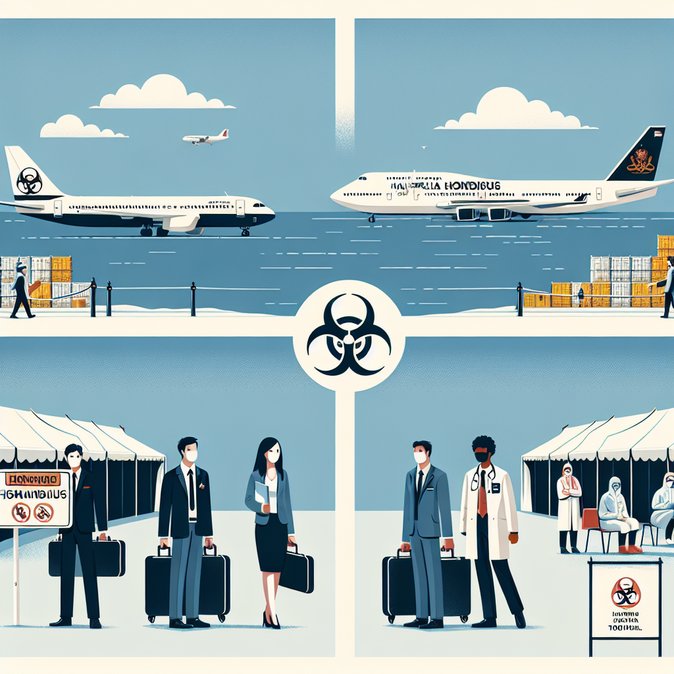
Australia’s Department of Foreign Affairs and Trade (DFAT) has dispatched a rapid-response consular team to Tenerife after five Australians—including one permanent resident—became stranded aboard the expedition vessel MV Hondius, which reported a cluster of hantavirus cases during a repositioning voyage from Antarctica to Europe.
The ship is due to dock in the Canary Islands on Sunday evening, 10 May, but Spanish health authorities have barred commercial disembarkation until all passengers receive medical clearance.
In a statement on Saturday night (AEST), DFAT said it is "considering options for the safe repatriation" of the group and is liaising with the World Health Organization and Spanish officials.
While none of the Australians is currently symptomatic, the department is organising charter air transport and contingency quarantine accommodation in Australia should testing later return positive.
States and territories have been asked to prepare Biosecurity Act isolation orders if required.
The incident revives memories of the COVID-19 era, when cruise outbreaks created major diplomatic and logistical headaches.
![DFAT Sends Consular Team to Canary Islands as Hantavirus Hits Antarctic Cruise]()
Travel operators note that most pandemic-era protocols—pre-departure testing, rapid onboard isolation cabins and international "green lane" medevac agreements—remain in place under International Health Regulations.
For Australians planning similar journeys, VisaHQ can simplify the administrative side of international travel. Through its Australian portal (https://www.visahq.com/australia/), the service provides up-to-date visa and entry-permit information for Spain, South American embarkation points and other stopovers, along with easy online applications and corporate account management—an especially useful resource when changing health rules demand quick itinerary adjustments.
Companies running high-end Antarctic itineraries now face renewed scrutiny of rodent-vector controls at South American ports where hantavirus is endemic.
For employers managing fly-in-fly-out (FIFO) rosters or executive incentive trips, the episode is a reminder to build medical evacuation coverage and consular liaison costs into travel budgets.
Insurers report that premiums for cruise add-ons have surged 15-20 per cent year-on-year, with underwriters demanding detailed outbreak-management plans before issuing group policies.
Australian officials emphasise that hantavirus has a low person-to-person transmission rate, but the government’s fast mobilisation illustrates a post-pandemic zero-tolerance stance on novel pathogens entering the country.
Mobility professionals should expect continued use of targeted health border measures—such as arrival PCR testing and compulsory health declarations—whenever overseas outbreaks intersect with Australian travellers.
The ship is due to dock in the Canary Islands on Sunday evening, 10 May, but Spanish health authorities have barred commercial disembarkation until all passengers receive medical clearance.
In a statement on Saturday night (AEST), DFAT said it is "considering options for the safe repatriation" of the group and is liaising with the World Health Organization and Spanish officials.
While none of the Australians is currently symptomatic, the department is organising charter air transport and contingency quarantine accommodation in Australia should testing later return positive.
States and territories have been asked to prepare Biosecurity Act isolation orders if required.
The incident revives memories of the COVID-19 era, when cruise outbreaks created major diplomatic and logistical headaches.

Travel operators note that most pandemic-era protocols—pre-departure testing, rapid onboard isolation cabins and international "green lane" medevac agreements—remain in place under International Health Regulations.
For Australians planning similar journeys, VisaHQ can simplify the administrative side of international travel. Through its Australian portal (https://www.visahq.com/australia/), the service provides up-to-date visa and entry-permit information for Spain, South American embarkation points and other stopovers, along with easy online applications and corporate account management—an especially useful resource when changing health rules demand quick itinerary adjustments.
Companies running high-end Antarctic itineraries now face renewed scrutiny of rodent-vector controls at South American ports where hantavirus is endemic.
For employers managing fly-in-fly-out (FIFO) rosters or executive incentive trips, the episode is a reminder to build medical evacuation coverage and consular liaison costs into travel budgets.
Insurers report that premiums for cruise add-ons have surged 15-20 per cent year-on-year, with underwriters demanding detailed outbreak-management plans before issuing group policies.
Australian officials emphasise that hantavirus has a low person-to-person transmission rate, but the government’s fast mobilisation illustrates a post-pandemic zero-tolerance stance on novel pathogens entering the country.
Mobility professionals should expect continued use of targeted health border measures—such as arrival PCR testing and compulsory health declarations—whenever overseas outbreaks intersect with Australian travellers.