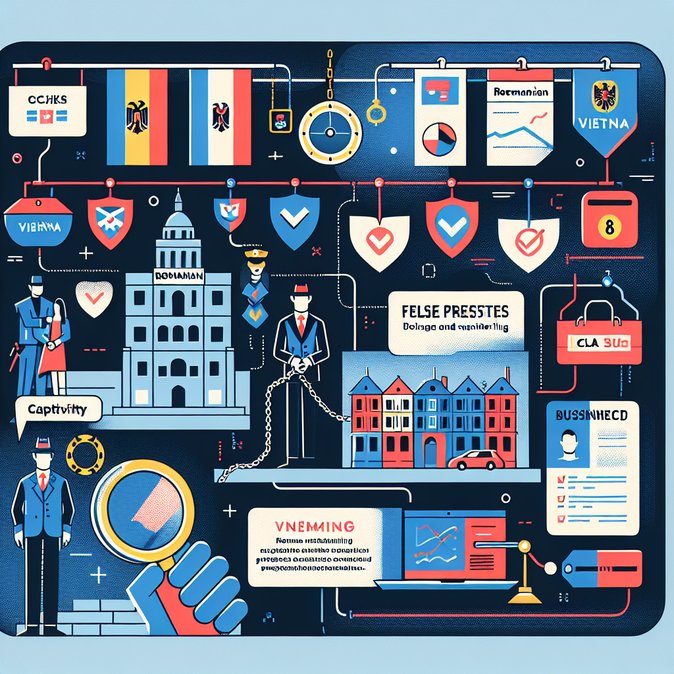
A joint task-force of the Austrian Federal Criminal Police, Eurojust, Europol and Romanian law enforcement carried out dawn raids on 9 May that dismantled a network trafficking young Romanian women to Vienna for forced prostitution. Eight premises in Romania and three in Vienna’s Favoriten district were searched, leading to four arrests abroad and the identification of six victims on Austrian soil. Officers seized ten mobile phones and dozens of identity cards, suggesting the gang may have exploited at least 20 women since 2023 and laundered €1.5 million into real estate and luxury vehicles. The investigation builds on Austria’s tougher stance on fast-track border-asylum cases and the EU’s renewed focus on cross-border trafficking ahead of the Entry-Exit System go-live. Officials said biometric data collected under the new system will make it harder for traffickers to recycle victims under false identities. For global-mobility and relocation teams the case is a reminder that informal recruitment chains can mask coercion and immigration fraud.
![Austrian-Romanian police operation breaks human-trafficking ring exploiting migrant women]()
At the practical level, organisations struggling to navigate Austria’s shifting immigration landscape can streamline the process by using VisaHQ’s one-stop platform. The service’s Austria portal (https://www.visahq.com/austria/) aggregates real-time visa requirements, forms and support options, allowing HR and mobility teams to move staff compliantly while staying alert to red-flag indicators of trafficking.
Companies employing third-country nationals in Austria’s service sectors should audit supplier hiring practices and ensure workers receive in-person briefings on legal rights and local support lines. The victims have been transferred to Austria’s specialised protection programme and will receive residence permits, counselling and vocational training – a pathway that underscores Austria’s efforts to combine law enforcement with victim integration.

At the practical level, organisations struggling to navigate Austria’s shifting immigration landscape can streamline the process by using VisaHQ’s one-stop platform. The service’s Austria portal (https://www.visahq.com/austria/) aggregates real-time visa requirements, forms and support options, allowing HR and mobility teams to move staff compliantly while staying alert to red-flag indicators of trafficking.
Companies employing third-country nationals in Austria’s service sectors should audit supplier hiring practices and ensure workers receive in-person briefings on legal rights and local support lines. The victims have been transferred to Austria’s specialised protection programme and will receive residence permits, counselling and vocational training – a pathway that underscores Austria’s efforts to combine law enforcement with victim integration.