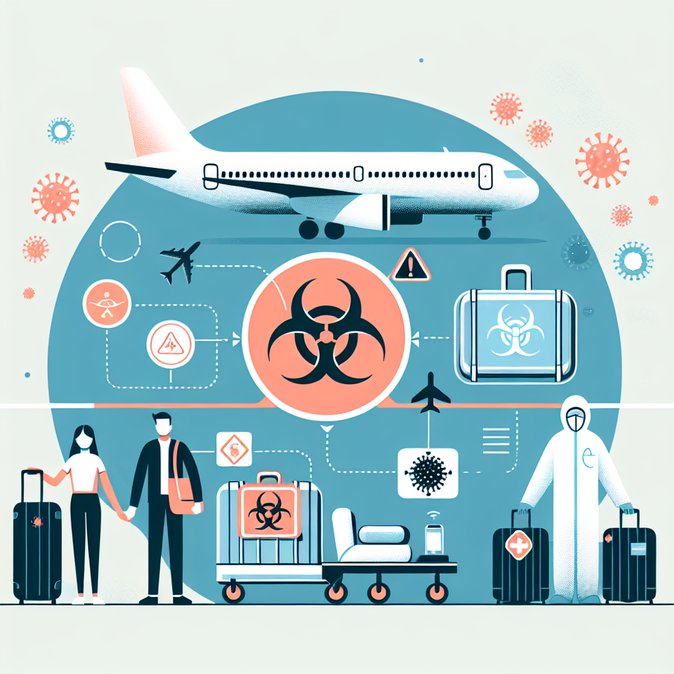
The Finnish Institute for Health and Welfare (THL) disclosed on 9 May 2026 that two Finnish nationals may have been exposed to the Andes strain of hantavirus while travelling on KLM flight 592 from Johannesburg to Amsterdam on 25 April. A fellow passenger—later hospitalised and deceased—was found to have been infectious during the first leg of the journey before disembarking in South Africa. THL contacted the two Finns through airline manifests supplied under International Health Regulations and advised them to self-monitor and limit social contact for 21 days, even though person-to-person transmission of Andes virus remains rare. The incident has prompted Finland’s Ministry of Social Affairs and Health to fast-track a decree classifying the Andes strain as a “generally hazardous communicable disease,” a category that gives authorities broader powers to impose isolation or travel restrictions. Airlines operating via Helsinki Airport have been reminded to maintain up-to-date passenger-locator protocols and to brief crew on recognising haemorrhagic-fever symptoms.
![Finnish Health Officials Trace Two Passengers Exposed to Deadly Andes Hantavirus on Intercontinental Flight]()
For travellers who now have to navigate shifting health declarations, visa requirements and possible quarantine rules, VisaHQ’s Finland portal (https://www.visahq.com/finland/) offers a one-stop resource that tracks real-time entry regulations, vaccination advisories and necessary paperwork—streamlining compliance should new decrees come into force.
Employers with staff transiting high-risk zones in South America or southern Africa should review duty-of-care policies and ensure access to rapid medical evacuation. Although no secondary cases have been detected, the episode underscores the mobility risks that remain even as post-pandemic travel rebounds. Finland’s communicable-disease experts say they are also re-evaluating onboard cleaning standards for long-haul aircraft and may recommend pre-departure health questionnaires on routes originating in endemic regions. For global mobility teams the key takeaway is the importance of real-time travel health intelligence: the initial exposure occurred outside Finland’s borders, but the potential public-health response—from quarantine orders to amended immigration health checks—will unfold domestically. Companies should verify that travellers’ emergency contact details and consent for data-sharing with health authorities are current before departure.

For travellers who now have to navigate shifting health declarations, visa requirements and possible quarantine rules, VisaHQ’s Finland portal (https://www.visahq.com/finland/) offers a one-stop resource that tracks real-time entry regulations, vaccination advisories and necessary paperwork—streamlining compliance should new decrees come into force.
Employers with staff transiting high-risk zones in South America or southern Africa should review duty-of-care policies and ensure access to rapid medical evacuation. Although no secondary cases have been detected, the episode underscores the mobility risks that remain even as post-pandemic travel rebounds. Finland’s communicable-disease experts say they are also re-evaluating onboard cleaning standards for long-haul aircraft and may recommend pre-departure health questionnaires on routes originating in endemic regions. For global mobility teams the key takeaway is the importance of real-time travel health intelligence: the initial exposure occurred outside Finland’s borders, but the potential public-health response—from quarantine orders to amended immigration health checks—will unfold domestically. Companies should verify that travellers’ emergency contact details and consent for data-sharing with health authorities are current before departure.