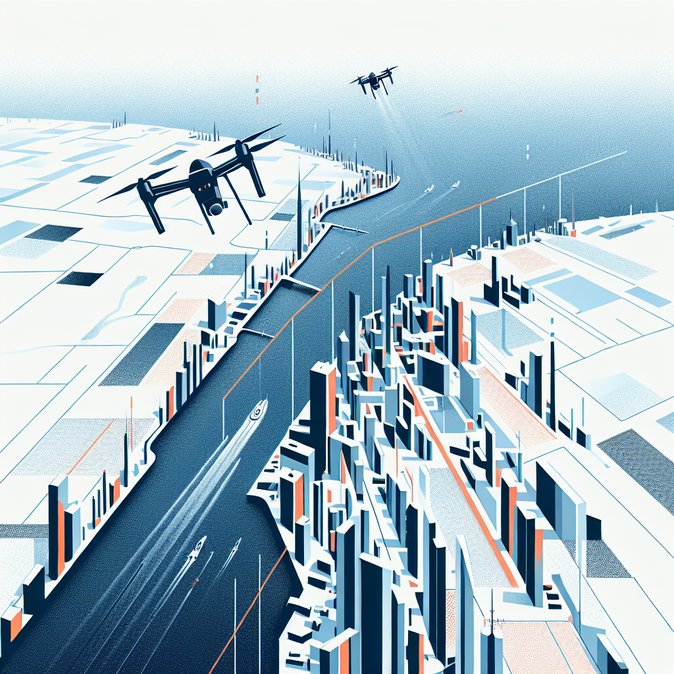
In an unusually detailed briefing on Monday, the Finnish Defence Forces (FDF) told Yle that pilots deliberately refrained from shooting down two drones spotted near Virolahti on 3 May because the craft were travelling parallel to the border and could have scattered debris into Russian territory if destroyed. “In peacetime we do not intercept at the line itself,” an FDF spokesperson said. The military instead requested that the Transport and Communications Agency impose an immediate no-fly zone over the eastern Gulf of Finland, giving fighters a wider safety buffer had the drones turned inland. The temporary restriction, which covers approaches to the key ports of Kotka and Hamina, remains in force pending forensic analysis of radar tracks. The clarification answers criticism from local politicians who questioned why the intruders were allowed to exit unchallenged.
![Finnish Defence Forces Explain Why Intercepting Stray Drones Is ‘Last Resort’]()
Amid the bewildering tangle of new flight plans and permissions, travellers may also find themselves juggling fresh visa and passport requirements. VisaHQ’s dedicated Finland portal (https://www.visahq.com/finland/) can expedite everything from e-visa applications to passport renewals, ensuring crews and executives redeployed by sudden airspace changes spend less time on paperwork and more time on mission-critical tasks.
Defence lawyers note that under the Hague Conventions and Finland’s own Territorial Surveillance Act, lethal force is permissible only when an object endangers life or critical infrastructure. The drones—believed to be part of Ukraine’s long-range strike package against Russia—carried no such risk during their brief incursion. For airlines the episode underscores the growing complexity of Baltic airspace. Finnair has already rerouted several evening departures to Copenhagen and Brussels to avoid military danger areas, adding six to nine minutes of block time and minor crew-duty adjustments. Charter operators flying oil-and-gas technicians to Kotka warn that future closures could force diversions to Helsinki and costly ground transfers. Risk advisers are urging companies to audit flight-tracking alerts and ensure that travel-insurance policies treat drone incidents as an eligible “airspace closure” event. With NATO air-defence drills scheduled for late May, further short-notice restrictions are likely.
Amid the bewildering tangle of new flight plans and permissions, travellers may also find themselves juggling fresh visa and passport requirements. VisaHQ’s dedicated Finland portal (https://www.visahq.com/finland/) can expedite everything from e-visa applications to passport renewals, ensuring crews and executives redeployed by sudden airspace changes spend less time on paperwork and more time on mission-critical tasks.
Defence lawyers note that under the Hague Conventions and Finland’s own Territorial Surveillance Act, lethal force is permissible only when an object endangers life or critical infrastructure. The drones—believed to be part of Ukraine’s long-range strike package against Russia—carried no such risk during their brief incursion. For airlines the episode underscores the growing complexity of Baltic airspace. Finnair has already rerouted several evening departures to Copenhagen and Brussels to avoid military danger areas, adding six to nine minutes of block time and minor crew-duty adjustments. Charter operators flying oil-and-gas technicians to Kotka warn that future closures could force diversions to Helsinki and costly ground transfers. Risk advisers are urging companies to audit flight-tracking alerts and ensure that travel-insurance policies treat drone incidents as an eligible “airspace closure” event. With NATO air-defence drills scheduled for late May, further short-notice restrictions are likely.