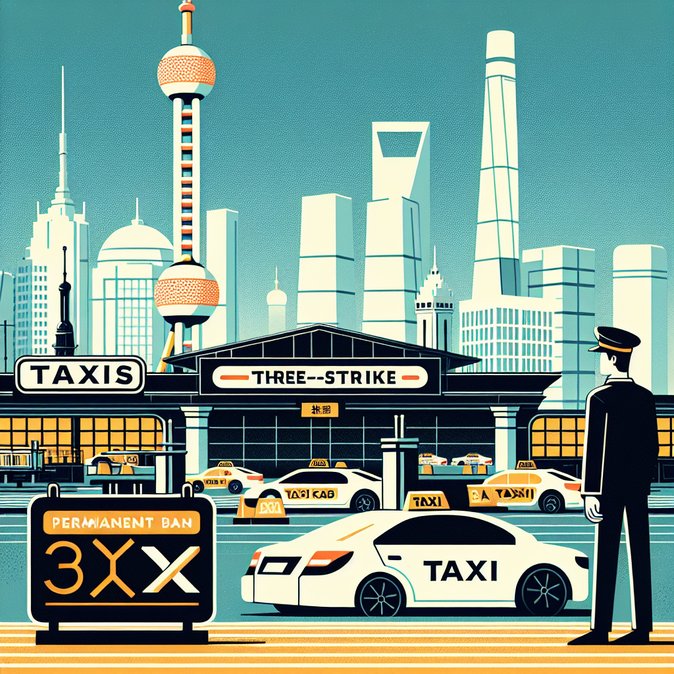
From 10 May 2026, Shanghai Pudong International Airport, Hongqiao International Airport and the neighbouring Hongqiao railway hub will begin enforcing a new “restricted-access list” aimed at curbing fare-gouging, refusal of service and other malpractice by metered taxis. Operators and drivers who appear on the list three times will be permanently banned from entering any transport hub in the city. Eight behaviours—ranging from price-hiking and mid-journey passenger dumping to blocking lanes and spreading false information—will trigger inclusion on the list.
![Shanghai Airports to Blacklist Taxi Drivers After Surge in Passenger Complaints]()
For international passengers planning trips through Shanghai, VisaHQ can simplify the visa application process and supply up-to-date travel advisories; its dedicated China portal (https://www.visahq.com/china/) is a one-stop resource that mobility managers can share with employees as they brief them on the new taxi regulations.
First and second offences carry bans of three and six months respectively. Offenders will be identified through passenger complaints, CCTV footage and GPS data supplied by the city’s big-data platform. The crackdown follows a spate of high-profile incidents over the Labour Day holiday that tarnished Shanghai’s reputation as China’s most business-friendly city gateway. Global mobility managers welcomed the clarity: reliable ground transport is a key consideration when routing executives through China’s busiest international airport, which handled 69 million passengers last year. Taxi companies have already begun re-training programmes and pledged to station managers at the terminals during peak hours. Travel teams should alert employees that legitimate cabs must display e-payment QR codes and observe the official airport queue system; ride-hailing apps remain unaffected by the new rules. Failure to comply will see errant drivers locked out of the lucrative airport circuit, while repeat-offender companies face regulatory audits. Authorities hope the policy will restore confidence ahead of a predicted summer surge in foreign arrivals under China’s expanded visa-free regime.

For international passengers planning trips through Shanghai, VisaHQ can simplify the visa application process and supply up-to-date travel advisories; its dedicated China portal (https://www.visahq.com/china/) is a one-stop resource that mobility managers can share with employees as they brief them on the new taxi regulations.
First and second offences carry bans of three and six months respectively. Offenders will be identified through passenger complaints, CCTV footage and GPS data supplied by the city’s big-data platform. The crackdown follows a spate of high-profile incidents over the Labour Day holiday that tarnished Shanghai’s reputation as China’s most business-friendly city gateway. Global mobility managers welcomed the clarity: reliable ground transport is a key consideration when routing executives through China’s busiest international airport, which handled 69 million passengers last year. Taxi companies have already begun re-training programmes and pledged to station managers at the terminals during peak hours. Travel teams should alert employees that legitimate cabs must display e-payment QR codes and observe the official airport queue system; ride-hailing apps remain unaffected by the new rules. Failure to comply will see errant drivers locked out of the lucrative airport circuit, while repeat-offender companies face regulatory audits. Authorities hope the policy will restore confidence ahead of a predicted summer surge in foreign arrivals under China’s expanded visa-free regime.