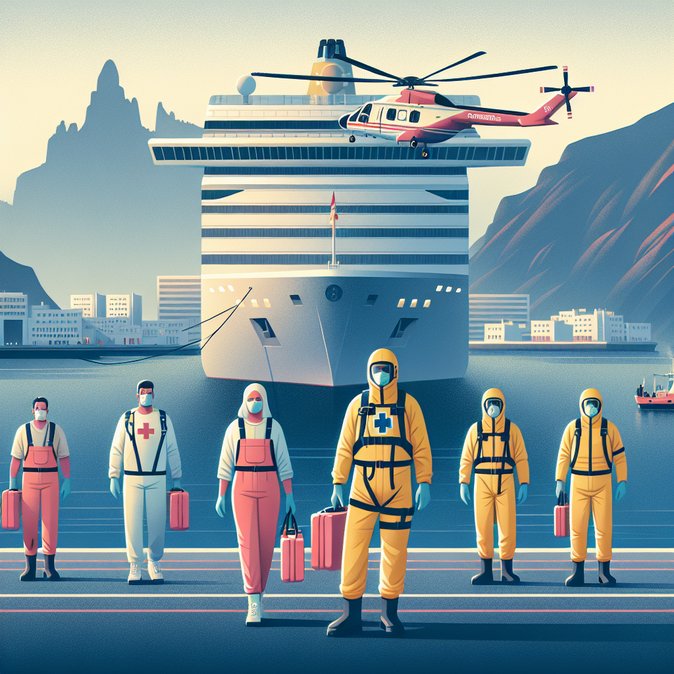
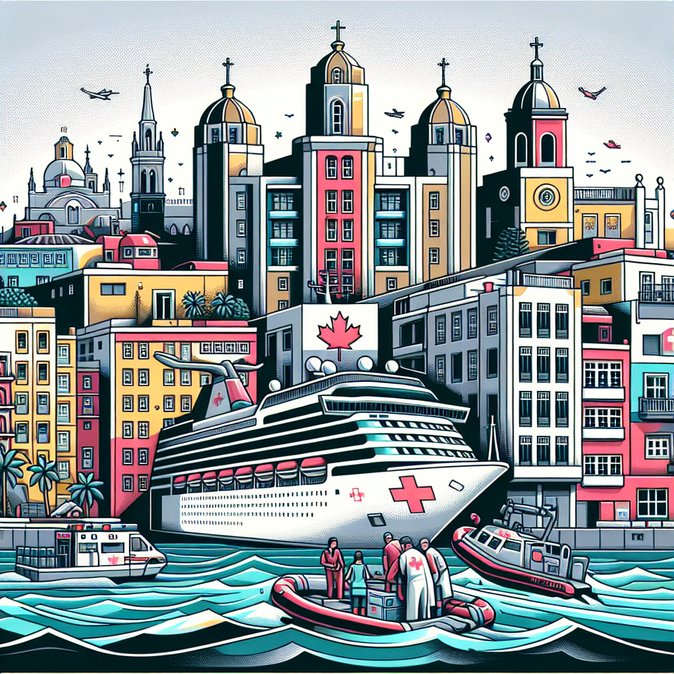
Global Affairs Canada confirmed on 8 May that a rapid-response consular team is en route to the port of Granadilla, Tenerife, where the expedition vessel MV Hondius is due to dock this weekend following an onboard outbreak of a rare strain of hantavirus. Four Canadian citizens—two passengers and two crew—remain under observation on the ship; three additional Canadians who disembarked earlier in the voyage are isolating at home in Ontario and Quebec. The World Health Organization has recorded eight laboratory-confirmed cases and three deaths linked to the outbreak. The MV Hondius had been sailing a 21-day Atlantic wildlife itinerary when several passengers began exhibiting flu-like symptoms later identified as Andes virus, a rodent-borne pathogen that can progress to severe respiratory illness. Spanish health authorities ordered the vessel to skip scheduled calls in Madeira and proceed directly to the Canary Islands, where a coordinated medical evacuation plan is now in place. Canadian officials say nobody currently on board is showing symptoms, but caution that the incubation period can extend up to six weeks.
![Ottawa Sends Consular Team to Canary Islands After Hantavirus Outbreak on Cruise Ship]()
Should any of the affected passengers or their family members need to alter onward travel plans, replace lost documents or obtain emergency visas, VisaHQ’s online platform can streamline the paperwork process. Its Canada-specific portal (https://www.visahq.com/canada/) allows both individual travellers and corporate mobility teams to secure visas, passport renewals and electronic travel authorisations quickly, helping to minimise additional stress when health incidents disrupt an itinerary.
Canada’s intervention illustrates how quickly consular crises can emerge as cruise lines resume exotic itineraries in the post-pandemic recovery. The government team will assist local officials with contact tracing, arrange medical care if required and facilitate safe onward travel for unaffected Canadians. Ottawa has advised all citizens who were on the voyage to monitor their health closely and seek immediate medical attention should fever, muscle aches or shortness of breath develop. For mobility and travel-risk managers, the incident underscores the importance of rigorous pre-trip medical briefings and real-time health monitoring for employees on leisure or “bleisure” cruises. Companies should verify that travellers are enrolled in their emergency-assistance programme and that cruise itineraries are captured in duty-of-care tracking tools. Organisations with personnel scheduled to board the MV Hondius on future sailings may wish to review cancellation options until the outbreak is fully contained. More broadly, the case is a reminder that travel health risks extend beyond COVID-19. The Public Health Agency of Canada notes that Andes virus does not spread easily between people, but limited person-to-person transmission has been documented. Employers should therefore maintain robust infectious-disease protocols for all international assignments, particularly those involving remote regions or expedition travel.
Should any of the affected passengers or their family members need to alter onward travel plans, replace lost documents or obtain emergency visas, VisaHQ’s online platform can streamline the paperwork process. Its Canada-specific portal (https://www.visahq.com/canada/) allows both individual travellers and corporate mobility teams to secure visas, passport renewals and electronic travel authorisations quickly, helping to minimise additional stress when health incidents disrupt an itinerary.
Canada’s intervention illustrates how quickly consular crises can emerge as cruise lines resume exotic itineraries in the post-pandemic recovery. The government team will assist local officials with contact tracing, arrange medical care if required and facilitate safe onward travel for unaffected Canadians. Ottawa has advised all citizens who were on the voyage to monitor their health closely and seek immediate medical attention should fever, muscle aches or shortness of breath develop. For mobility and travel-risk managers, the incident underscores the importance of rigorous pre-trip medical briefings and real-time health monitoring for employees on leisure or “bleisure” cruises. Companies should verify that travellers are enrolled in their emergency-assistance programme and that cruise itineraries are captured in duty-of-care tracking tools. Organisations with personnel scheduled to board the MV Hondius on future sailings may wish to review cancellation options until the outbreak is fully contained. More broadly, the case is a reminder that travel health risks extend beyond COVID-19. The Public Health Agency of Canada notes that Andes virus does not spread easily between people, but limited person-to-person transmission has been documented. Employers should therefore maintain robust infectious-disease protocols for all international assignments, particularly those involving remote regions or expedition travel.