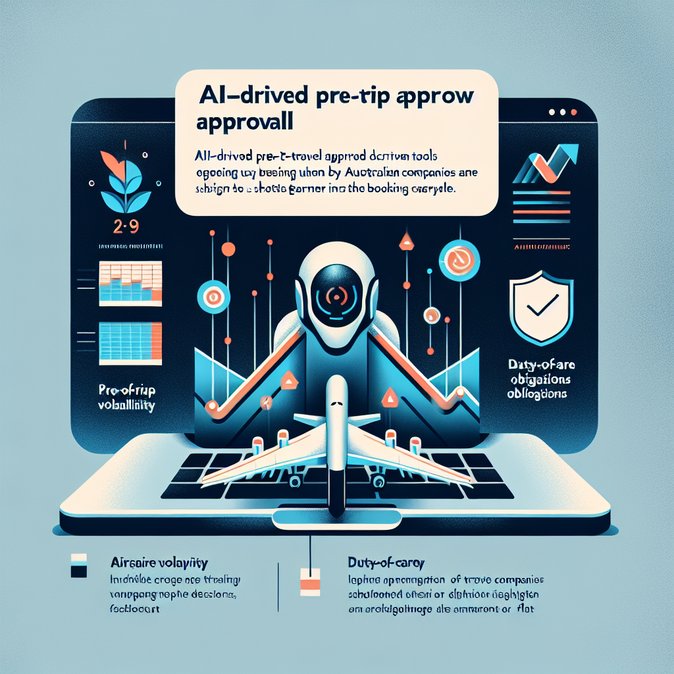
Australian corporates are moving travel-authorisation decisions ‘upstream’ as artificial-intelligence tools gain traction, according to Travel Weekly’s 6 May report. SAP Concur says flight bookings by its Australian clients jumped almost 10 % in 2025 and a further 44 % year-on-year in March 2025, prompting finance teams to demand earlier cost visibility. AI-powered request platforms now estimate trip costs in real time, flag policy breaches and route approvals based on spend and risk before tickets are purchased. Advocates argue the shift reduces out-of-policy bookings, tightens audit trails and frees travellers from retrospective expense disputes.
![Corporate Travel Programs Embrace AI-Driven Pre-Trip Approvals]()
Meanwhile, organisations tasked with managing visas at pace can leverage VisaHQ’s Australia portal (https://www.visahq.com/australia/), which plugs into corporate booking flows, pre-checks traveller documentation and surfaces real-time visa costs—giving approvers one more data point before green-lighting a trip.
For global-mobility and travel-risk managers, the trend offers dual benefits: stronger budget control in an inflationary airfare environment and enhanced duty-of-care data (e.g., itinerary approval timestamps and traveller intent). Early adopters in Australia’s mining and professional-services sectors report faster turnaround for low-risk domestic trips while maintaining higher scrutiny on Middle-East and Africa travel. Vendors expect demand to accelerate through 2026 as companies grapple with volatile fuel surcharges and geopolitical uncertainty; mobility teams should review whether their online-booking tools integrate with AI request workflows or risk policy-compliance blind spots.

Meanwhile, organisations tasked with managing visas at pace can leverage VisaHQ’s Australia portal (https://www.visahq.com/australia/), which plugs into corporate booking flows, pre-checks traveller documentation and surfaces real-time visa costs—giving approvers one more data point before green-lighting a trip.
For global-mobility and travel-risk managers, the trend offers dual benefits: stronger budget control in an inflationary airfare environment and enhanced duty-of-care data (e.g., itinerary approval timestamps and traveller intent). Early adopters in Australia’s mining and professional-services sectors report faster turnaround for low-risk domestic trips while maintaining higher scrutiny on Middle-East and Africa travel. Vendors expect demand to accelerate through 2026 as companies grapple with volatile fuel surcharges and geopolitical uncertainty; mobility teams should review whether their online-booking tools integrate with AI request workflows or risk policy-compliance blind spots.