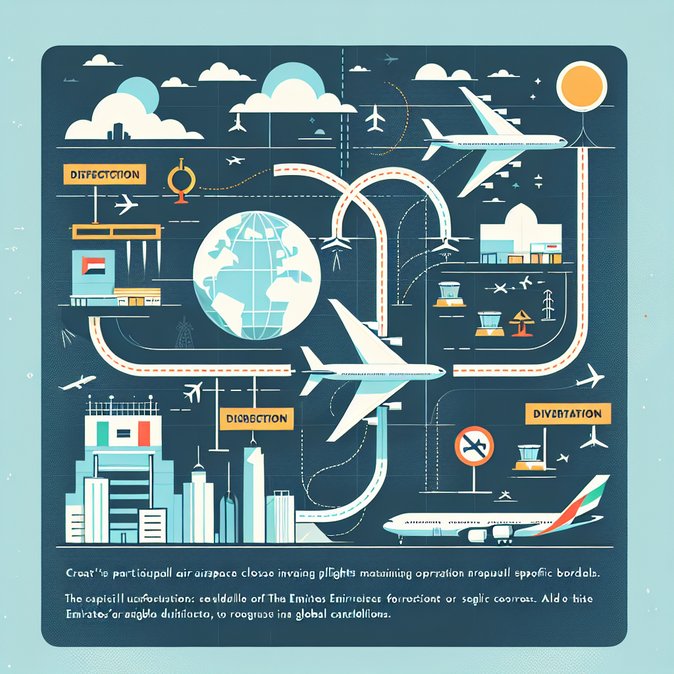
Just 24 hours after new regional flight restrictions rattled carriers, Dubai International Airport (DXB) confirmed on 6 May that all three terminals are back at full operational capacity. In a statement to local media, DXB management said the airport is now handling a “steady flow” of arrivals and departures as airlines rebuild schedules and crews reposition aircraft. Passengers are still urged to arrive early and monitor real-time updates, but the worst bottlenecks appear to have eased. During the brief partial closure of UAE airspace, DXB functioned on a skeleton network to maintain essential connectivity for cargo and critical passenger flows. Airport teams used the breathing space to fine-tune contingency plans, run live simulations with air-traffic controllers and re-sequence thousands of slots in anticipation of a rapid rebound.
![Dubai International Airport Restores 100 % Operations as Airspace Gradually Re-opens]()
For travellers who suddenly need to adjust documentation—whether securing a new UAE visa or sorting transit permits—VisaHQ can remove much of the stress. Its online portal, complete with step-by-step guidance for the Emirates (https://www.visahq.com/united-arab-emirates/), offers fast-track processing, real-time requirement updates and concierge assistance that dovetails neatly with the tight timelines many corporates now face.
For companies that base regional mobility programmes on Dubai’s hub model, the restart is strategically significant. The emirate lost an estimated 15 % of daily seat capacity during the closure, forcing some business travellers to route through Doha or Jeddah. With full operations restored, corporates can resume preferred routings, optimise duty-of-care tracking and reduce costly layovers. Nevertheless, travel managers should keep a close watch on onward network stability. Airlines warn that crew-duty limits and aircraft rotations remain off-balance, meaning some short-notice retiming is still possible. HR teams relocating new hires this month should factor in extra lead time for connection buffers and continue to counsel travellers to reconfirm terminal and gate information. Long term, the incident may accelerate DXB’s investment in smart-gate technology and automated queue management to absorb shocks without widespread schedule disruption. It also strengthens the argument for diversifying entry points across the UAE—especially with Abu Dhabi International’s midfield terminal ramp-up and the multibillion-dollar expansion of Al Maktoum International at Dubai South.

For travellers who suddenly need to adjust documentation—whether securing a new UAE visa or sorting transit permits—VisaHQ can remove much of the stress. Its online portal, complete with step-by-step guidance for the Emirates (https://www.visahq.com/united-arab-emirates/), offers fast-track processing, real-time requirement updates and concierge assistance that dovetails neatly with the tight timelines many corporates now face.
For companies that base regional mobility programmes on Dubai’s hub model, the restart is strategically significant. The emirate lost an estimated 15 % of daily seat capacity during the closure, forcing some business travellers to route through Doha or Jeddah. With full operations restored, corporates can resume preferred routings, optimise duty-of-care tracking and reduce costly layovers. Nevertheless, travel managers should keep a close watch on onward network stability. Airlines warn that crew-duty limits and aircraft rotations remain off-balance, meaning some short-notice retiming is still possible. HR teams relocating new hires this month should factor in extra lead time for connection buffers and continue to counsel travellers to reconfirm terminal and gate information. Long term, the incident may accelerate DXB’s investment in smart-gate technology and automated queue management to absorb shocks without widespread schedule disruption. It also strengthens the argument for diversifying entry points across the UAE—especially with Abu Dhabi International’s midfield terminal ramp-up and the multibillion-dollar expansion of Al Maktoum International at Dubai South.