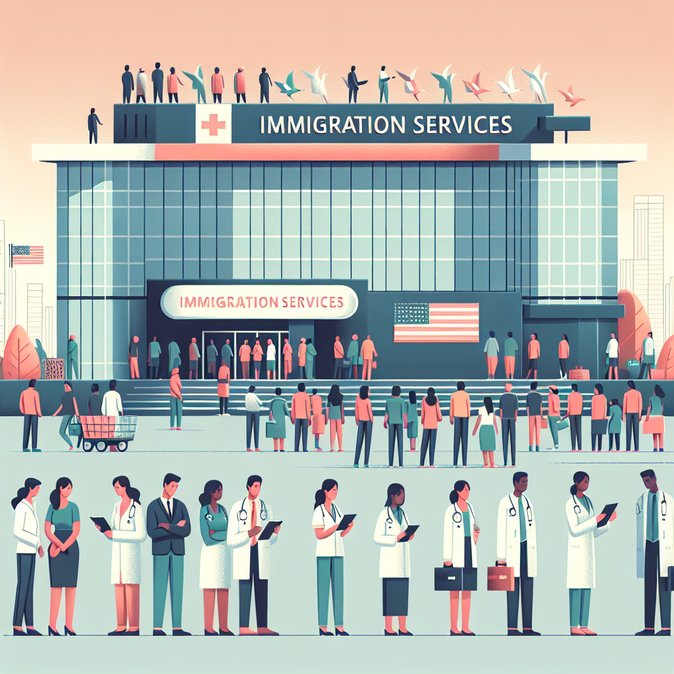
Immigration lawyers welcomed a rare bit of good news this week after U.S. Citizenship and Immigration Services confirmed that it has removed foreign medical doctors – along with several other categories – from the list of visa and green-card cases it had quietly frozen earlier this year as part of an extensive national-security review. The clarification, posted 4 May 2026 on a USCIS alert page and analysed by Manifest Law, means that thousands of physicians stuck in limbo can once again advance H-1B extensions, J-1 waiver requests and immigrant-visa petitions. Hospitals and residency programs had warned that the freeze risked worsening an already acute physician shortage projected to hit 86,000 doctors by 2032. Waiver sponsors in Texas, New York and Ohio reported dozens of delayed start dates, while some rural facilities were preparing contingency plans to redirect patients. The processing thaw should allow many of those doctors to complete onboarding before the new academic year.
![USCIS lifts processing freeze on foreign-trained physicians and other paused case types]()
Professionals navigating these shifting requirements may also benefit from VisaHQ’s tailored visa and passport services. The platform provides up-to-date guidance on U.S. immigration categories, document checklists and real-time status tracking, all in one place: https://www.visahq.com/united-states/ By outsourcing the paperwork to specialists, hospitals and physicians can focus on patient care while reducing costly delays.
In the same notice, USCIS said it has also resumed scheduling postponed naturalisation oath ceremonies, cleared certain family-based petitions, refugee registrations for South Africans and several employment-authorisation applications that were swept up in the January travel-ban screening expansion. Applicants will not receive a formal "unpause" notice; instead, movement will appear in their online case status or arrive via new biometrics/interview notices. Practitioners advise foreign physicians to check MyUSCIS portals daily and to respond quickly to any Requests for Evidence that may issue as officers work through the backlog. Employers should coordinate closely with credentialing departments and state medical boards, many of which require an H-1B approval notice before issuing a licence. Because USCIS has offered no premium-processing accommodation, some hospitals are fronting the $2,805 premium fee to accelerate time-sensitive petitions. The episode is a reminder of how overarching security-policy shifts can ripple through the business-immigration ecosystem. With the travel-ban vetting review still in force for other nationalities, companies should continue to anticipate sporadic holds and to maintain redundancy in their workforce planning.

Professionals navigating these shifting requirements may also benefit from VisaHQ’s tailored visa and passport services. The platform provides up-to-date guidance on U.S. immigration categories, document checklists and real-time status tracking, all in one place: https://www.visahq.com/united-states/ By outsourcing the paperwork to specialists, hospitals and physicians can focus on patient care while reducing costly delays.
In the same notice, USCIS said it has also resumed scheduling postponed naturalisation oath ceremonies, cleared certain family-based petitions, refugee registrations for South Africans and several employment-authorisation applications that were swept up in the January travel-ban screening expansion. Applicants will not receive a formal "unpause" notice; instead, movement will appear in their online case status or arrive via new biometrics/interview notices. Practitioners advise foreign physicians to check MyUSCIS portals daily and to respond quickly to any Requests for Evidence that may issue as officers work through the backlog. Employers should coordinate closely with credentialing departments and state medical boards, many of which require an H-1B approval notice before issuing a licence. Because USCIS has offered no premium-processing accommodation, some hospitals are fronting the $2,805 premium fee to accelerate time-sensitive petitions. The episode is a reminder of how overarching security-policy shifts can ripple through the business-immigration ecosystem. With the travel-ban vetting review still in force for other nationalities, companies should continue to anticipate sporadic holds and to maintain redundancy in their workforce planning.