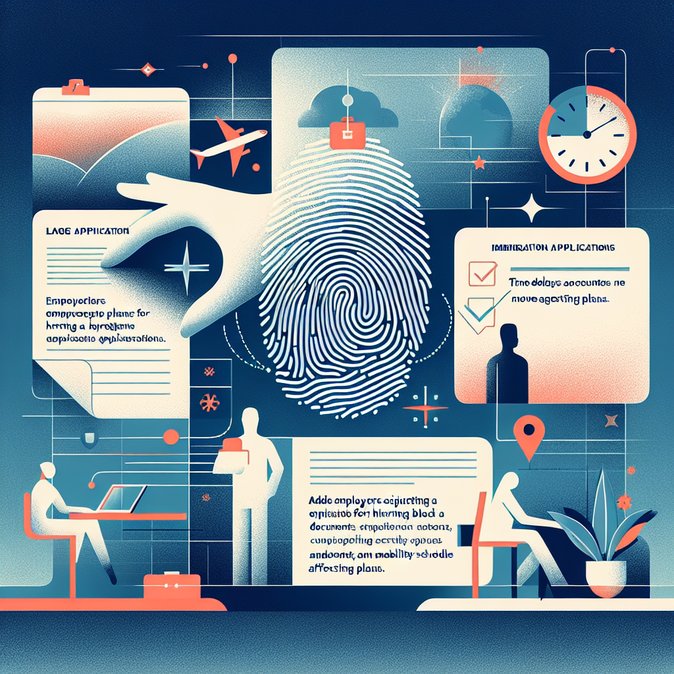
U.S. Citizenship and Immigration Services (USCIS) has quietly rolled out a new security-vetting protocol that requires the agency to re-submit fingerprints already on file for virtually every immigration application that was still pending on 27 April 2026.
![USCIS begins re-running fingerprints on all pending immigration cases, slowing adjudications]()
For applicants and employers looking to stay ahead of these processing shifts, VisaHQ offers an easy way to monitor case requirements, secure alternative travel documents and get real-time updates. The company’s online portal (https://www.visahq.com/united-states/) walks users through document checklists, timeline estimates and contingency options—support that can be invaluable while USCIS works through its newly expanded fingerprint backlog.
According to internal guidance seen by practitioners and first reported by Envoy Global, the Federal Bureau of Investigation (FBI) will compare the re-run prints against criminal and national-security databases using upgraded matching algorithms. The change affects adjustment-of-status (I-485) filings, naturalisation (N-400) cases, most family and employment petitions, asylum applications and other categories that normally clear the FBI fingerprint check only once. USCIS told media outlets that no new biometrics appointments are being scheduled; instead, the agency is recycling the existing digital prints it already holds. While that limits the burden on applicants, it also means tens of millions of files must cycle through FBI systems a second time, creating a temporary adjudications bottleneck. Corporate immigration managers are already reporting slower case movement. Adjustment-of-status receipts that had been showing a two-to-three-month processing window on the USCIS dashboard are now projecting four to six months. Attorneys are advising employers to update foreign national employees who were counting on work-travel (EAD/AP) benefits tied to those filings and to extend underlying H-1B or L-1 status where feasible. USCIS has not published a formal Federal Register notice, but it did acknowledge the practice change during a stakeholder call on 2 May. Officials said the review was mandated by the Department of Homeland Security’s 2025 Screening & Vetting Implementation Plan after a classified audit found that several terrorism-related hits had been missed during the initial processing of older cases. The agency expects the backlog created by the re-checks to clear "within 90 days" and says newly filed cases will be routed through the new workflow only after the legacy backlog is complete. For employers, the most practical step is to build additional slack into global-mobility timelines. Adjustment applicants whose green-card interviews were expected this summer may now be looking at autumn. Foreign nationals travelling internationally should keep valid underlying visas or advance parole documents in hand, as last-minute renewals could be delayed. USCIS has not offered premium-processing relief for the affected case types, so proactive planning – and clear employee communication – will be essential until the agency publishes more definitive metrics on the new vetting cycle.

For applicants and employers looking to stay ahead of these processing shifts, VisaHQ offers an easy way to monitor case requirements, secure alternative travel documents and get real-time updates. The company’s online portal (https://www.visahq.com/united-states/) walks users through document checklists, timeline estimates and contingency options—support that can be invaluable while USCIS works through its newly expanded fingerprint backlog.
According to internal guidance seen by practitioners and first reported by Envoy Global, the Federal Bureau of Investigation (FBI) will compare the re-run prints against criminal and national-security databases using upgraded matching algorithms. The change affects adjustment-of-status (I-485) filings, naturalisation (N-400) cases, most family and employment petitions, asylum applications and other categories that normally clear the FBI fingerprint check only once. USCIS told media outlets that no new biometrics appointments are being scheduled; instead, the agency is recycling the existing digital prints it already holds. While that limits the burden on applicants, it also means tens of millions of files must cycle through FBI systems a second time, creating a temporary adjudications bottleneck. Corporate immigration managers are already reporting slower case movement. Adjustment-of-status receipts that had been showing a two-to-three-month processing window on the USCIS dashboard are now projecting four to six months. Attorneys are advising employers to update foreign national employees who were counting on work-travel (EAD/AP) benefits tied to those filings and to extend underlying H-1B or L-1 status where feasible. USCIS has not published a formal Federal Register notice, but it did acknowledge the practice change during a stakeholder call on 2 May. Officials said the review was mandated by the Department of Homeland Security’s 2025 Screening & Vetting Implementation Plan after a classified audit found that several terrorism-related hits had been missed during the initial processing of older cases. The agency expects the backlog created by the re-checks to clear "within 90 days" and says newly filed cases will be routed through the new workflow only after the legacy backlog is complete. For employers, the most practical step is to build additional slack into global-mobility timelines. Adjustment applicants whose green-card interviews were expected this summer may now be looking at autumn. Foreign nationals travelling internationally should keep valid underlying visas or advance parole documents in hand, as last-minute renewals could be delayed. USCIS has not offered premium-processing relief for the affected case types, so proactive planning – and clear employee communication – will be essential until the agency publishes more definitive metrics on the new vetting cycle.