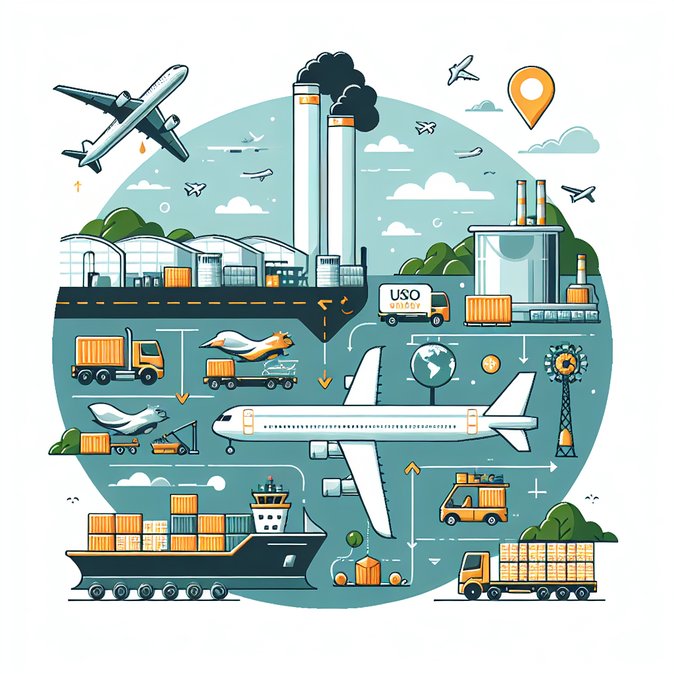
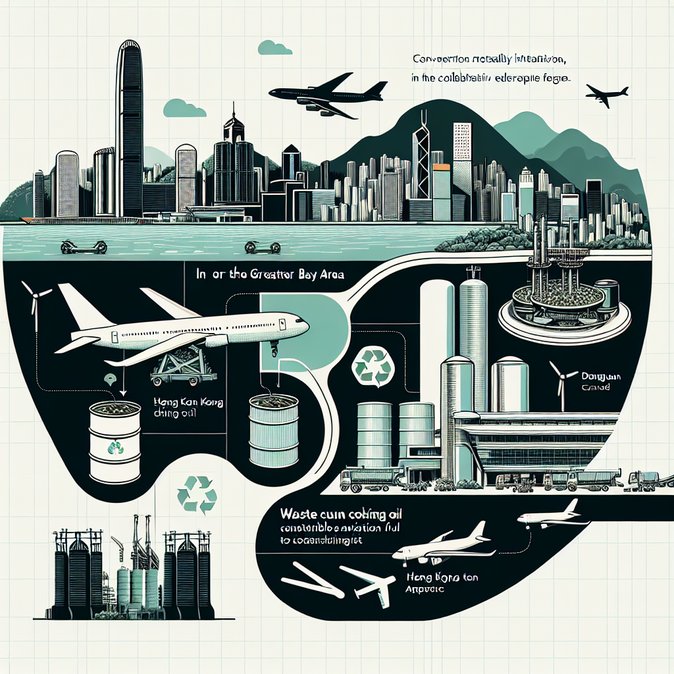
Hong Kong moved a step closer to decarbonising regional air travel on 5 May when Chief Executive John Lee witnessed the signing of a Memorandum of Understanding (MOU) with the Dongguan Municipal Government and home-grown bio-refiner EcoCeres. The three-way pact lays the groundwork for a sustainable-aviation-fuel (SAF) value-chain straddling both sides of the boundary: used cooking oil collected in Hong Kong and neighbouring mainland cities will be converted in Dongguan into SAF that meets ASTM-certified standards and can be uplifted at Hong Kong International Airport.
![Hong Kong and Dongguan ink landmark agreement to build Greater Bay Area sustainable aviation-fuel hub]()
For companies and flight departments shuttling crews and executives around the Greater Bay Area, navigating ever-changing travel and customs requirements can be as challenging as meeting sustainability targets. VisaHQ’s Hong Kong portal (https://www.visahq.com/hong-kong/) simplifies visa and passport processing, offers real-time status tracking, and keeps travelers compliant with new “green corridor” rules—ensuring that paperwork never becomes a bottleneck to greener operations.
Although the agreement is commercial in nature, the policy element is significant. Both governments committed to “policy alignment” on customs clearance, product certification and cross-boundary logistics—areas that have often slowed the movement of hazardous or tax-sensitive fuel products. Officials said dedicated “green corridors” will be created at land checkpoints so that tanker trucks carrying waste oil and finished SAF can move under a pre-notification system, reducing border dwell time to under two hours. For multinational companies operating regional fleets or relying on corporate shuttles, the availability of locally produced SAF could translate into lower Scope 3 emissions and fewer supply-chain shocks. Cathay Pacific, Asia Jet and several corporate flight departments have all signed letters of intent to purchase the first batches once production comes on-stream in 2027. Analysts at CAPA Centre for Aviation estimate that HKIA could replace up to 30 percent of conventional jet kerosene with SAF by 2030 if similar regional production lines come online. The project also dovetails with the Hong Kong SAR’s Climate Action Plan 2050 and Beijing’s target of peak aviation emissions by 2035. By locating primary processing in Dongguan—where land and utilities are cheaper—while keeping finance, insurance and R&D functions in Hong Kong, the partnership showcases the “one base, two jurisdictions” model the Greater Bay Area is keen to replicate in other mobility-related industries such as electric-vehicle charging and hydrogen bunkering. Practical takeaway for mobility managers: expect HKIA fuel suppliers to begin offering SAF blend options on long-haul contracts from late-2027. Companies with in-house travel programmes should monitor future government incentives—rumoured to include duty rebates and carbon-credit multipliers—for early adopters of SAF-powered travel.
For companies and flight departments shuttling crews and executives around the Greater Bay Area, navigating ever-changing travel and customs requirements can be as challenging as meeting sustainability targets. VisaHQ’s Hong Kong portal (https://www.visahq.com/hong-kong/) simplifies visa and passport processing, offers real-time status tracking, and keeps travelers compliant with new “green corridor” rules—ensuring that paperwork never becomes a bottleneck to greener operations.
Although the agreement is commercial in nature, the policy element is significant. Both governments committed to “policy alignment” on customs clearance, product certification and cross-boundary logistics—areas that have often slowed the movement of hazardous or tax-sensitive fuel products. Officials said dedicated “green corridors” will be created at land checkpoints so that tanker trucks carrying waste oil and finished SAF can move under a pre-notification system, reducing border dwell time to under two hours. For multinational companies operating regional fleets or relying on corporate shuttles, the availability of locally produced SAF could translate into lower Scope 3 emissions and fewer supply-chain shocks. Cathay Pacific, Asia Jet and several corporate flight departments have all signed letters of intent to purchase the first batches once production comes on-stream in 2027. Analysts at CAPA Centre for Aviation estimate that HKIA could replace up to 30 percent of conventional jet kerosene with SAF by 2030 if similar regional production lines come online. The project also dovetails with the Hong Kong SAR’s Climate Action Plan 2050 and Beijing’s target of peak aviation emissions by 2035. By locating primary processing in Dongguan—where land and utilities are cheaper—while keeping finance, insurance and R&D functions in Hong Kong, the partnership showcases the “one base, two jurisdictions” model the Greater Bay Area is keen to replicate in other mobility-related industries such as electric-vehicle charging and hydrogen bunkering. Practical takeaway for mobility managers: expect HKIA fuel suppliers to begin offering SAF blend options on long-haul contracts from late-2027. Companies with in-house travel programmes should monitor future government incentives—rumoured to include duty rebates and carbon-credit multipliers—for early adopters of SAF-powered travel.