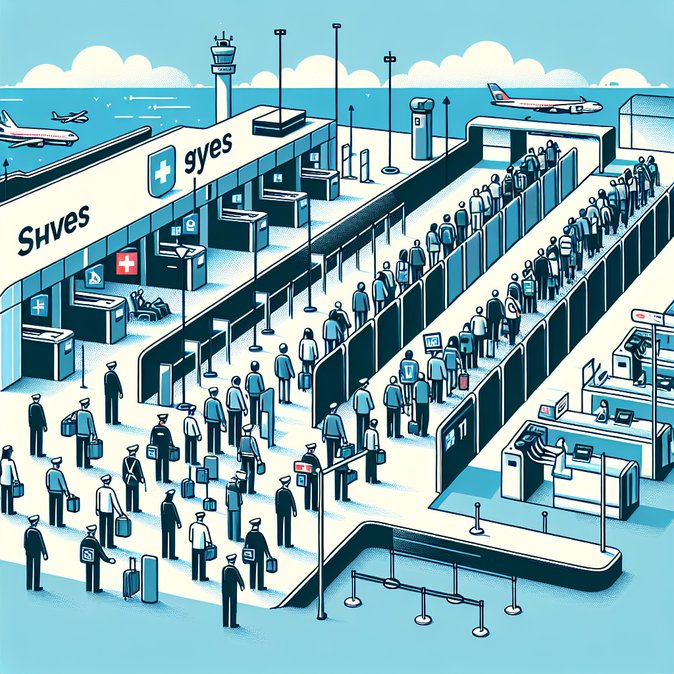
The European Commission on 4 May authorised Schengen members to temporarily bypass mandatory fingerprint and facial-recognition capture at external borders when queues exceed acceptable limits. The exceptional measure follows reports of hour-long lines since the Entry/Exit System (EES) became fully operational on 10 April. Under the ‘flex mode’ arrangement, border guards at Zurich and Geneva airports may revert to manual passport stamping during peak waves, provided that carrier data (API/PNR) continues to be transmitted and the central EES database remains active. Ireland and Cyprus, outside Schengen, are not covered.
![Brussels grants Schengen states—including Switzerland—flexibility to suspend biometric border checks]()
For travellers who want to be certain their paperwork is flawless before arriving at Swiss checkpoints, VisaHQ offers a convenient solution: its Switzerland page (https://www.visahq.com/switzerland/) aggregates the latest entry rules, monitors developments such as the EES flex mode, and facilitates visa and travel-authorisation applications for individuals and corporate clients alike, helping to smooth the journey even when border procedures change with little notice.
Brussels will review the congestion weekly and could reinstate full biometrics at short notice. Travel-risk consultancies recommend allowing at least 30 extra minutes for connections while procedures bed in, and warn that manual stamps could complicate day-count calculations for frequent travellers: stays will still be registered electronically, but the onus is on travellers to prove legal duration if stamps are unclear. The reprieve offers Swiss airports breathing space to complete the installation of 250 additional biometric kiosks ahead of the separate ETIAS travel-authorisation launch slated for October 2026. Companies should update employee travel policies to reflect possible manual processing and remind staff to keep boarding passes as evidence of Schengen entry dates. Airlines fear that if staffing shortages persist into the summer peak, the Commission may impose slot caps similar to those used during the 2022 post-pandemic chaos, potentially forcing schedule trims.
For travellers who want to be certain their paperwork is flawless before arriving at Swiss checkpoints, VisaHQ offers a convenient solution: its Switzerland page (https://www.visahq.com/switzerland/) aggregates the latest entry rules, monitors developments such as the EES flex mode, and facilitates visa and travel-authorisation applications for individuals and corporate clients alike, helping to smooth the journey even when border procedures change with little notice.
Brussels will review the congestion weekly and could reinstate full biometrics at short notice. Travel-risk consultancies recommend allowing at least 30 extra minutes for connections while procedures bed in, and warn that manual stamps could complicate day-count calculations for frequent travellers: stays will still be registered electronically, but the onus is on travellers to prove legal duration if stamps are unclear. The reprieve offers Swiss airports breathing space to complete the installation of 250 additional biometric kiosks ahead of the separate ETIAS travel-authorisation launch slated for October 2026. Companies should update employee travel policies to reflect possible manual processing and remind staff to keep boarding passes as evidence of Schengen entry dates. Airlines fear that if staffing shortages persist into the summer peak, the Commission may impose slot caps similar to those used during the 2022 post-pandemic chaos, potentially forcing schedule trims.