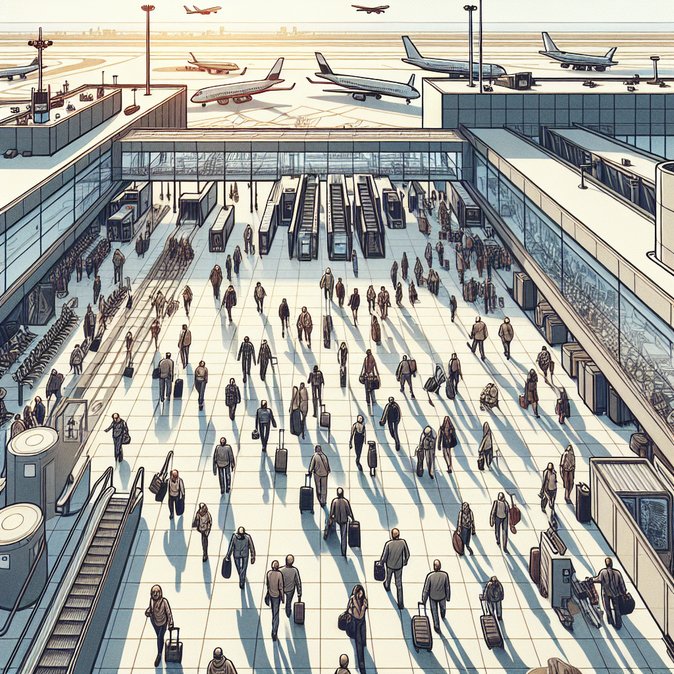
The European Commission announced on 2 May 2026 that member states may temporarily suspend certain biometric-capture functions of the new Entry/Exit System (EES) during peak periods to ease congestion. The decision follows complaints of 90-minute passport queues at several Mediterranean airports and ferry ports since the system’s full activation on 10 April. Although Helsinki Airport has escaped the worst bottlenecks—processing times average 45–60 seconds per third-country passenger—Finland’s Border Guard welcomed the “built-in flexibility,” noting that summer weekends can see 20,000 non-EU arrivals. Under the revised guidance, officers may switch to “light-touch” alphanumeric checks when e-gates are saturated, provided that fingerprints and facial images are captured on the traveller’s next Schengen entry. Airlines remain responsible for Advance Passenger Information accuracy and face €5,000 fines per incorrectly prescreened traveller. For global mobility teams, the change reduces the risk of missed connections on Finnair’s Asia-to-Europe ‘Midnight Wave’, which relies on 40-minute transfer windows. Travel managers should still advise visa-exempt employees (e.g., U.S., UK, Japan) to allow extra time on their first trip after 10 April, when a full biometric enrolment is mandatory and stored for three years.
![Brussels Grants Flexibility on EU Entry/Exit System, Offering Relief to Finnish Border Check-points]()
For organisations needing hands-on assistance with these evolving EU border requirements, VisaHQ can help streamline the entire process. Through its Finland portal (https://www.visahq.com/finland/), the platform offers real-time guidance on EES, ETIAS and traditional visa rules, and can arrange document checks, courier filing and status tracking for individual travellers or whole project teams.
Holders of new visas issued after that date are already in the EES database and can use automated lanes where available. The Commission stressed that the flexibility is not a suspension; member states must continue recording entry/exit data to combat overstays. Finland, where overstay rates are among the EU’s lowest at 0.2 percent, said it would apply the relief mainly during the late-July holiday peak and at land crossings with Norway, where camper-van traffic surges. Looking ahead, officials confirmed that the separate ETIAS pre-travel authorisation for visa-free nationals remains on track for “late 2026.” HR departments should therefore plan for a two-step compliance regime: pre-authorisation before departure and biometric verification on arrival. Early communication can prevent traveller panic and ensure project timelines remain on schedule.
For organisations needing hands-on assistance with these evolving EU border requirements, VisaHQ can help streamline the entire process. Through its Finland portal (https://www.visahq.com/finland/), the platform offers real-time guidance on EES, ETIAS and traditional visa rules, and can arrange document checks, courier filing and status tracking for individual travellers or whole project teams.
Holders of new visas issued after that date are already in the EES database and can use automated lanes where available. The Commission stressed that the flexibility is not a suspension; member states must continue recording entry/exit data to combat overstays. Finland, where overstay rates are among the EU’s lowest at 0.2 percent, said it would apply the relief mainly during the late-July holiday peak and at land crossings with Norway, where camper-van traffic surges. Looking ahead, officials confirmed that the separate ETIAS pre-travel authorisation for visa-free nationals remains on track for “late 2026.” HR departments should therefore plan for a two-step compliance regime: pre-authorisation before departure and biometric verification on arrival. Early communication can prevent traveller panic and ensure project timelines remain on schedule.