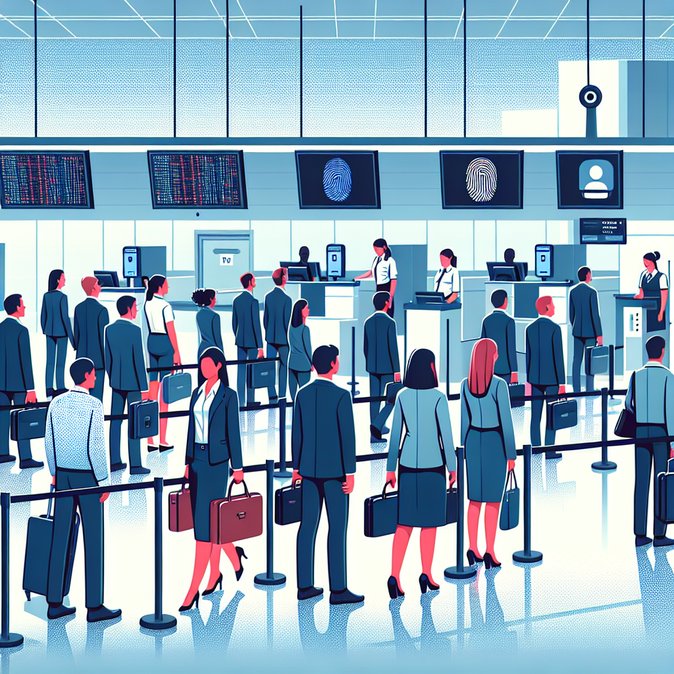
A Guardian report published 30 April chronicles the first-hand experiences of British passengers caught in multi-hour lines as EU airports grapple with the full roll-out of the Entry/Exit System (EES). Travellers arriving at Pisa, Lisbon and Athens described three- to four-hour waits while fingerprints were taken and software glitches were resolved. Some airports reverted to manual stamping, undermining the very rationale for EES. The article underscores a key mobility challenge: the Schengen Area processes roughly 200 million third-country passenger movements each year, and UK citizens now account for 14 % of that total. Even a modest 30-second increase per traveller adds the equivalent of 775,000 staff-hours annually—a resourcing burden most border agencies have yet to fund. Data-privacy advocates also voice concern that EES storage periods (three years for visa-exempt travellers) exceed UK GDPR standards.
![‘Nightmare’ Queues Highlight Early Pain Points of EU Entry/Exit System for UK Travellers]()
At this juncture, travellers and corporate mobility teams may find it useful to lean on a specialist such as VisaHQ. Through its UK portal (https://www.visahq.com/united-kingdom/), the company provides real-time updates on Schengen entry requirements, personalised document checklists, and optional concierge services that can pre-validate data before departure—minimising surprises at the EES kiosk or manual-stamping counter.
Companies whose assignees shuttle regularly between UK and EU offices must now reconcile competing data-protection regimes when logging staff movements. The Guardian piece notes that frequent-traveller kiosks being piloted in Paris-Charles-de-Gaulle cut registration time by 40 %, but those lanes are not open to leisure travellers or first-time EES users—groups that dominate peak-season volumes. Until throughput improves, mobility managers should steer employees to less-congested entry points (e.g., Porto instead of Lisbon) and encourage arrival outside the 10 a.m.-2 p.m. window, when anecdotal evidence shows the worst bottlenecks. Longer term, the EU plans to integrate EES with ETIAS pre-clearance, but that system has been delayed to late 2027. In the meantime, British businesses and universities sending staff or students to Europe must budget for longer transit times and the possibility of missed onward rail or domestic-air connections.

At this juncture, travellers and corporate mobility teams may find it useful to lean on a specialist such as VisaHQ. Through its UK portal (https://www.visahq.com/united-kingdom/), the company provides real-time updates on Schengen entry requirements, personalised document checklists, and optional concierge services that can pre-validate data before departure—minimising surprises at the EES kiosk or manual-stamping counter.
Companies whose assignees shuttle regularly between UK and EU offices must now reconcile competing data-protection regimes when logging staff movements. The Guardian piece notes that frequent-traveller kiosks being piloted in Paris-Charles-de-Gaulle cut registration time by 40 %, but those lanes are not open to leisure travellers or first-time EES users—groups that dominate peak-season volumes. Until throughput improves, mobility managers should steer employees to less-congested entry points (e.g., Porto instead of Lisbon) and encourage arrival outside the 10 a.m.-2 p.m. window, when anecdotal evidence shows the worst bottlenecks. Longer term, the EU plans to integrate EES with ETIAS pre-clearance, but that system has been delayed to late 2027. In the meantime, British businesses and universities sending staff or students to Europe must budget for longer transit times and the possibility of missed onward rail or domestic-air connections.