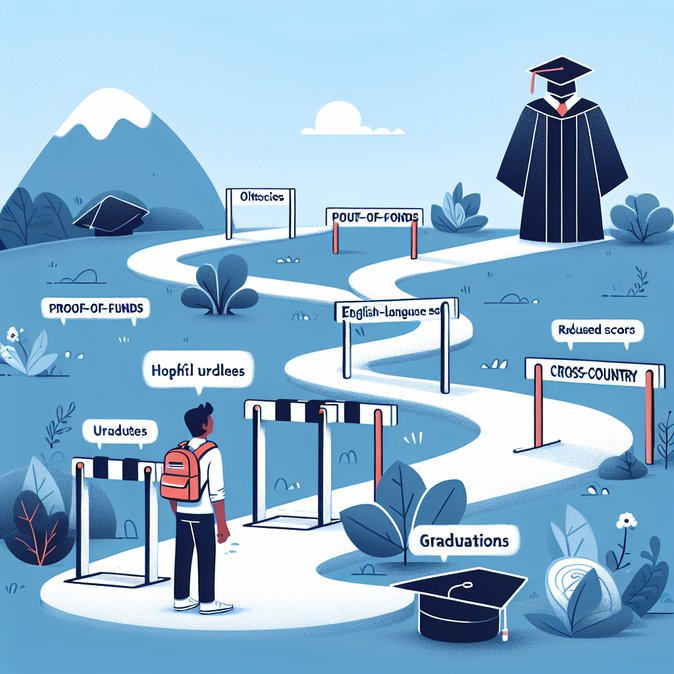
NDTV’s education desk warns that the wave of “New Visa Rules 2026” adopted by major study-destinations is reshaping the overseas-education playbook for Indian aspirants. Published on 27 April, the roundup details tighter financial-proof thresholds, higher language-test scores and reduced work-rights in countries such as Australia, Canada and the UK. Australia now requires proof of AUD 29,710 in annual living costs—up 17 percent—and has replaced its Genuine Temporary Entrant test with a broader “Genuine Student” assessment.
![‘New Visa Rules 2026’ Raise Financial and English-Language Bars for Indian Students Abroad]()
Indian students looking to navigate these shifting requirements can streamline paperwork and monitor policy updates through VisaHQ’s dedicated India portal (https://www.visahq.com/india/), which provides live country-specific checklists, fee calculators and end-to-end application support for study, work and travel visas.
Canada has imposed a national study-permit cap and axed the fast-track SDS pathway, while the UK is moving to limit dependants and shorten post-study work visas. For Indian families, the biggest hit is financial: education consultants estimate total first-year expenses for an average master’s programme in Australia will rise above INR 36 lakh (USD 43,000). Banks are already reporting a spike in secured-loan applications as students rush to lock in funding before further hikes. Universities are responding with targeted scholarships, but competition is intensifying. Experts advise applicants to align programmes closely with prior academics and career plans, as visa officers are scrutinising “course relevance” more strictly. Corporate learning & development managers should note that employer-sponsored master’s or executive-education pathways may now offer a cost-effective alternative to self-funded study abroad, especially where in-country work-rights are curtailed.

Indian students looking to navigate these shifting requirements can streamline paperwork and monitor policy updates through VisaHQ’s dedicated India portal (https://www.visahq.com/india/), which provides live country-specific checklists, fee calculators and end-to-end application support for study, work and travel visas.
Canada has imposed a national study-permit cap and axed the fast-track SDS pathway, while the UK is moving to limit dependants and shorten post-study work visas. For Indian families, the biggest hit is financial: education consultants estimate total first-year expenses for an average master’s programme in Australia will rise above INR 36 lakh (USD 43,000). Banks are already reporting a spike in secured-loan applications as students rush to lock in funding before further hikes. Universities are responding with targeted scholarships, but competition is intensifying. Experts advise applicants to align programmes closely with prior academics and career plans, as visa officers are scrutinising “course relevance” more strictly. Corporate learning & development managers should note that employer-sponsored master’s or executive-education pathways may now offer a cost-effective alternative to self-funded study abroad, especially where in-country work-rights are curtailed.