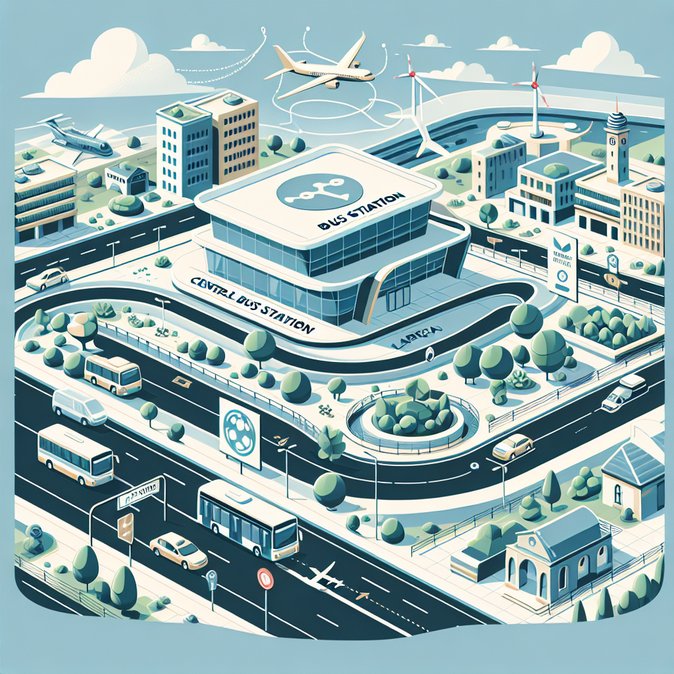
The Cypriot transport ministry on 27 April signed a €6.38 million (+VAT) contract with Iacovou Group for a new central bus station in Larnaca’s marina district—an infrastructure project identified as ‘critical’ in the city’s Sustainable Urban Mobility Plan. The interchange will link urban, regional and inter-city routes and, crucially for global mobility programmes, offer a dedicated corridor to Larnaca International Airport, the island’s main gateway for expatriate arrivals and departing assignees. Construction is scheduled to start in mid-May and is co-funded by the EU’s Thaleia 2021-2027 cohesion programme.
![€6.38 million Larnaca central bus hub to knit airport, city and inter-city networks]()
Meanwhile, for overseas employees and consultants who still need to arrange entry permits before touching down at Larnaca, VisaHQ’s Cyprus portal (https://www.visahq.com/cyprus/) streamlines visa applications, residence paperwork and passport renewals, letting mobility managers track every case in real time and match the station’s future transport efficiencies with equally frictionless border formalities.
Once operational in late 2027, the hub will feature real-time information systems, electric-bus charging bays and secure luggage facilities—modernisations expected to cut private-car use and reduce trip times between Larnaca’s business districts, the tourist seafront and the airport. For multinationals with operations in Cyprus’ east-coast tech and energy clusters, improved ground connectivity should ease ‘last-mile’ challenges that often inflate relocation costs. Assignees landing after 23:00 currently face limited public-transport options and a €20-€25 taxi fare; the new hub’s integrated night-bus services are projected to trim costs by up to 60 %. Travel-policy teams may wish to revisit ground-transfer allowances once the station comes online. The project also advances Cyprus’ climate commitments by nudging commuters away from single-occupancy vehicles. Companies enrolled in EU-level sustainability reporting (CSRD) can potentially count employee commuting via the new electrified bus fleet toward Scope 3 emission reductions, provided accurate modal-shift data are captured. While the station will not directly solve peak-summer congestion on the A3 highway, planners stress that predictable bus links give travellers more options if airlines consolidate flights into narrower operating windows, as happened after April’s security scare. Early awareness campaigns aimed at foreign residents and short-stay business visitors are likely once a detailed timetable is released in 2027.

Meanwhile, for overseas employees and consultants who still need to arrange entry permits before touching down at Larnaca, VisaHQ’s Cyprus portal (https://www.visahq.com/cyprus/) streamlines visa applications, residence paperwork and passport renewals, letting mobility managers track every case in real time and match the station’s future transport efficiencies with equally frictionless border formalities.
Once operational in late 2027, the hub will feature real-time information systems, electric-bus charging bays and secure luggage facilities—modernisations expected to cut private-car use and reduce trip times between Larnaca’s business districts, the tourist seafront and the airport. For multinationals with operations in Cyprus’ east-coast tech and energy clusters, improved ground connectivity should ease ‘last-mile’ challenges that often inflate relocation costs. Assignees landing after 23:00 currently face limited public-transport options and a €20-€25 taxi fare; the new hub’s integrated night-bus services are projected to trim costs by up to 60 %. Travel-policy teams may wish to revisit ground-transfer allowances once the station comes online. The project also advances Cyprus’ climate commitments by nudging commuters away from single-occupancy vehicles. Companies enrolled in EU-level sustainability reporting (CSRD) can potentially count employee commuting via the new electrified bus fleet toward Scope 3 emission reductions, provided accurate modal-shift data are captured. While the station will not directly solve peak-summer congestion on the A3 highway, planners stress that predictable bus links give travellers more options if airlines consolidate flights into narrower operating windows, as happened after April’s security scare. Early awareness campaigns aimed at foreign residents and short-stay business visitors are likely once a detailed timetable is released in 2027.