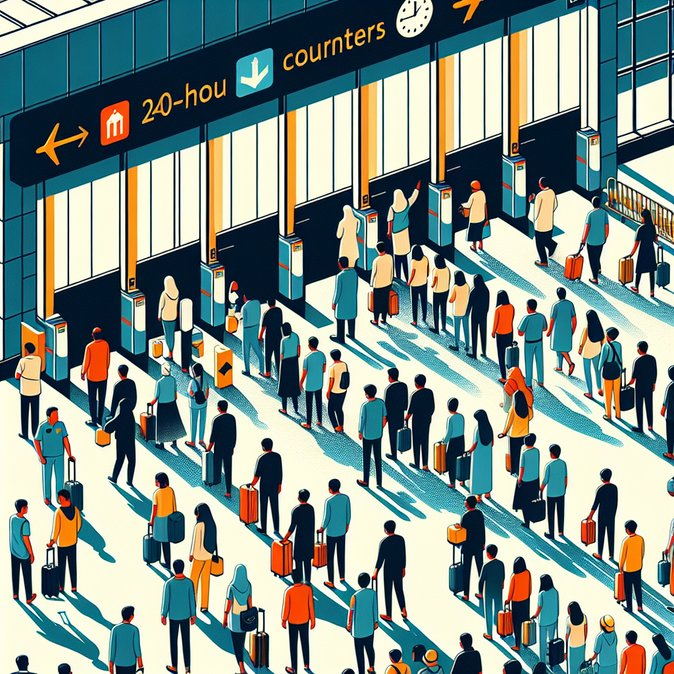
Beijing’s two international airports and three rail/road ports handled more than seven million border crossings between 1 January and the morning of 26 April, a 13 percent jump on the same period last year, according to the Beijing General Station of Exit-Entry Frontier Inspection. Foreign nationals accounted for 2.28 million of the movements, up 34 percent year-on-year, with more than 70 percent of them entering on China’s fast-growing visa-free or temporary-entry-permit schemes.
![Beijing rolls out one-stop visa-free transit services as 7 million border crossings logged in 2026]()
For those travelers—and the corporate travel departments that support them—who still require a traditional visa or simply want expert guidance through China’s rapidly evolving entry rules, VisaHQ offers a one-stop online portal (https://www.visahq.com/china/) that aggregates the latest requirements, provides step-by-step application assistance, and tracks submissions in real time, helping to eliminate paperwork headaches before the journey even begins.
To keep pace with the rebound, Beijing Capital and Daxing airports have opened integrated service desks that combine: (1) issuance of the 24-hour, 144-hour and new 240-hour transit-visa waivers; (2) on-site frontier inspections; and (3) multilingual assistance with China’s digital arrival card. Travelers who qualify can now clear immigration and receive a printed temporary entry permit in a single queue that officials say averages eight minutes during off-peak periods. The capital is also deploying roaming “blue-vest” liaison teams in arrival corridors to explain the 30-day visa-free policy that China unilaterally extends to 50 countries and to help first-time visitors activate mobile payment apps that require real-name verification. Airlines have been asked to highlight the new services in pre-departure announcements and to file advance passenger manifests at least 30 minutes earlier than in 2025 so that immigration authorities can run risk algorithms before the flight lands. For corporate travel managers, the one-stop model reduces the time-in-terminal for executives on rapid-fire visits and makes Beijing a more predictable transit hub for personnel rotation into North Asia. HR teams should still brief assignees that travelers without onward boarding passes or with passport damage may be sent to a secondary channel that can add 20-30 minutes to clearance. Companies planning large inbound events around the May Day holiday should factor the new eight-minute benchmark into airport-to-hotel transfer schedules but leave extra buffer for peak evening banks when inbound and domestic waves overlap.
For those travelers—and the corporate travel departments that support them—who still require a traditional visa or simply want expert guidance through China’s rapidly evolving entry rules, VisaHQ offers a one-stop online portal (https://www.visahq.com/china/) that aggregates the latest requirements, provides step-by-step application assistance, and tracks submissions in real time, helping to eliminate paperwork headaches before the journey even begins.
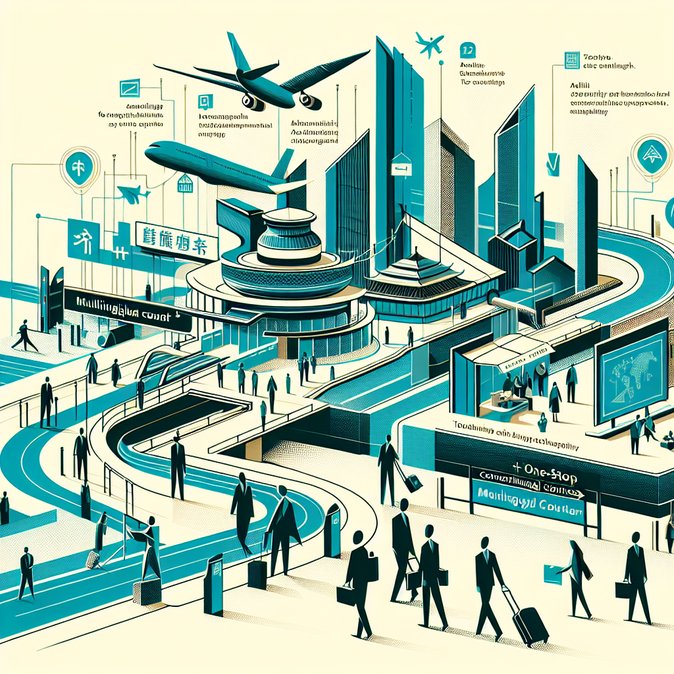
To keep pace with the rebound, Beijing Capital and Daxing airports have opened integrated service desks that combine: (1) issuance of the 24-hour, 144-hour and new 240-hour transit-visa waivers; (2) on-site frontier inspections; and (3) multilingual assistance with China’s digital arrival card. Travelers who qualify can now clear immigration and receive a printed temporary entry permit in a single queue that officials say averages eight minutes during off-peak periods. The capital is also deploying roaming “blue-vest” liaison teams in arrival corridors to explain the 30-day visa-free policy that China unilaterally extends to 50 countries and to help first-time visitors activate mobile payment apps that require real-name verification. Airlines have been asked to highlight the new services in pre-departure announcements and to file advance passenger manifests at least 30 minutes earlier than in 2025 so that immigration authorities can run risk algorithms before the flight lands. For corporate travel managers, the one-stop model reduces the time-in-terminal for executives on rapid-fire visits and makes Beijing a more predictable transit hub for personnel rotation into North Asia. HR teams should still brief assignees that travelers without onward boarding passes or with passport damage may be sent to a secondary channel that can add 20-30 minutes to clearance. Companies planning large inbound events around the May Day holiday should factor the new eight-minute benchmark into airport-to-hotel transfer schedules but leave extra buffer for peak evening banks when inbound and domestic waves overlap.