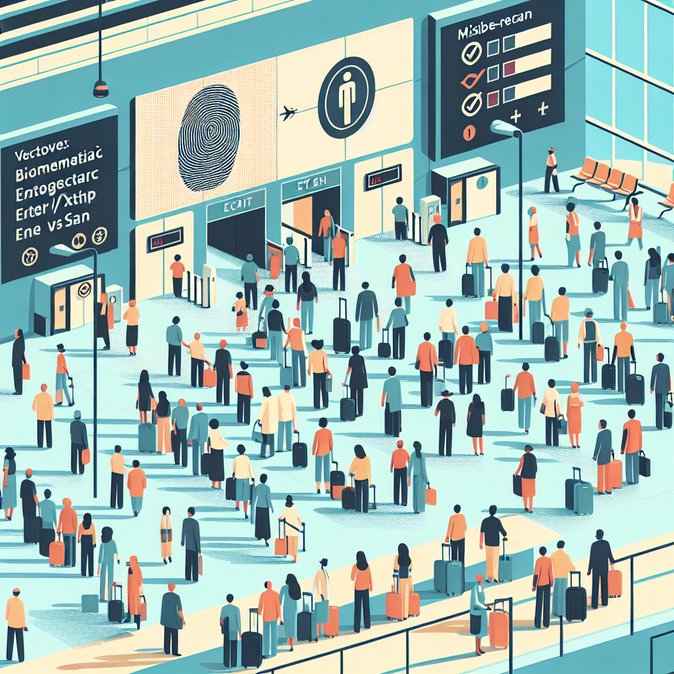
Just weeks after its full activation on April 10, 2026, the European Union’s biometric Entry/Exit System (EES) is already causing missed flights and hour-long queues for non-EU nationals—including thousands of Americans—according to a Travel Yahoo investigation published April 22. The new system scans fingerprints and facial data on first entry, replacing passport stamps with a digital log and automatically enforcing the 90/180-day rule. At Milan Linate, 122 passengers reportedly missed their connection when e-gates malfunctioned; similar bottlenecks were observed in Lisbon, Madrid-Barajas, and Paris-Orly. Airlines have begun advising U.S. passengers to arrive four hours before departure, a buffer usually reserved for long-haul flights.
![EU Entry/Exit System Creates Airport Chaos for U.S. Travelers as Summer Bookings Surge]()
For travelers who suddenly find themselves juggling extra paperwork or contesting an erroneous overstay, a service like VisaHQ can be a lifesaver. The platform offers real-time Schengen entry guidance, automated day-count tracking, and assistance with emergency passport renewals—everything you need to keep projects on schedule (more at https://www.visahq.com/united-states/).
Travel-insurance providers say claims for missed flights have doubled in the first ten days of EES operation. Why it matters for global mobility: U.S. employees on short-term assignments or “fly-in/fly-out” project work risk breaching the 90-day limit if exit data is recorded incorrectly. An erroneous overstay will automatically deny boarding on the next trip and could jeopardize Schengen visa approvals. HR teams should instruct travelers to keep boarding passes and to verify passport scans at exit kiosks. Compounding the issue, the companion ETIAS pre-travel authorization—now delayed until late 2026—will add another administrative layer next year. Companies may need to build an extra travel day into itineraries to accommodate border formalities, eroding productivity gains from hybrid work arrangements. EU officials acknowledge teething problems but insist the system will improve once frequent travelers complete initial biometric enrollment. Until then, U.S. corporates should brace for extended layovers, build slack into project timelines, and consider rail alternatives within the Schengen Area to avoid multiple border crossings.

For travelers who suddenly find themselves juggling extra paperwork or contesting an erroneous overstay, a service like VisaHQ can be a lifesaver. The platform offers real-time Schengen entry guidance, automated day-count tracking, and assistance with emergency passport renewals—everything you need to keep projects on schedule (more at https://www.visahq.com/united-states/).
Travel-insurance providers say claims for missed flights have doubled in the first ten days of EES operation. Why it matters for global mobility: U.S. employees on short-term assignments or “fly-in/fly-out” project work risk breaching the 90-day limit if exit data is recorded incorrectly. An erroneous overstay will automatically deny boarding on the next trip and could jeopardize Schengen visa approvals. HR teams should instruct travelers to keep boarding passes and to verify passport scans at exit kiosks. Compounding the issue, the companion ETIAS pre-travel authorization—now delayed until late 2026—will add another administrative layer next year. Companies may need to build an extra travel day into itineraries to accommodate border formalities, eroding productivity gains from hybrid work arrangements. EU officials acknowledge teething problems but insist the system will improve once frequent travelers complete initial biometric enrollment. Until then, U.S. corporates should brace for extended layovers, build slack into project timelines, and consider rail alternatives within the Schengen Area to avoid multiple border crossings.