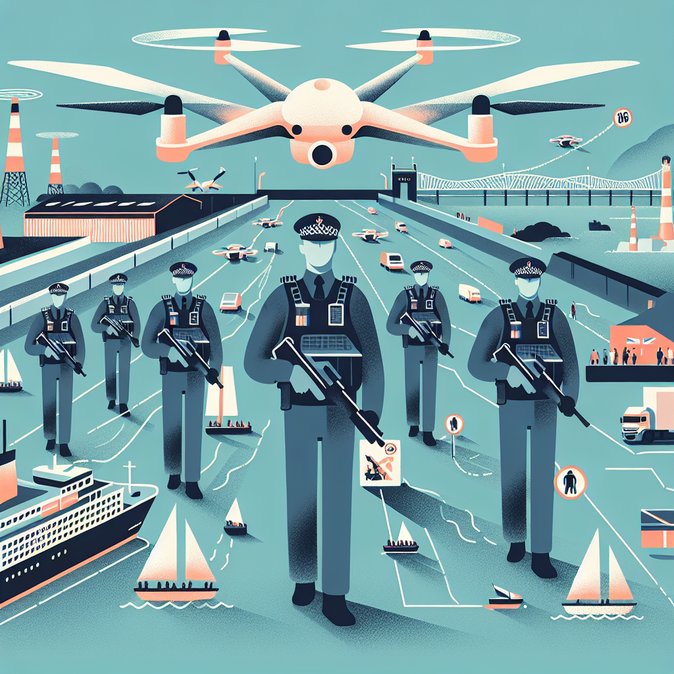
Britain and France have struck their most substantial migration-control accord since the 2018 Sandhurst Treaty, pledging up to £660 million (€766 million) to harden security on the French side of the English Channel. Home Secretary Shabana Mahmood and French Interior Minister Laurent Nuñez confirmed the deal on 23 April during a joint visit to Loon-Plage, where a new administrative detention centre will rise this summer.
![UK and France Agree £660 Million Channel Border Security Pact]()
Individuals and companies concerned about evolving cross-Channel entry requirements can lean on VisaHQ’s United Kingdom portal (https://www.visahq.com/united-kingdom/). The service tracks policy changes in real time and assists with visas, work permits, and travel documentation, helping travellers and HR teams stay compliant as the new Franco-British measures come into force.
Under the three-year pact London will release an initial £500 million to expand beach patrols, drone surveillance, heat-sensing cameras and helicopter overflights between Calais and Dunkirk. A further £160 million is results-based: if small-boat departures are not cut markedly within 12 months the UK can withhold the balance. French policing numbers dedicated to the Channel are slated to rise to 1,400 by 2029, up from roughly 800 today. For corporations that rotate staff or freight through Dover, Folkestone, or Eurotunnel terminals the agreement promises steadier flow-through times provided the extra French controls are coordinated with UK Border Force staffing. Logistics groups such as the Freight Transport Association welcomed the investment but warned that delays could worsen temporarily while new infrastructure is built. Politically, Prime Minister Keir Starmer is keen to demonstrate progress on a headline issue before the next general election. The Labour government hopes the results-driven funding mechanism will deflect criticism that earlier lump-sum transfers to Paris produced little measurable impact. If the programme curbs crossings it may also ease pressure on the UK’s asylum system, which paid £3.7 billion on hotel accommodation last year. Employers reliant on rapid cross-Channel movement—pharmaceuticals, automotive, and fish exports—should monitor construction timelines and factor in possible short-term traffic management around northern French ports.
Individuals and companies concerned about evolving cross-Channel entry requirements can lean on VisaHQ’s United Kingdom portal (https://www.visahq.com/united-kingdom/). The service tracks policy changes in real time and assists with visas, work permits, and travel documentation, helping travellers and HR teams stay compliant as the new Franco-British measures come into force.
Under the three-year pact London will release an initial £500 million to expand beach patrols, drone surveillance, heat-sensing cameras and helicopter overflights between Calais and Dunkirk. A further £160 million is results-based: if small-boat departures are not cut markedly within 12 months the UK can withhold the balance. French policing numbers dedicated to the Channel are slated to rise to 1,400 by 2029, up from roughly 800 today. For corporations that rotate staff or freight through Dover, Folkestone, or Eurotunnel terminals the agreement promises steadier flow-through times provided the extra French controls are coordinated with UK Border Force staffing. Logistics groups such as the Freight Transport Association welcomed the investment but warned that delays could worsen temporarily while new infrastructure is built. Politically, Prime Minister Keir Starmer is keen to demonstrate progress on a headline issue before the next general election. The Labour government hopes the results-driven funding mechanism will deflect criticism that earlier lump-sum transfers to Paris produced little measurable impact. If the programme curbs crossings it may also ease pressure on the UK’s asylum system, which paid £3.7 billion on hotel accommodation last year. Employers reliant on rapid cross-Channel movement—pharmaceuticals, automotive, and fish exports—should monitor construction timelines and factor in possible short-term traffic management around northern French ports.