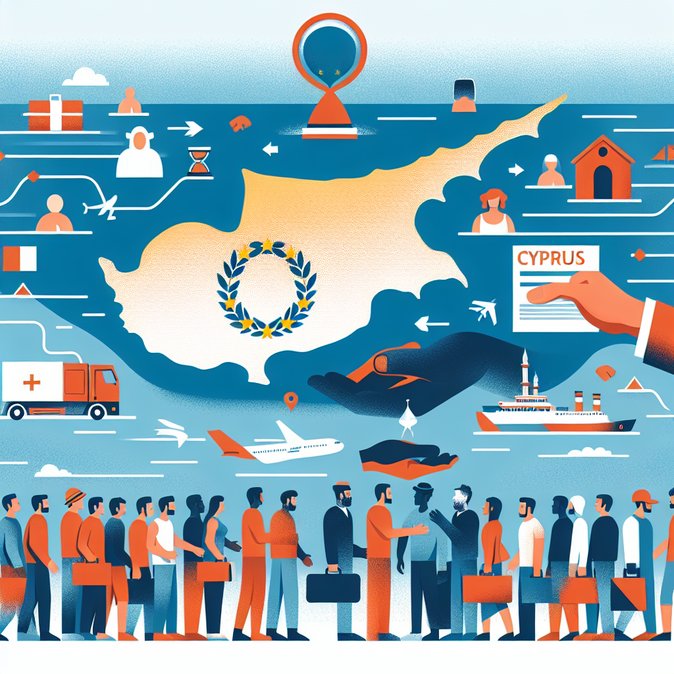
Under Cyprus’ rotating Presidency of the Council of the EU, labour ministers brokered a last-minute compromise with the European Parliament on 22 April that will overhaul the bloc’s 20-year-old rules on coordinating national social-security systems. The draft regulation amends Regulations 883/2004 and 987/2009, simplifying the way unemployment, family and long-term-care benefits are exported when citizens relocate or are posted to another member state. Key sticking points—such as eligibility periods for cross-border jobseekers and which country pays benefits to employees who telework in two or more states—were settled after Cyprus proposed a phased approach that gives national administrations three years to upgrade IT interfaces.
![Cyprus-led EU deal updates social security coordination for mobile workers]()
For companies and individuals grappling with the paperwork that still accompanies any cross-border move, VisaHQ can ease the load. Through its Cyprus portal (https://www.visahq.com/cyprus/), the platform provides step-by-step help with residence permits, work authorisations and related documentation, ensuring that mobility plans stay in sync with the newly reformed social-security rules.
The deal also clarifies when economically inactive EU citizens can be refused certain welfare payments, a long-running grievance of several Western and Nordic governments. For internationally mobile staff and their employers, the agreement promises faster benefit transfers and fewer paperwork bottlenecks. Payroll teams will be able to verify applicable legislation electronically, while HR departments will gain legal certainty over long-term remote-work arrangements that span multiple countries. The Commission estimates that delays and duplicate contributions currently cost businesses €1.5 billion a year—savings that could be redirected to talent development once the regulation takes effect, likely in early 2028. Cyprus’ Presidency has made labour mobility a flagship theme, arguing that smoother coordination is essential if smaller economies on Europe’s periphery are to attract specialised talent without losing social-security revenue. The provisional text now heads for lawyer-linguist review before formal adoption by the Council and Parliament later this summer.

For companies and individuals grappling with the paperwork that still accompanies any cross-border move, VisaHQ can ease the load. Through its Cyprus portal (https://www.visahq.com/cyprus/), the platform provides step-by-step help with residence permits, work authorisations and related documentation, ensuring that mobility plans stay in sync with the newly reformed social-security rules.
The deal also clarifies when economically inactive EU citizens can be refused certain welfare payments, a long-running grievance of several Western and Nordic governments. For internationally mobile staff and their employers, the agreement promises faster benefit transfers and fewer paperwork bottlenecks. Payroll teams will be able to verify applicable legislation electronically, while HR departments will gain legal certainty over long-term remote-work arrangements that span multiple countries. The Commission estimates that delays and duplicate contributions currently cost businesses €1.5 billion a year—savings that could be redirected to talent development once the regulation takes effect, likely in early 2028. Cyprus’ Presidency has made labour mobility a flagship theme, arguing that smoother coordination is essential if smaller economies on Europe’s periphery are to attract specialised talent without losing social-security revenue. The provisional text now heads for lawyer-linguist review before formal adoption by the Council and Parliament later this summer.