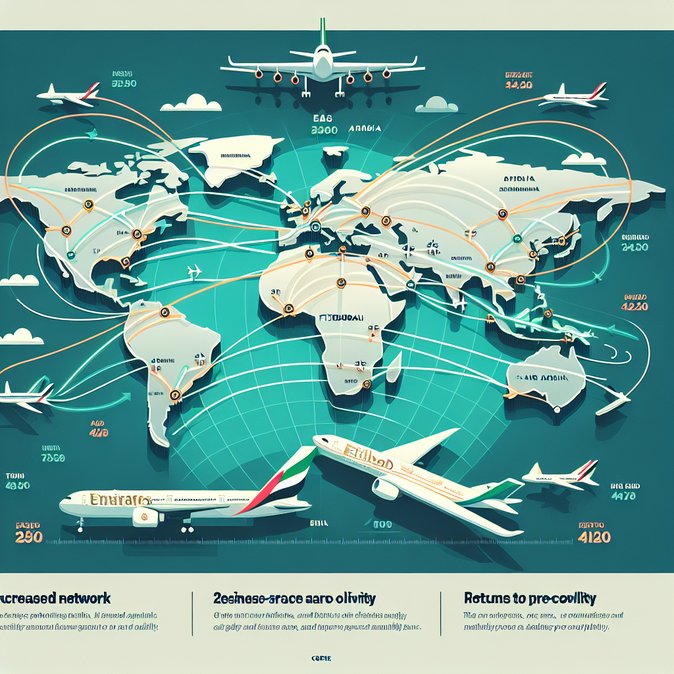
Just three weeks after regional airspace reopened, the UAE’s four home-grown carriers—Emirates, Etihad Airways, flydubai and Air Arabia—have rebuilt their combined passenger network to more than 420 cities across six continents. Arabian Business reported on 21 April 2026 that the figure marks a dramatic jump from around 250 active destinations at the start of the month, reflecting rapid schedule reinstatements once a US-Iran brokered ceasefire eased over-flight restrictions. For corporate mobility teams the rebound is significant: Emirates alone is now back to double-daily A380 service on the high-yield Dubai–New York JFK route, while flydubai has relaunched over 130 regional links that feed Emirates’ long-haul bank.
![UAE Airlines Restore Post-Ceasefire Network to 420 Destinations Worldwide]()
Whether your travellers are heading to a rebounding North American market or one of Etihad’s newly launched African stations, keeping on top of visa formalities is just as important as monitoring flight schedules. VisaHQ can take that burden off busy mobility teams: its dedicated UAE portal (https://www.visahq.com/united-arab-emirates/) offers up-to-the-minute entry requirements, online applications and expedited processing for more than 200 destinations, ensuring staff can pivot to new connections without compliance delays.
Etihad has prioritised Africa, announcing new services to Accra, Kinshasa and Lagos that open one-stop access from Abu Dhabi to fast-growing West African markets. Air Arabia, meanwhile, is rebuilding labour and VFR (visiting friends and relatives) corridors to South Asia and North Africa from its Sharjah base. Cargo belly-hold capacity is rising in parallel, restoring just-in-time supply chains for pharmaceuticals, electronics and perishables that had been forced onto slower sea-freight routings during the conflict. Travel-management companies say average UAE-origin fares have fallen 18 per cent week-on-week as seat supply returns. Despite the upbeat numbers, airlines warn that some frequencies remain lower than pre-conflict levels and travellers should continue to monitor flight status. Flexible rebooking and refund policies introduced in February remain in place until 15 June 2026. Mobility managers are advised to refresh employee-travel advisories and update automated approval workflows to reflect the expanded route map. In the medium term, network breadth is expected to top 500 destinations by Q4 2026 as deferred aircraft deliveries arrive and bilateral traffic rights talks resume—cementing Dubai and Abu Dhabi’s roles as pivotal hubs for intercontinental business travel.

Whether your travellers are heading to a rebounding North American market or one of Etihad’s newly launched African stations, keeping on top of visa formalities is just as important as monitoring flight schedules. VisaHQ can take that burden off busy mobility teams: its dedicated UAE portal (https://www.visahq.com/united-arab-emirates/) offers up-to-the-minute entry requirements, online applications and expedited processing for more than 200 destinations, ensuring staff can pivot to new connections without compliance delays.
Etihad has prioritised Africa, announcing new services to Accra, Kinshasa and Lagos that open one-stop access from Abu Dhabi to fast-growing West African markets. Air Arabia, meanwhile, is rebuilding labour and VFR (visiting friends and relatives) corridors to South Asia and North Africa from its Sharjah base. Cargo belly-hold capacity is rising in parallel, restoring just-in-time supply chains for pharmaceuticals, electronics and perishables that had been forced onto slower sea-freight routings during the conflict. Travel-management companies say average UAE-origin fares have fallen 18 per cent week-on-week as seat supply returns. Despite the upbeat numbers, airlines warn that some frequencies remain lower than pre-conflict levels and travellers should continue to monitor flight status. Flexible rebooking and refund policies introduced in February remain in place until 15 June 2026. Mobility managers are advised to refresh employee-travel advisories and update automated approval workflows to reflect the expanded route map. In the medium term, network breadth is expected to top 500 destinations by Q4 2026 as deferred aircraft deliveries arrive and bilateral traffic rights talks resume—cementing Dubai and Abu Dhabi’s roles as pivotal hubs for intercontinental business travel.