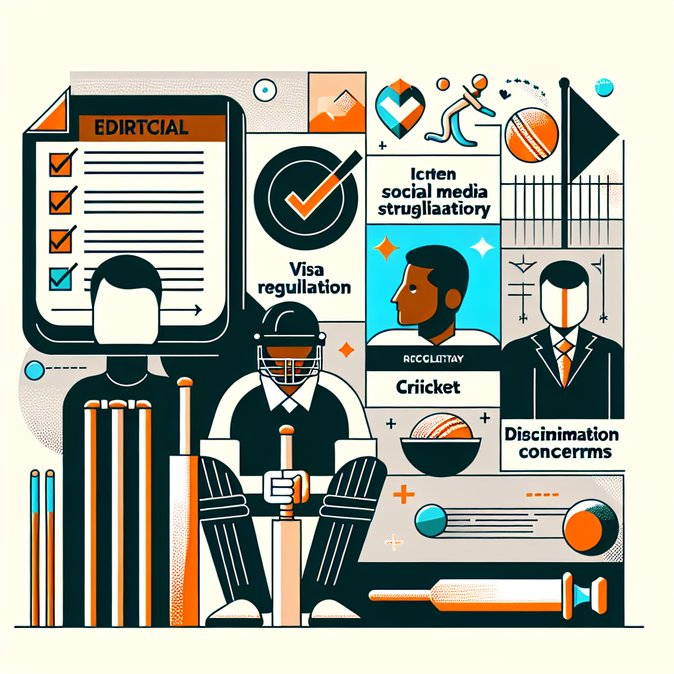
Australia’s opposition leader Angus Taylor has used the Coalition’s first major policy launch of 2026 to promise a migration reset that would make adherence to “Australian values” an enforceable visa condition and subject most applicants to social-media screening. The policy, unveiled late on 14 April, would also create a “safe-countries” list that blocks asylum claims from nations judged to have functioning liberal democracies, revive temporary-protection visas and order a retrospective review of 1,700 Gaza evacuees already in Australia. Within hours, Home Affairs Minister Tony Burke branded the plan “a decision about what sort of country we are”, warning it would replace Australia’s long-standing non-discriminatory migration framework with a subjective test wide open to political abuse. Cricket star Usman Khawaja—one of Australia’s most prominent Muslim athletes—called the proposal “appalling”, saying it would single out people of Islamic faith under the guise of values checks. Policy analysts note that most temporary and permanent applicants already sign an Australian values statement and pass character tests administered by the Department of Home Affairs and the Australian Security Intelligence Organisation. Turning that declaration into a visa condition would lower the threshold for cancellation and deportation and could generate significant compliance workload for employers who sponsor staff on 482 or 186 visas. Multinationals may need to introduce social-media due-diligence for secondees long before lodgement to avoid reputational or financial risk if posts are deemed non-compliant after arrival.
![Labor and sporting figures slam Coalition’s ‘Australian-values’ immigration overhaul]()
For organisations and travellers trying to keep pace with such shifting requirements, VisaHQ offers a streamlined way to verify the latest Australian visa rules, receive tailored application guidance, and access concierge support that can spot red flags—like potential social-media or “values” issues—before papers are filed. More information is available at https://www.visahq.com/australia/
Business groups fear the proposal will inject more uncertainty into talent pipelines just as skills shortages re-emerge in construction, clean energy and defence. “Screening subjectively defined ‘values’ will make processing times blow out and discourage critical workers,” the Australian Industry Group said in a briefing note. Immigration lawyers add that the plan raises rule-of-law questions because visa refusal or cancellation grounds are not clearly defined. For global mobility teams, the immediate takeaway is advisory rather than operational—the proposal has no legal effect unless the Coalition wins the next federal election—but assignees considering Australia postings are already asking how their online lives could be audited. Employers should prepare talking points that emphasise current law, reassure on privacy, and track the legislative debate closely over the coming months.

For organisations and travellers trying to keep pace with such shifting requirements, VisaHQ offers a streamlined way to verify the latest Australian visa rules, receive tailored application guidance, and access concierge support that can spot red flags—like potential social-media or “values” issues—before papers are filed. More information is available at https://www.visahq.com/australia/
Business groups fear the proposal will inject more uncertainty into talent pipelines just as skills shortages re-emerge in construction, clean energy and defence. “Screening subjectively defined ‘values’ will make processing times blow out and discourage critical workers,” the Australian Industry Group said in a briefing note. Immigration lawyers add that the plan raises rule-of-law questions because visa refusal or cancellation grounds are not clearly defined. For global mobility teams, the immediate takeaway is advisory rather than operational—the proposal has no legal effect unless the Coalition wins the next federal election—but assignees considering Australia postings are already asking how their online lives could be audited. Employers should prepare talking points that emphasise current law, reassure on privacy, and track the legislative debate closely over the coming months.