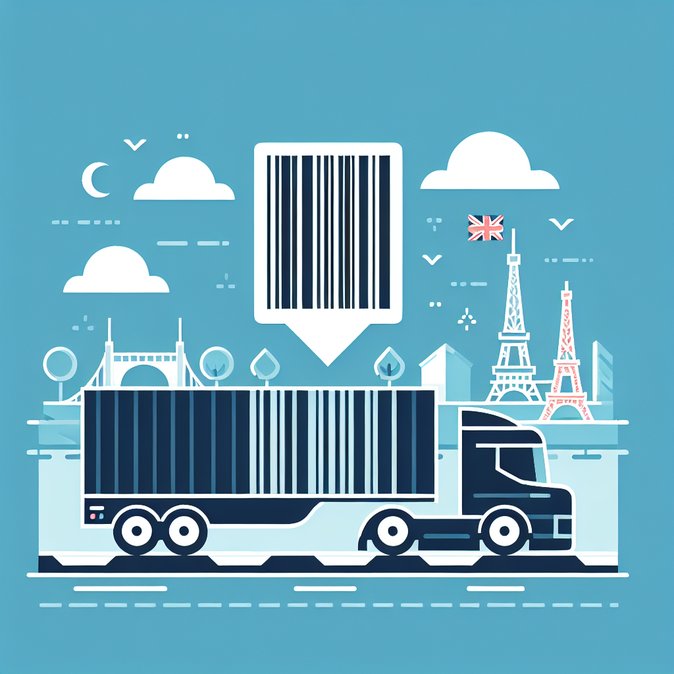
France’s much-trailed ‘Enveloppe Logistique Obligatoire’ (ELO) requirement officially comes into force on April 20 2026, marking the biggest procedural change at the post-Brexit Smart Border since the system was introduced in 2021. From the first sailing after midnight, every truck—loaded or empty—boarding a ferry or shuttle between the ports of Calais, Dunkerque and the Channel Tunnel terminal at Coquelles must present a single ELO barcode at check-in. The barcode links all export, import and safety declarations to the vehicle registration and sailing reference, allowing French Customs’ Brexit IT platform to pre-clear consignments before the truck reaches French territory.
Background: France’s customs authority (DGDDI) has spent two years phasing in ELO as an optional facilitation tool, generating more than 4,000 envelopes a week during the pilot phase.
The envelope consolidates Entry Summary Declarations filed in the EU’s new ICS2 system together with export and import MRNs into one scannable code.
Hauliers that continued to present multiple paper or PDF documents have until now faced longer dwell times at port kiosks and an elevated risk of secondary inspections.
![Cross-Channel Logistics Crunch Time: France Makes ELO Barcode Mandatory from Today]()
For operators that feel underprepared, VisaHQ can help streamline the transition. Its dedicated France portal (https://www.visahq.com/france/) offers easy-to-follow checklists, document pre-screening, and live status tracking so logistics managers, drivers, and business travellers can quickly verify that all declarations are in order before reaching the port.
Why now? The mandatory switch aligns French procedures with the EU’s second release of ICS2, which itself went live for maritime and road operators in March 2026. French Customs argues that full enforcement will cut average border transaction time per truck from 1 minute 20 seconds to under 45 seconds, freeing capacity ahead of the summer freight peak and the pressure expected during the Paris 2026 sporting calendar. Trade bodies on both sides of the Channel, however, warn that unprepared operators could face denied boarding and cascading queues on the UK road network if even a small percentage of vehicles arrive without a valid envelope.
Practical implications for business travellers and corporate logistics teams are immediate. Companies shipping exhibition material, just-in-time automotive parts or temperature-controlled pharmaceuticals must ensure their freight forwarders can generate ELOs and transmit the barcode to drivers’ smartphones before arrival at the port. Failure to do so may invalidate delivery time guarantees and jeopardise penalties written into service-level agreements.
Looking ahead, DGDDI plans to extend the envelope logic to air cargo via PARAFE freight e-gates at Paris-CDG in 2027, part of a broader strategy to automate risk-based controls while meeting new EU customs data requirements. For now, the April 20 deadline is a hard stop: French ferry operators confirmed they will refuse loading to any truck whose barcode fails to scan, shifting the compliance burden squarely onto exporters, logistics providers and their mobility managers.
Background: France’s customs authority (DGDDI) has spent two years phasing in ELO as an optional facilitation tool, generating more than 4,000 envelopes a week during the pilot phase.
The envelope consolidates Entry Summary Declarations filed in the EU’s new ICS2 system together with export and import MRNs into one scannable code.
Hauliers that continued to present multiple paper or PDF documents have until now faced longer dwell times at port kiosks and an elevated risk of secondary inspections.
For operators that feel underprepared, VisaHQ can help streamline the transition. Its dedicated France portal (https://www.visahq.com/france/) offers easy-to-follow checklists, document pre-screening, and live status tracking so logistics managers, drivers, and business travellers can quickly verify that all declarations are in order before reaching the port.
Why now? The mandatory switch aligns French procedures with the EU’s second release of ICS2, which itself went live for maritime and road operators in March 2026. French Customs argues that full enforcement will cut average border transaction time per truck from 1 minute 20 seconds to under 45 seconds, freeing capacity ahead of the summer freight peak and the pressure expected during the Paris 2026 sporting calendar. Trade bodies on both sides of the Channel, however, warn that unprepared operators could face denied boarding and cascading queues on the UK road network if even a small percentage of vehicles arrive without a valid envelope.
Practical implications for business travellers and corporate logistics teams are immediate. Companies shipping exhibition material, just-in-time automotive parts or temperature-controlled pharmaceuticals must ensure their freight forwarders can generate ELOs and transmit the barcode to drivers’ smartphones before arrival at the port. Failure to do so may invalidate delivery time guarantees and jeopardise penalties written into service-level agreements.
Looking ahead, DGDDI plans to extend the envelope logic to air cargo via PARAFE freight e-gates at Paris-CDG in 2027, part of a broader strategy to automate risk-based controls while meeting new EU customs data requirements. For now, the April 20 deadline is a hard stop: French ferry operators confirmed they will refuse loading to any truck whose barcode fails to scan, shifting the compliance burden squarely onto exporters, logistics providers and their mobility managers.