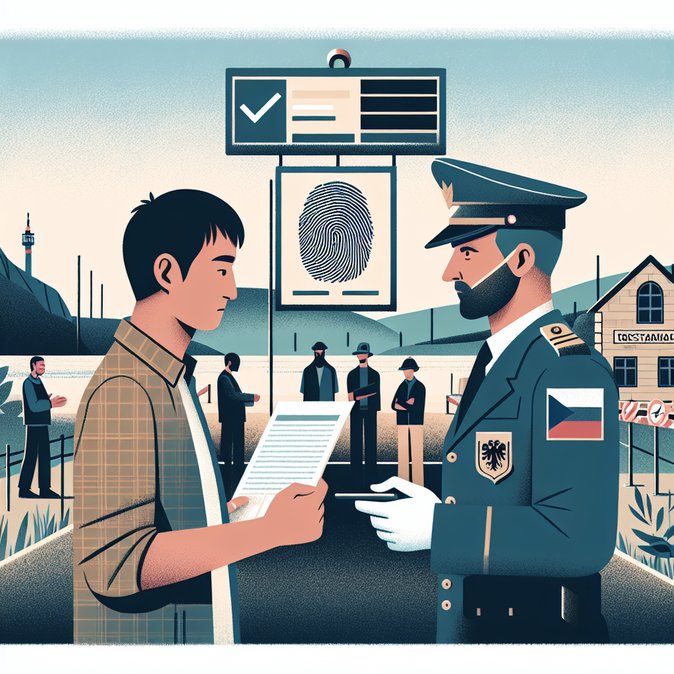
Czech border police confirmed on 17 April that they had briefly detained former Philippine congressman Zaldy Co after he tried to leave the Czech Republic for Germany without the correct travel documentation. According to statements reported by Manila-based GMA News, Co was stopped late Thursday evening at a road checkpoint near the Saxon frontier, part of a series of random controls that have become more frequent since the European Union’s Entry/Exit System (EES) went fully live across the Schengen Area on 10 April 2026. Under the EES, all non-EU citizens must provide fingerprint and facial scans the first time they enter the bloc. The data are stored for three years and automatically verified on every subsequent crossing. Travellers who have not enrolled, present an expired passport, or exceed their visa-free allowance can be flagged for secondary inspection or detention while their status is clarified. Czech officials say the system is designed to curb overstays and identity fraud but admit that roadside spot-checks can take up to 30 minutes when mobile biometric kits are used.
![Former Philippine lawmaker detained at Czech-German border highlights EU’s new biometric exit checks]()
For travellers who want to avoid exactly the kind of hiccup Co experienced, VisaHQ’s Czech Republic portal (https://www.visahq.com/czech-republic/) provides clear, up-to-date guidance on EES registration, visa requirements and passport validity rules, and can even coordinate courier submissions or fast-track appointments for corporate teams. Using their service can drastically reduce the risk of being delayed—or detained—during random checks within the Schengen zone.
For corporate mobility managers the incident is a timely reminder that Schengen’s once-invisible internal borders are no longer completely friction-free. Tourist buses, delivery vans and private cars can all be pulled over, and passengers without proof of EES registration—or with mismatched passport numbers—risk missing onward flights or meetings. Multinationals that regularly shuttle technicians or executives between Prague, Dresden and Munich are advising staff to carry printed evidence of their most recent EES transaction and to factor an extra hour of buffer time into itineraries. Immigration lawyers also note that the Charter of Fundamental Rights and Freedoms obliges Czech authorities to bring anyone held on immigration grounds before a judge within 48 hours. Co’s hearing was reportedly scheduled for Saturday morning. Although high-profile, the case is typical of the first week of full EES enforcement: dozens of travellers across Central Europe have been delayed or fined for failing to register biometric data at their initial point of entry. Looking ahead, Czech border police expect spot-checks to remain intensive until the summer holiday peak, when the workflow should stabilise as more third-country nationals become familiar with the new rules. Businesses planning cross-border projects this quarter are therefore urged to review staff documentation, audit shuttle-bus routes, and communicate the reality of on-the-road inspections—even inside the Schengen zone.

For travellers who want to avoid exactly the kind of hiccup Co experienced, VisaHQ’s Czech Republic portal (https://www.visahq.com/czech-republic/) provides clear, up-to-date guidance on EES registration, visa requirements and passport validity rules, and can even coordinate courier submissions or fast-track appointments for corporate teams. Using their service can drastically reduce the risk of being delayed—or detained—during random checks within the Schengen zone.
For corporate mobility managers the incident is a timely reminder that Schengen’s once-invisible internal borders are no longer completely friction-free. Tourist buses, delivery vans and private cars can all be pulled over, and passengers without proof of EES registration—or with mismatched passport numbers—risk missing onward flights or meetings. Multinationals that regularly shuttle technicians or executives between Prague, Dresden and Munich are advising staff to carry printed evidence of their most recent EES transaction and to factor an extra hour of buffer time into itineraries. Immigration lawyers also note that the Charter of Fundamental Rights and Freedoms obliges Czech authorities to bring anyone held on immigration grounds before a judge within 48 hours. Co’s hearing was reportedly scheduled for Saturday morning. Although high-profile, the case is typical of the first week of full EES enforcement: dozens of travellers across Central Europe have been delayed or fined for failing to register biometric data at their initial point of entry. Looking ahead, Czech border police expect spot-checks to remain intensive until the summer holiday peak, when the workflow should stabilise as more third-country nationals become familiar with the new rules. Businesses planning cross-border projects this quarter are therefore urged to review staff documentation, audit shuttle-bus routes, and communicate the reality of on-the-road inspections—even inside the Schengen zone.