
Barely six weeks after tariff turbulence stalled negotiations, New Delhi is sending a senior delegation to Washington next week to finalise the legal text of an interim India–US trade agreement. Officials told Business Standard on 15 April that market-access for IT services, data flows and temporary business visas will be “front-and-centre topics,” alongside goods tariffs re-calibrated after a recent US Supreme Court ruling. Industry insiders expect India to push for restoration of the H-1B ‘drop-box’ interview waiver, which ended last December and has since pushed appointment wait-times in Mumbai and Hyderabad above 500 days. New Delhi also wants clarity on the proposed US$250 ‘integrity fee’ that Congress is considering for work visas from high-volume countries—with India easily topping that list. For the United States, negotiators are likely to seek digital-trade disciplines resembling those in the Indo-Pacific Economic Framework, including commitments not to impose customs duties on cross-border data transfers—an area where India has been cautious because of planned local-storage rules. Mobility managers should watch the talks closely.
![Indian delegation heads to Washington as interim trade pact talks revive—services mobility high on agenda]()
Companies trying to keep pace with these shifting requirements can lean on visa experts such as VisaHQ, whose India portal (https://www.visahq.com/india/) streamlines U.S. consular applications, tracks appointment slots, and provides document-preparation assistance—helping firms move talent overseas quickly when negotiations like these unlock new opportunities.
A side-letter under discussion would oblige each country to publish quarterly visa-appointment capacity data and create a hot-line for firms moving critical personnel on 30-day notice. If agreed, the mechanism could become operational by October 2026, in time for year-end project surges. The delegation’s visit signals political will to wrap up the mini-deal before the US elections heat up. For Indian exporters and service suppliers facing rising global protectionism, even incremental gains on visa processing could translate into millions of dollars in saved project delays.

Companies trying to keep pace with these shifting requirements can lean on visa experts such as VisaHQ, whose India portal (https://www.visahq.com/india/) streamlines U.S. consular applications, tracks appointment slots, and provides document-preparation assistance—helping firms move talent overseas quickly when negotiations like these unlock new opportunities.
A side-letter under discussion would oblige each country to publish quarterly visa-appointment capacity data and create a hot-line for firms moving critical personnel on 30-day notice. If agreed, the mechanism could become operational by October 2026, in time for year-end project surges. The delegation’s visit signals political will to wrap up the mini-deal before the US elections heat up. For Indian exporters and service suppliers facing rising global protectionism, even incremental gains on visa processing could translate into millions of dollars in saved project delays.
More From India
View all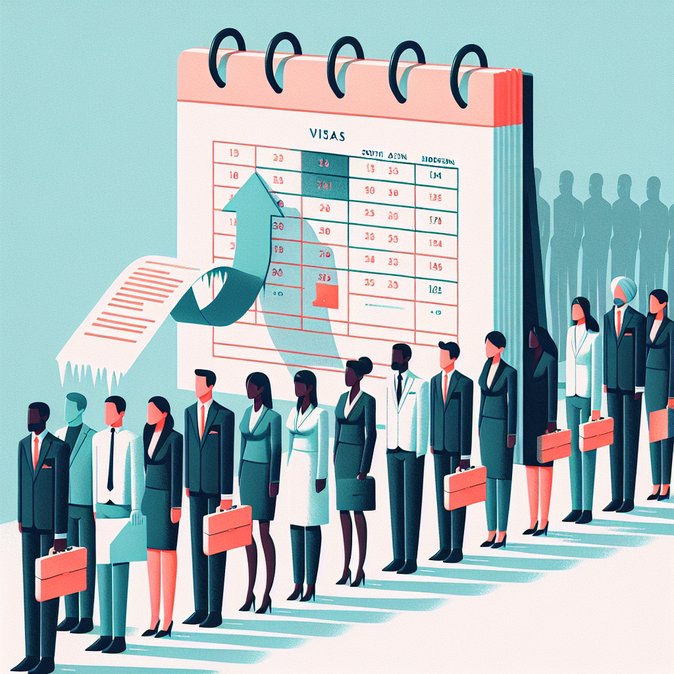
US May Visa Bulletin 2026 freezes employment-based green cards for India, warns of possible EB-5 retrogression

India–UK Free Trade Agreement slated for May launch promises smoother short-term visas for business travellers