
Panama customs
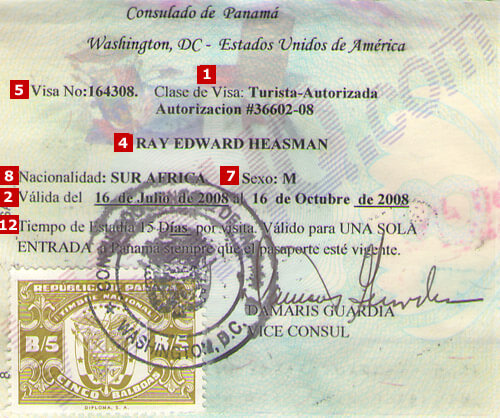
Apply for visa
Free import
• Travel luggage for your own use and not for sale: clothing, jewelry, handbags, toiletries and other personal items in reasonable quantities; portable electronics (for example 1 camera, 1 video camera, 1 laptop, 1 mobile phone); sports and camping equipment; portable musical instruments; books and recordings; and the hand tools of your trade.
• Medicines, food and portable medical devices in quantities that match your needs during the trip; a wheelchair, and children's strollers and toys.
• For travelers aged 18 or older: 500 g of tobacco products in any form, 5 L of wine, spirits or liquor, and up to 2 kg of sweets.
• Other goods (not part of your luggage) worth up to USD 500 per traveler, not for commercial use. This exemption can be used once every 6 months and only if you have been outside Panama for at least 72 hours.
• Every adult traveler, or the adult responsible for a family group, must complete the Traveler's Sworn Declaration (Declaración Jurada de Viajero) when entering and when leaving Panama. The digital form at declaraciondeviajero.ana.gob.pa can be filled in up to 3 days before travel; show the QR code it generates at customs.
Currency
• Cash, securities, negotiable documents (such as cheques), precious metals or any combination of these worth USD 10,000 or more (or the equivalent in other currencies) must be declared to customs on arrival. The adult responsible for a family group must declare the money carried by children under 18. Declaring is free of tax and fees; not declaring or making a false declaration is customs fraud, punishable by a fine, imprisonment and immediate seizure of the money.
Prohibited
• Electronic cigarettes, vapes, heated tobacco products and similar devices, with or without nicotine. Their import and sale are banned by Law 315 of 2022 and customs may seize them.
• Illegal drugs
Restricted
• Firearms and ammunition, including hunting and sporting guns, may be brought in only under Panama's firearms regulations, which are enforced by the Ministry of Public Security (DIASP). Check the rules before you travel and declare all weapons, ammunition and explosives to customs.
• Live animals, plants, fresh food, meat and other animal or plant products must be declared. They are inspected by the Agricultural Quarantine service of the Ministry of Agricultural Development (MIDA), and products without the required permits or certificates are seized and destroyed.
• Chemicals, pharmaceutical products and toxic products must be declared to customs.
• Dogs, cats and ferrets need an official zoosanitary export certificate from the country of origin, issued no more than 30 days before travel and apostilled or legalized by a Panamanian consulate. Dogs must be vaccinated against rabies, distemper, hepatitis, leptospirosis and parvovirus; cats against rabies, feline viral rhinotracheitis, calicivirus and panleukopenia; ferrets against rabies. The rabies vaccine must be given from 3 months of age and at least 30 days before travel for young animals, and be valid for adults. Record deworming and parasite treatments in the vaccination card.
• Notify the pet's arrival 3 to 5 working days in advance by emailing the entry request, the zoosanitary certificate and the vaccination card to the Ministry of Health ([email protected]). On arrival at Tocumen Airport, report to the MIDA Agricultural Quarantine office and the Ministry of Health Zoonosis Control office. Fees are paid in cash: USD 10 import licence per species and USD 15 inspection per animal (MIDA), plus USD 40 per animal (Ministry of Health), or USD 130 if strict home quarantine is required. Animals that do not meet the requirements are held or returned by the airline.
• Birds and other animals need import requirements from MIDA's National Animal Health Directorate, requested in advance.