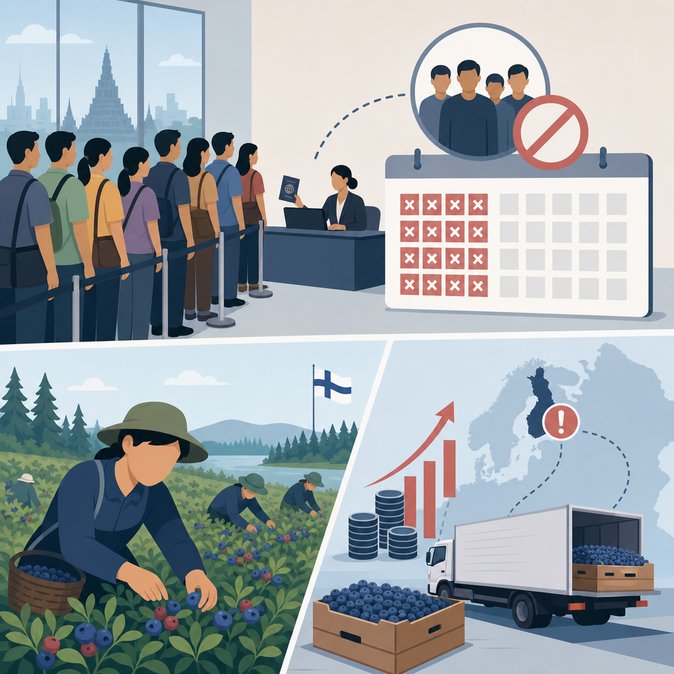
Finland’s wild-berry industry faces an unexpected labour crunch after thousands of Thai pickers—who normally account for the bulk of the seasonal workforce—were unable to secure visa-application slots at the Finnish embassy and outsourced visa centre in Bangkok. Industry association Arktiset Aromit told Finnish broadcaster Yle that only about half of the 3,200 workers contracted by major processor Pohjola Foods have managed to book appointments. Unless approvals accelerate in June, large swathes of Finland’s forests could go unharvested just as blueberries, lingonberries and cloudberries reach peak ripeness.
The visa log-jam comes at a sensitive time. Last year authorities uncovered alleged cartel activity and labour-rights abuses in the berry sector, prompting closer scrutiny of employer practices and a doubling of the electronic seasonal-work certificate fee to €200. Officials insist the higher fee is needed to cover processing costs, but recruiters say the price hike—and stricter documentation demands—have lengthened application interviews from 15 to 45 minutes, slashing daily throughput.
Amid these bottlenecks, third-party facilitators like VisaHQ can provide a partial workaround. The company’s online platform (https://www.visahq.com/finland/) helps applicants and their sponsors spot documentation gaps early, secure available appointment slots, and track status changes in real time, potentially shaving days off the process without bypassing any official requirements.
For Finnish food companies and their global customers, the repercussions could be felt far beyond the forest. Berries supply raw material for juice concentrates, dairy products and nutraceuticals exported across Europe and Asia. A shortfall in pickers would not only raise consumer prices but also jeopardise supply contracts, forcing firms to source frozen berries from Sweden or Poland at a premium.
![Visa Bottlenecks for Thai Seasonal Workers Threaten Finland’s 2026 Berry Harvest]()
Logistics providers warn that any last-minute charters arranged to fly pickers in could collide with summer holiday peaks at Helsinki-Vantaa, driving up air-freight costs.
Thai workers, many of whom return year after year, earn several times the rural Thai wage during Finland’s short July-August season. Delay or cancellation threatens that income lifeline.
In past years, the two governments have negotiated emergency quota increases or waived certain paperwork to keep the harvest on track, but the Finnish Ministry for Foreign Affairs says no such fast-track is planned this time, citing the need to prevent exploitation.
Employers are urging mobility teams to act quickly: pre-populate Schengen visa forms, schedule medicals, and fund biometric-passport renewals where needed. Without decisive coordination, an administrative bottleneck thousands of kilometres away could leave Finland’s iconic berries—worth an estimated €300 million a year—rotting on the forest floor.
The visa log-jam comes at a sensitive time. Last year authorities uncovered alleged cartel activity and labour-rights abuses in the berry sector, prompting closer scrutiny of employer practices and a doubling of the electronic seasonal-work certificate fee to €200. Officials insist the higher fee is needed to cover processing costs, but recruiters say the price hike—and stricter documentation demands—have lengthened application interviews from 15 to 45 minutes, slashing daily throughput.
Amid these bottlenecks, third-party facilitators like VisaHQ can provide a partial workaround. The company’s online platform (https://www.visahq.com/finland/) helps applicants and their sponsors spot documentation gaps early, secure available appointment slots, and track status changes in real time, potentially shaving days off the process without bypassing any official requirements.
For Finnish food companies and their global customers, the repercussions could be felt far beyond the forest. Berries supply raw material for juice concentrates, dairy products and nutraceuticals exported across Europe and Asia. A shortfall in pickers would not only raise consumer prices but also jeopardise supply contracts, forcing firms to source frozen berries from Sweden or Poland at a premium.

Logistics providers warn that any last-minute charters arranged to fly pickers in could collide with summer holiday peaks at Helsinki-Vantaa, driving up air-freight costs.
Thai workers, many of whom return year after year, earn several times the rural Thai wage during Finland’s short July-August season. Delay or cancellation threatens that income lifeline.
In past years, the two governments have negotiated emergency quota increases or waived certain paperwork to keep the harvest on track, but the Finnish Ministry for Foreign Affairs says no such fast-track is planned this time, citing the need to prevent exploitation.
Employers are urging mobility teams to act quickly: pre-populate Schengen visa forms, schedule medicals, and fund biometric-passport renewals where needed. Without decisive coordination, an administrative bottleneck thousands of kilometres away could leave Finland’s iconic berries—worth an estimated €300 million a year—rotting on the forest floor.