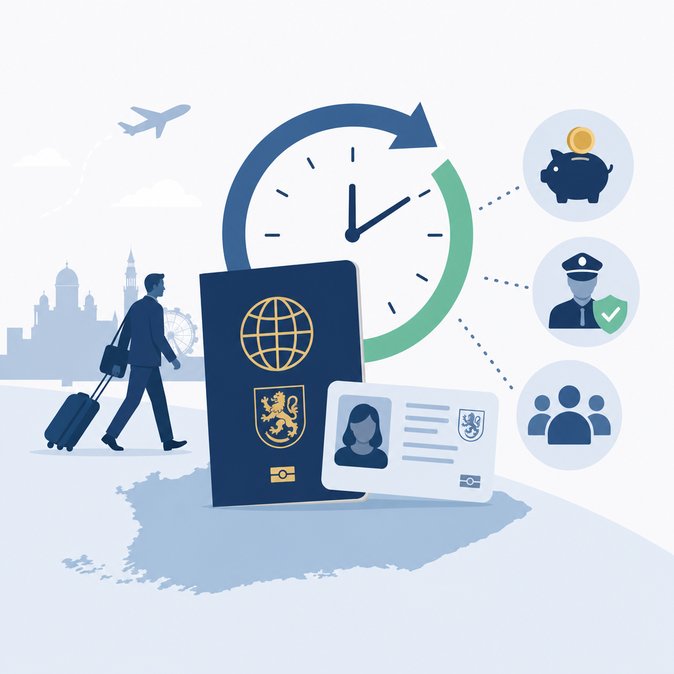
The Finnish Government has taken a decisive step toward modernising its travel-document regime by proposing that ordinary passports and national identity cards be valid for 10 years instead of the current five. In a draft bill submitted to Parliament on 28 May 2026, the Ministry of the Interior argues that longer-lasting documents will align Finland with common practice across Europe, lighten the administrative workload of the police, and save frequent travellers both time and money. Under the proposal, adult passports and ID cards issued after the reform’s entry into force—expected in early 2028—would carry a decade-long validity.
![Finland Moves to Double Passport and ID Card Validity to 10 Years]()
Travellers wondering how the forthcoming change affects their international plans can turn to VisaHQ for help. Through its Finland portal (https://www.visahq.com/finland/), the service monitors regulatory updates and provides hands-on assistance with passport renewals, visa applications and ancillary documents, ensuring both private citizens and corporate clients remain compliant as the ten-year validity is rolled out.
Passports for minors would still be capped at five years because rapidly changing facial features complicate automated border checks. To strengthen document security, applicants would have to appear in person at a police service point, and digital photos could only be transmitted by accredited photographers or studios with a business ID, ending the current self-upload option. The Interior Ministry estimates that the change will cut annual application volumes almost in half, freeing police resources for core duties such as crime prevention and border-control support during peak travel seasons. Despite slightly higher production costs for longer-life booklets, per-year expenses for citizens are forecast to fall. Exact fees will be set by a separate decree once the legislation is adopted. For multinational companies headquartered in Finland, the measure promises fewer HR touchpoints and lower compliance costs: employee travel documents will need replacing only every ten years, reducing downtime linked to renewals. Immigration lawyers also anticipate smoother residence-permit processing because applicants often submit passports for copying—longer validity means fewer rejected files due to imminent expiry. Airlines, too, stand to benefit from fewer last-minute document problems at check-in. Until the new rules enter into force, five-year documents remain standard, and existing passports and ID cards will stay valid until their printed expiry dates. The Ministry urges travellers to continue checking destination-country requirements, many of which demand six months’ validity on arrival even after Finland’s reform takes hold.

Travellers wondering how the forthcoming change affects their international plans can turn to VisaHQ for help. Through its Finland portal (https://www.visahq.com/finland/), the service monitors regulatory updates and provides hands-on assistance with passport renewals, visa applications and ancillary documents, ensuring both private citizens and corporate clients remain compliant as the ten-year validity is rolled out.
Passports for minors would still be capped at five years because rapidly changing facial features complicate automated border checks. To strengthen document security, applicants would have to appear in person at a police service point, and digital photos could only be transmitted by accredited photographers or studios with a business ID, ending the current self-upload option. The Interior Ministry estimates that the change will cut annual application volumes almost in half, freeing police resources for core duties such as crime prevention and border-control support during peak travel seasons. Despite slightly higher production costs for longer-life booklets, per-year expenses for citizens are forecast to fall. Exact fees will be set by a separate decree once the legislation is adopted. For multinational companies headquartered in Finland, the measure promises fewer HR touchpoints and lower compliance costs: employee travel documents will need replacing only every ten years, reducing downtime linked to renewals. Immigration lawyers also anticipate smoother residence-permit processing because applicants often submit passports for copying—longer validity means fewer rejected files due to imminent expiry. Airlines, too, stand to benefit from fewer last-minute document problems at check-in. Until the new rules enter into force, five-year documents remain standard, and existing passports and ID cards will stay valid until their printed expiry dates. The Ministry urges travellers to continue checking destination-country requirements, many of which demand six months’ validity on arrival even after Finland’s reform takes hold.