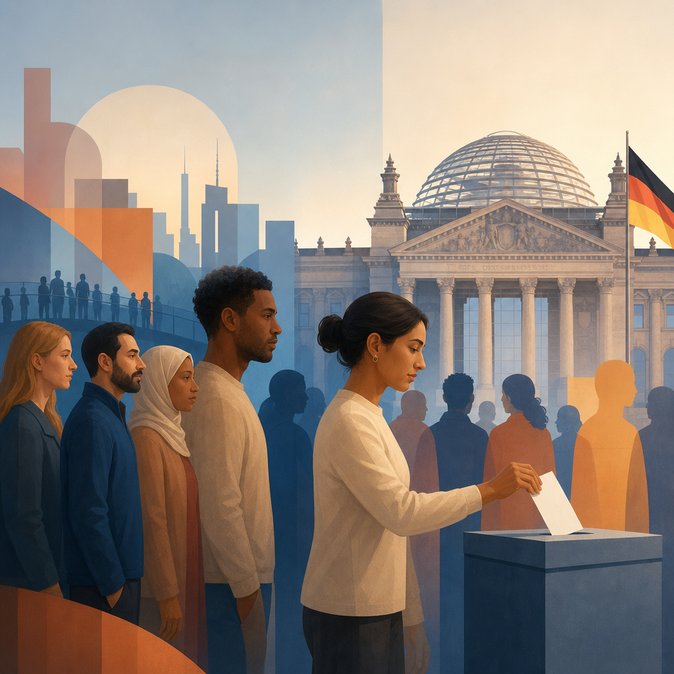
Germany’s opposition Die Linke (Left Party) ignited a fresh debate on immigrant integration on 28 May by tabling a Bundestag motion that would give all non-citizen residents the right to vote in federal, state and local elections once they have lived legally in the country for five years. The proposal would enfranchise roughly nine million third-country nationals and four million EU citizens who currently have voting rights only at municipal level. Left-party MP Ferat Koçak, himself the son of Kurdish migrants, framed the initiative as a response to a “democratic deficit” in an immigration nation where 14 million people pay taxes yet cannot influence legislation that affects them. Deputy parliamentary leader Clara Bünger added that expanding the franchise would reduce alienation and strengthen social cohesion at a time when far-right rhetoric is on the rise.
![German Left Party Pushes for Voting Rights After Five Years’ Residence]()
For individuals trying to navigate Germany’s evolving immigration landscape—whether arranging visas, extending residence permits, or planning a path to citizenship—VisaHQ provides step-by-step assistance. Its Germany portal (https://www.visahq.com/germany/) lets employers, HR teams and assignees check requirements, submit applications online and track processing in real time, streamlining compliance even as the rules continue to shift.
The plan triggered immediate push-back from conservatives. CDU interior spokesman Günter Krings called the idea “constitutionally absurd”, arguing that the Basic Law reserves Bundestag elections for “das Volk” – the German people. Legal scholars note that implementing the change would require a two-thirds constitutional amendment or a landmark ruling from the Federal Constitutional Court overturning its 1990 precedent on foreign voting rights. For global-mobility and HR teams, the proposal – even if unlikely to pass in the current legislative term – is a signpost of shifting political expectations among long-term expatriates, international assignees and foreign graduates who build their careers in Germany. Companies may face new employee-relations questions about political participation and integration support. It also dovetails with Germany’s 2024 citizenship reform, which cut the naturalisation waiting period to five years and legalised dual nationality. The debate is expected to continue in committee hearings before the summer recess. Whether or not the motion gains traction, it reinforces a broader trend: Germany is moving from a labour-migration model to one that seeks deeper civic inclusion of its foreign-born workforce.
For individuals trying to navigate Germany’s evolving immigration landscape—whether arranging visas, extending residence permits, or planning a path to citizenship—VisaHQ provides step-by-step assistance. Its Germany portal (https://www.visahq.com/germany/) lets employers, HR teams and assignees check requirements, submit applications online and track processing in real time, streamlining compliance even as the rules continue to shift.
The plan triggered immediate push-back from conservatives. CDU interior spokesman Günter Krings called the idea “constitutionally absurd”, arguing that the Basic Law reserves Bundestag elections for “das Volk” – the German people. Legal scholars note that implementing the change would require a two-thirds constitutional amendment or a landmark ruling from the Federal Constitutional Court overturning its 1990 precedent on foreign voting rights. For global-mobility and HR teams, the proposal – even if unlikely to pass in the current legislative term – is a signpost of shifting political expectations among long-term expatriates, international assignees and foreign graduates who build their careers in Germany. Companies may face new employee-relations questions about political participation and integration support. It also dovetails with Germany’s 2024 citizenship reform, which cut the naturalisation waiting period to five years and legalised dual nationality. The debate is expected to continue in committee hearings before the summer recess. Whether or not the motion gains traction, it reinforces a broader trend: Germany is moving from a labour-migration model to one that seeks deeper civic inclusion of its foreign-born workforce.