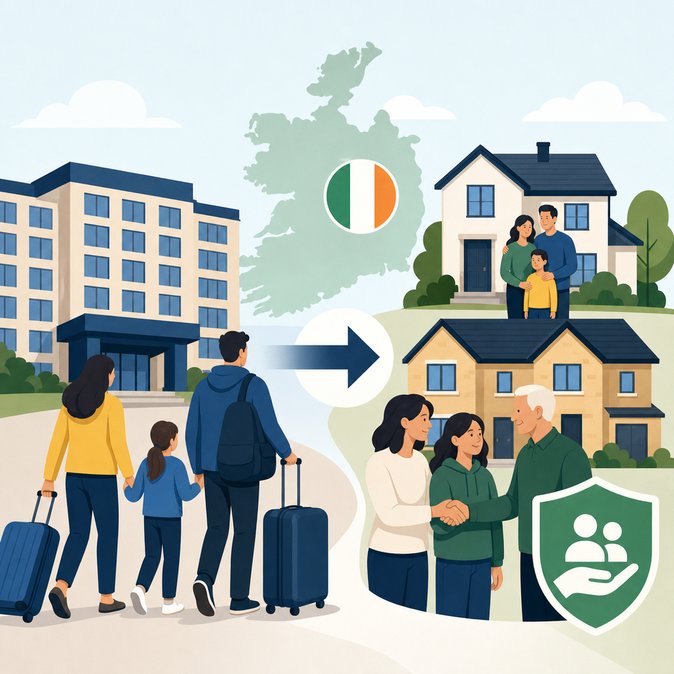
Alongside the launch of the Stamp 4 Transition Scheme, Ministers on 26 May 2026 confirmed that Ireland will begin withdrawing the costly system of State-contracted hotel accommodation that has housed tens of thousands of Ukrainian arrivals since 2022. The first contracts will terminate in August 2026, with all commercial hotel arrangements wrapped up by March 2027. The decision marks a pivot from emergency response to long-term integration. At present, about 16,000 Ukrainians live in hotels paid for by the Exchequer, a model that officials say is neither sustainable nor conducive to labour-market participation. Residents affected by the first phase will receive at least three months’ notice and will be offered case-management support delivered by the Irish Red Cross and the International Organisation for Migration.
![State-Funded Hotel Accommodation for Ukrainians to End by March 2027, Government Confirms]()
Amid all these shifts, both Ukrainian beneficiaries and Irish employers can streamline visa, residence-permit and document formalities through VisaHQ’s dedicated Ireland platform (https://www.visahq.com/ireland/). The service provides clear checklists, online submission tools and live status tracking, removing much of the administrative friction so that newcomers can focus on settling into permanent housing and finding work.
Financial incentives are built into the transition. From October 2026, the Accommodation Recognition Payment—available to Irish households hosting beneficiaries—will return to its pre-2023 level of €400 per month, encouraging community-based solutions over hotel stays. Once individuals secure private rentals or hosted placements, they will move onto the standard social-welfare safety net available to Irish citizens. For employers, the phase-out may unlock a geographically mobile workforce. Many Ukrainian hotel residents are restricted to rural or tourist-centric locations with limited public transport. Relocation to private housing closer to Ireland’s urban job hubs—especially Dublin, Cork and Galway—could ease recruitment bottlenecks in hospitality, logistics and healthcare. Mobility managers, however, should brace for short-term housing-market pressure as thousands seek leases in an already tight rental sector. The Department of Justice will publish contract-termination timetables in June and has urged businesses to liaise with relocation providers early. Companies sponsoring work permits for non-EEA hires may also see hotel capacity freed up for use in short-term corporate housing once Ukrainian bookings wind down.

Amid all these shifts, both Ukrainian beneficiaries and Irish employers can streamline visa, residence-permit and document formalities through VisaHQ’s dedicated Ireland platform (https://www.visahq.com/ireland/). The service provides clear checklists, online submission tools and live status tracking, removing much of the administrative friction so that newcomers can focus on settling into permanent housing and finding work.
Financial incentives are built into the transition. From October 2026, the Accommodation Recognition Payment—available to Irish households hosting beneficiaries—will return to its pre-2023 level of €400 per month, encouraging community-based solutions over hotel stays. Once individuals secure private rentals or hosted placements, they will move onto the standard social-welfare safety net available to Irish citizens. For employers, the phase-out may unlock a geographically mobile workforce. Many Ukrainian hotel residents are restricted to rural or tourist-centric locations with limited public transport. Relocation to private housing closer to Ireland’s urban job hubs—especially Dublin, Cork and Galway—could ease recruitment bottlenecks in hospitality, logistics and healthcare. Mobility managers, however, should brace for short-term housing-market pressure as thousands seek leases in an already tight rental sector. The Department of Justice will publish contract-termination timetables in June and has urged businesses to liaise with relocation providers early. Companies sponsoring work permits for non-EEA hires may also see hotel capacity freed up for use in short-term corporate housing once Ukrainian bookings wind down.
More From Ireland
View all
Ireland Creates ‘Stamp 4 Transition Scheme’ to Give 70,000 Ukrainians a Long-Term Immigration Pathway
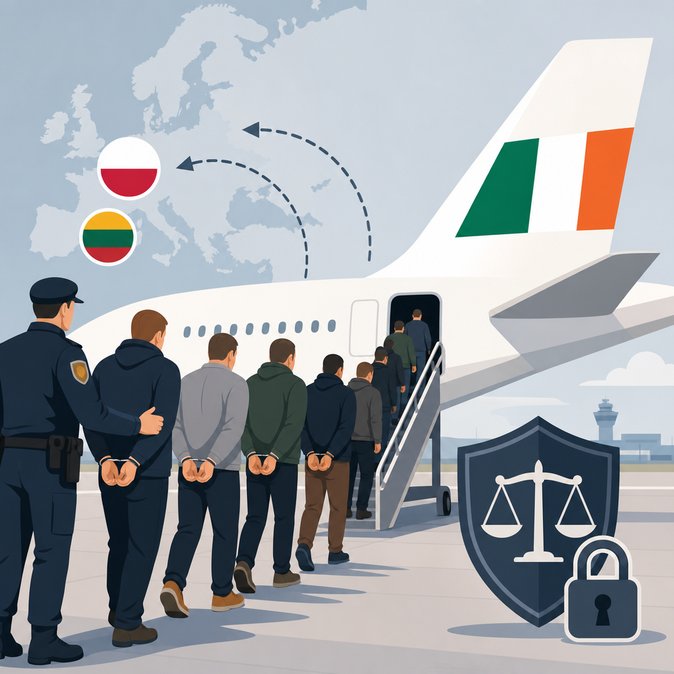
Ireland Removes 34 Convicted EU Nationals on Charter Flight in Largest Deportation Operation of 2026