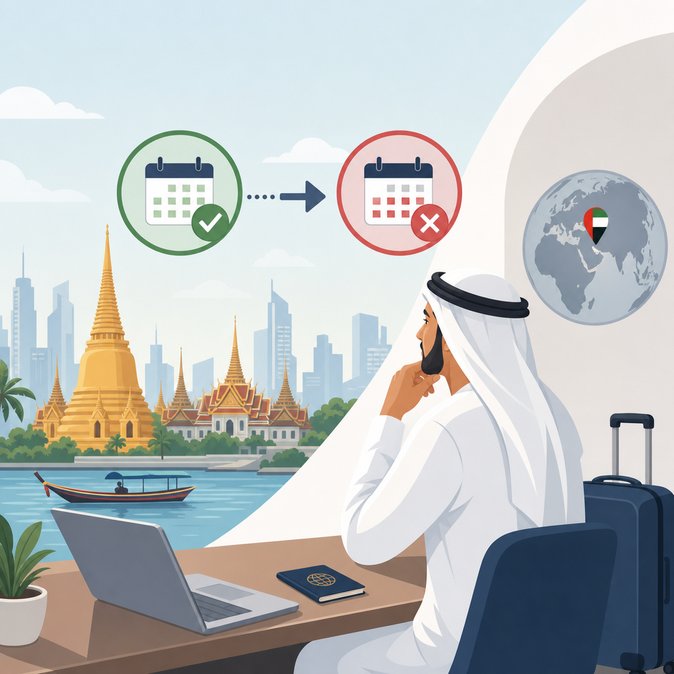
Thailand has rolled back its generous 60-day visa-exemption scheme, reinstating the traditional 30-day limit for citizens of 93 countries and territories, including the United Arab Emirates. The change was confirmed by a Cabinet spokesperson in Bangkok and reported in Middle East travel media on 22 May 2026. The two-month waiver was introduced in late 2024 to accelerate tourism recovery but, according to officials, has outlived its purpose and created overstays that strain immigration resources. The revised rule will take effect 15 days after its publication in the Royal Gazette, giving UAE residents with June travel plans a narrow window to adjust itineraries.
![Thailand cuts visa-free stay for Emirati visitors back to 30 days]()
For UAE residents scrambling to secure the right paperwork, VisaHQ’s online platform can manage Thai e-visa applications end-to-end—from document checks to embassy submission—and even offers live chat guidance; travellers can start the process at https://www.visahq.com/united-arab-emirates/
While the shorter stamp still covers most holiday and business-visitor needs, longer-stay segments—digital nomads, language students and retirees—will have to apply for e-visas or convert to education or special-tourist visas on arrival. Travel agencies in Dubai expect a surge in urgent e-visa filings and warn that processing may stretch beyond the typical three working days during the Eid travel spike. Importantly, Thai immigration will judge eligibility by passport, not UAE residency. A UAE resident with, say, a Pakistani or Nigerian passport must still secure the appropriate pre-arranged visa or, if eligible, a visa-on-arrival approval letter, which Thailand has simultaneously cut from 31 to four nationalities. Corporate mobility managers with staff on rotational assignments in Bangkok, Phuket and the Eastern Economic Corridor should audit existing travel rosters. Any stays exceeding 30 continuous days will either need mid-trip “visa runs” or a switch to the 90-day Special Tourist Visa (STV). Fines for overstaying are THB 500 (≈AED 50) per day, capped at THB 20,000, and can jeopardise future entry, so compliance messaging is urgent.

For UAE residents scrambling to secure the right paperwork, VisaHQ’s online platform can manage Thai e-visa applications end-to-end—from document checks to embassy submission—and even offers live chat guidance; travellers can start the process at https://www.visahq.com/united-arab-emirates/
While the shorter stamp still covers most holiday and business-visitor needs, longer-stay segments—digital nomads, language students and retirees—will have to apply for e-visas or convert to education or special-tourist visas on arrival. Travel agencies in Dubai expect a surge in urgent e-visa filings and warn that processing may stretch beyond the typical three working days during the Eid travel spike. Importantly, Thai immigration will judge eligibility by passport, not UAE residency. A UAE resident with, say, a Pakistani or Nigerian passport must still secure the appropriate pre-arranged visa or, if eligible, a visa-on-arrival approval letter, which Thailand has simultaneously cut from 31 to four nationalities. Corporate mobility managers with staff on rotational assignments in Bangkok, Phuket and the Eastern Economic Corridor should audit existing travel rosters. Any stays exceeding 30 continuous days will either need mid-trip “visa runs” or a switch to the 90-day Special Tourist Visa (STV). Fines for overstaying are THB 500 (≈AED 50) per day, capped at THB 20,000, and can jeopardise future entry, so compliance messaging is urgent.