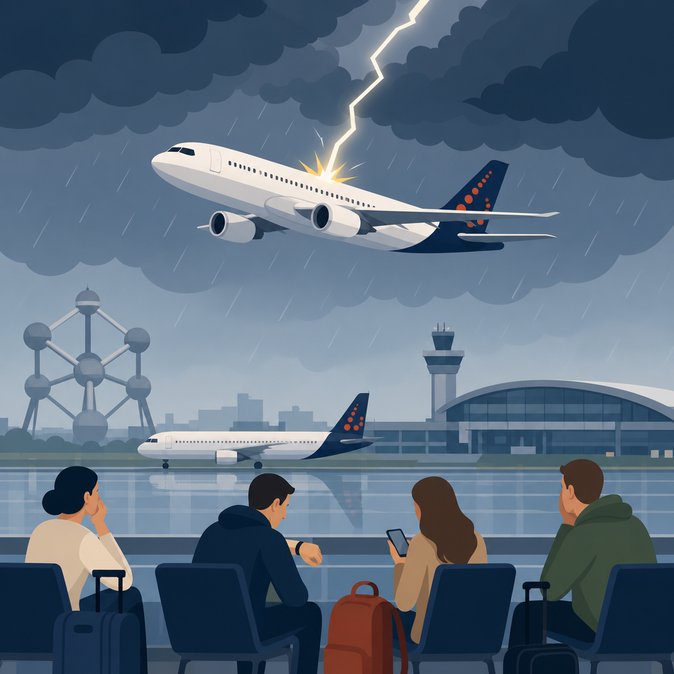
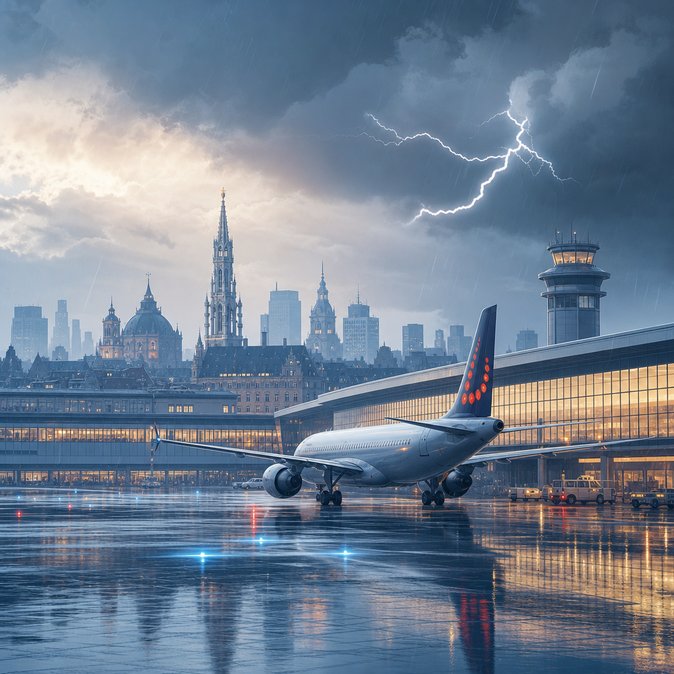
A Brussels Airlines Airbus A320neo carrying 176 passengers bound for Budapest was hit by lightning shortly after take-off from Brussels Airport on the afternoon of 18 May 2026, prompting the crew to declare PAN-PAN and return to Zaventem as a precaution. No injuries were reported and the aircraft—registration OO-SBB—landed safely under its own power.
![Lightning Strike Forces Brussels Airlines Jet Back to Zaventem, Minor Ripple Delays Across Network]()
Travel disruptions are stressful enough without worrying about entry paperwork. If your journey starts or transits in Belgium, VisaHQ (https://www.visahq.com/belgium/) can streamline visa applications or passport renewals in advance, giving you one less variable to juggle when sudden schedule changes like lightning diversions occur.
Although modern aircraft are designed to channel lightning through the fuselage, engineers conducted an immediate visual and non-destructive inspection. The jet was cleared for service within hours, but the diversion triggered a 2.5-hour delay for the displaced passengers, who eventually continued to Budapest on a standby plane. Brussels Airlines re-accommodated onward connections free of charge, yet several evening departures left the hub 20–30 minutes late as ground handlers reshuffled stands and crews. The incident underscores the operational fragility highlighted by recent strike-related cancellations: a single unplanned event can cascade when buffer times are squeezed. Travel managers with tight meeting schedules in central Europe should monitor thunderstorm forecasts and consider earlier flights during spring storm season. As a best practice, employers are reminded to register employee itineraries in corporate tracking systems so rapid welfare checks can be made when diversions occur.
Travel disruptions are stressful enough without worrying about entry paperwork. If your journey starts or transits in Belgium, VisaHQ (https://www.visahq.com/belgium/) can streamline visa applications or passport renewals in advance, giving you one less variable to juggle when sudden schedule changes like lightning diversions occur.
Although modern aircraft are designed to channel lightning through the fuselage, engineers conducted an immediate visual and non-destructive inspection. The jet was cleared for service within hours, but the diversion triggered a 2.5-hour delay for the displaced passengers, who eventually continued to Budapest on a standby plane. Brussels Airlines re-accommodated onward connections free of charge, yet several evening departures left the hub 20–30 minutes late as ground handlers reshuffled stands and crews. The incident underscores the operational fragility highlighted by recent strike-related cancellations: a single unplanned event can cascade when buffer times are squeezed. Travel managers with tight meeting schedules in central Europe should monitor thunderstorm forecasts and consider earlier flights during spring storm season. As a best practice, employers are reminded to register employee itineraries in corporate tracking systems so rapid welfare checks can be made when diversions occur.