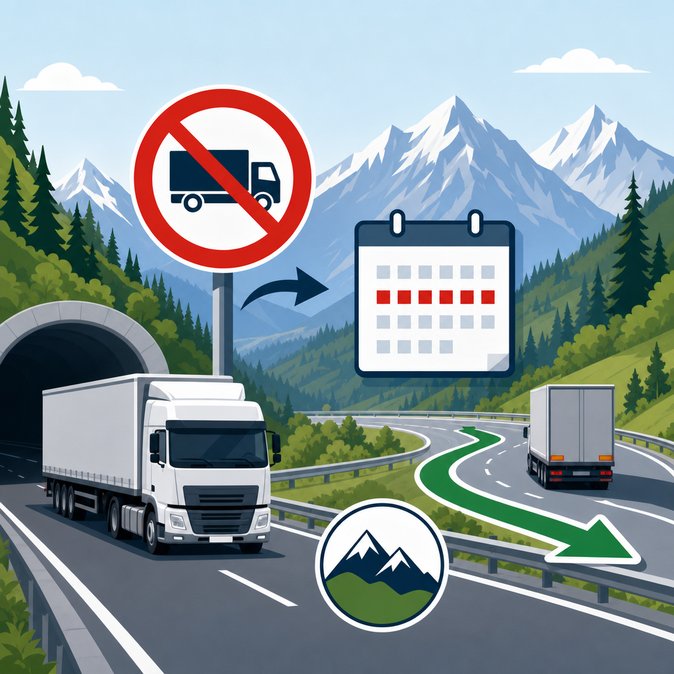
The Federal Ministry for Innovation, Mobility and Infrastructure has issued Decree II/121 restricting vehicles over 7.5 tonnes from using the northbound carriageway of the A10 Tauern Autobahn between 18 May 2026 (11:00) and 23 May 2026 (04:00). The measure—published in the official gazette on 15 May—targets the notorious Pass Lueg–Werfen construction zone, where lane narrowings have already produced tailbacks exceeding 15 km on peak Saturdays.
![Austria Imposes 5-Day Heavy-Truck Ban on A10 Tauern Corridor]()
International haulage firms rerouting around these closures should also make sure their drivers possess any required travel documents for Austria and its neighbors; VisaHQ’s digital platform (https://www.visahq.com/austria/) provides up-to-date visa information and can expedite applications, helping fleets stay compliant while they navigate the A10 restrictions.
Exceptions apply to live-animal transports, perishable foodstuffs and consignments for major events such as the Eurovision Song Contest’s load-out in Vienna. However, all exempt operators must carry documentary proof and may still be diverted by police if congestion threatens public safety. Enforcement will rely on weight sensors installed at Golling entrance ramps and mobile patrols equipped with ANPR cameras. Logistics providers serving southern Germany and Northern Italy will need to reroute via the A12/A13 Brenner axis or schedule overnight slots once the ban lifts each morning at 04:00. Forwarders should also anticipate higher toll costs and potential driver shortages as hours-of-service limits tighten. Clients on just-in-time schedules—especially in the automotive supply chain—are advised to build contingency stock or shift urgent freight onto intermodal rail services via the Tauern Rail Tunnel. The temporary embargo is part of a broader government strategy to protect Alpine communities from noise and emissions while accelerating bridge-deck replacements ahead of the summer exodus. Officials have hinted that similar weekend bans could follow in June and July if traffic volumes rebound to 2019 levels.
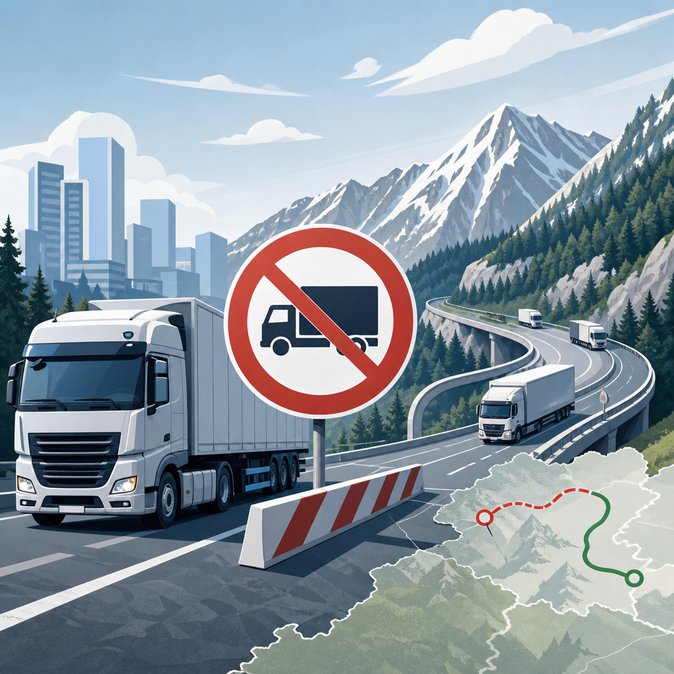
International haulage firms rerouting around these closures should also make sure their drivers possess any required travel documents for Austria and its neighbors; VisaHQ’s digital platform (https://www.visahq.com/austria/) provides up-to-date visa information and can expedite applications, helping fleets stay compliant while they navigate the A10 restrictions.
Exceptions apply to live-animal transports, perishable foodstuffs and consignments for major events such as the Eurovision Song Contest’s load-out in Vienna. However, all exempt operators must carry documentary proof and may still be diverted by police if congestion threatens public safety. Enforcement will rely on weight sensors installed at Golling entrance ramps and mobile patrols equipped with ANPR cameras. Logistics providers serving southern Germany and Northern Italy will need to reroute via the A12/A13 Brenner axis or schedule overnight slots once the ban lifts each morning at 04:00. Forwarders should also anticipate higher toll costs and potential driver shortages as hours-of-service limits tighten. Clients on just-in-time schedules—especially in the automotive supply chain—are advised to build contingency stock or shift urgent freight onto intermodal rail services via the Tauern Rail Tunnel. The temporary embargo is part of a broader government strategy to protect Alpine communities from noise and emissions while accelerating bridge-deck replacements ahead of the summer exodus. Officials have hinted that similar weekend bans could follow in June and July if traffic volumes rebound to 2019 levels.