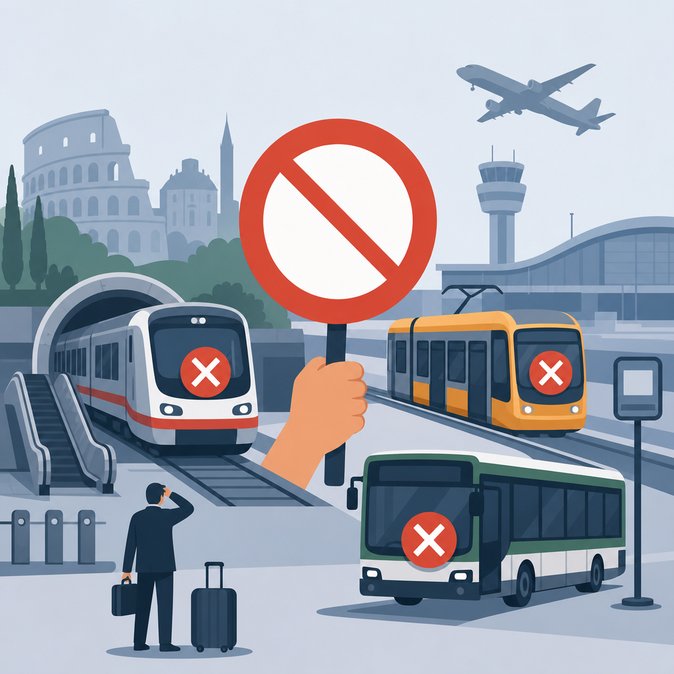
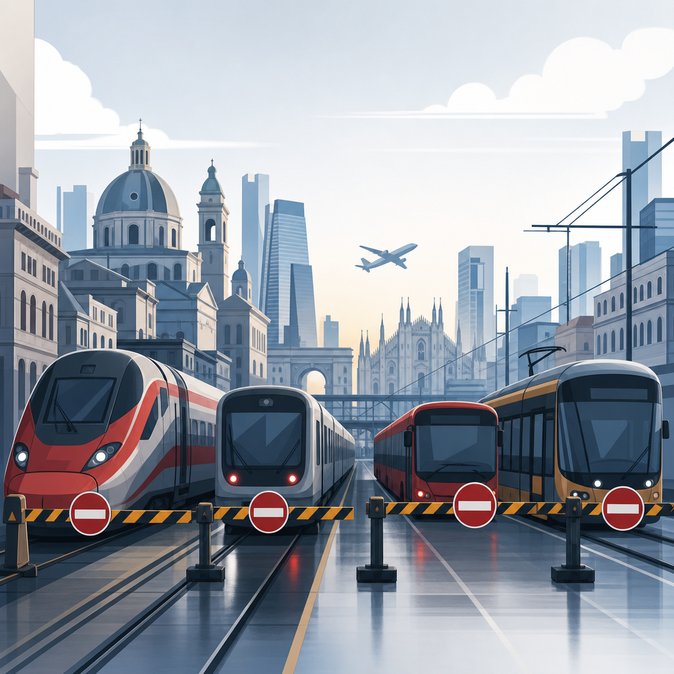
Italy’s mobility network is bracing for its most disruptive walk-out of the year after the Unione Sindacale di Base (USB) and several autonomous unions confirmed a 24-hour general strike running from 21:00 on Sunday 17 May until 21:00 on Monday 18 May. Rail. Trenitalia, Italo and regional railways warn that long-distance Frecce, Intercity and regional services could be cancelled or heavily reduced outside the two legally protected windows (06:00-09:00 and 18:00-21:00). Travellers holding time-sensitive tickets can rebook without penalty or claim full refunds, but must do so before departure. Corporate mobility managers have been advised to stagger Monday meetings, allow remote work and book hotel rooms close to client sites where feasible. Urban transport. Rome’s ATAC, Milan’s ATM, Naples’ ANM and dozens of provincial operators will suspend most metro, tram and bus services between 08:30-17:00 and after 20:00. Airports remain open, yet the absence of connecting ground transport is likely to push more passengers into taxis and ride-hailing apps; fares are expected to surge. Industrial context. USB is protesting wage stagnation, safety standards and what it calls “militarisation” of ports and logistics linked to Italy’s defence commitments. The strike also targets the new ‘May Day Decree’, accusing the government of allocating resources to rearmament rather than public services.
![Nationwide 24-Hour Transport Strike on 17-18 May Expected to Halt Trains, Metros and Local Buses Across Italy]()
For international travellers who still need to arrange entry documents, VisaHQ offers fast, secure Italian visa processing and real-time status updates. Their dedicated Italy portal (https://www.visahq.com/italy/) also aggregates travel advisories, which can prove invaluable when strikes or other transport disruptions threaten to upend itineraries.
Although aviation unions are not formally participating, ancillary staff at rail-linked airports such as Fiumicino and Malpensa may join pickets, adding an element of uncertainty for inbound business travellers. Practical advice. Companies with posted workers or short-term assignees should: (1) Issue written guidance on rebooking procedures; (2) Remind travellers that taxi receipts are reimbursable only when public transport is unavailable; (3) Verify hotel availability near key rail hubs; and (4) Activate remote-work contingencies for Monday. Travellers arriving from abroad should factor in an extra 60-90 minutes to reach city centres and keep proof of essential trips in case local police request documentation.
For international travellers who still need to arrange entry documents, VisaHQ offers fast, secure Italian visa processing and real-time status updates. Their dedicated Italy portal (https://www.visahq.com/italy/) also aggregates travel advisories, which can prove invaluable when strikes or other transport disruptions threaten to upend itineraries.
Although aviation unions are not formally participating, ancillary staff at rail-linked airports such as Fiumicino and Malpensa may join pickets, adding an element of uncertainty for inbound business travellers. Practical advice. Companies with posted workers or short-term assignees should: (1) Issue written guidance on rebooking procedures; (2) Remind travellers that taxi receipts are reimbursable only when public transport is unavailable; (3) Verify hotel availability near key rail hubs; and (4) Activate remote-work contingencies for Monday. Travellers arriving from abroad should factor in an extra 60-90 minutes to reach city centres and keep proof of essential trips in case local police request documentation.