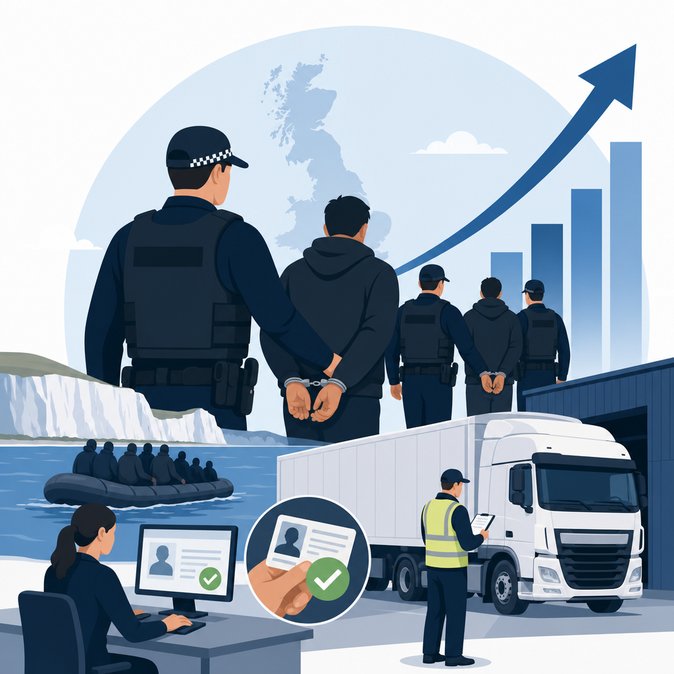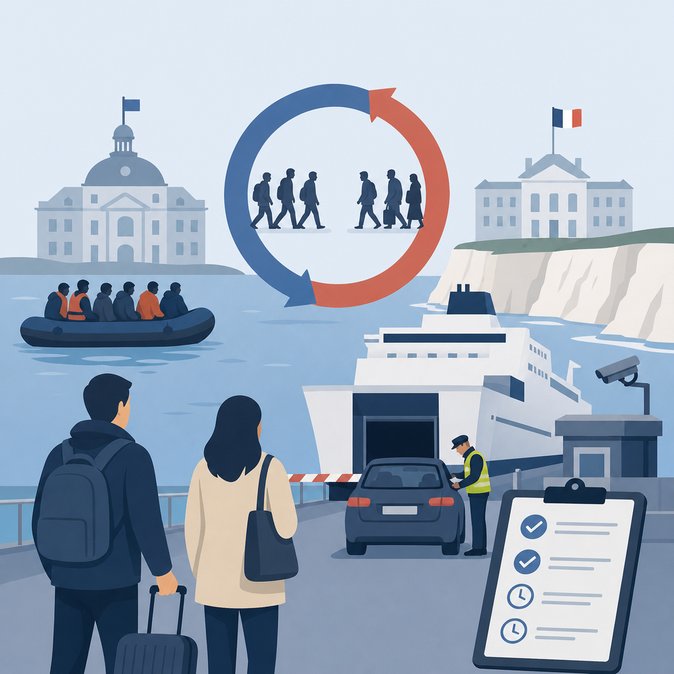
The UK Home Office has confirmed that the controversial ‘one-in, one-out’ pilot with France—under which every asylum-seeker who arrives in Kent on a small boat is returned to France in exchange for a person already waiting there to come to Britain legally—will run until 1 October 2026. The scheme, signed by Prime Minister Keir Starmer and President Emmanuel Macron last July, had been due to end on 11 June but was quietly prolonged over the weekend after internal assessments judged it ‘operationally sound’. Although ministers insist the reciprocal transfers are beginning to deter crossings, Home Office data show 605 migrants have so far been sent back to France while 581 have entered the UK via regular ferries and Eurotunnel services. The numbers attempting the journey are down roughly one-third on 2025, but officials admit that poor spring weather and a shift by smugglers to lorry routes via Belgium have also played a part.
![UK-France ‘One-In, One-Out’ Channel Returns Pilot Extended Until October]()
For companies or individuals who still need to navigate legitimate travel and work permissions between the two countries, VisaHQ’s online platform can take the headache out of visa and passport formalities. Their UK portal (https://www.visahq.com/united-kingdom/) offers up-to-date guidance, electronic application tools and concierge support that can streamline everything from Schengen business visas to UK Skilled Worker permits, helping mobility teams stay compliant while the political landscape evolves.
Lawyers and NGOs reacted angrily to the extension, branding the scheme “state-sanctioned human trafficking”. Campaigners say people returned to France often disappear from reception centres and may be re-routed to other EU states where they were first fingerprinted, risking refoulement to unsafe countries. Business groups, meanwhile, worry that the policy complicates workforce planning for sectors that rely on refugee talent pipelines, such as health and social care. For global mobility teams the message is two-fold: first, expect sustained media and political scrutiny of cross-Channel movements well into the autumn; and second, be prepared for a possible tightening of carrier-liability checks as France looks to prove the pilot is not increasing clandestine departures from its own shores. Employers moving staff between UK and French offices should remind assignees to carry full documentation and allow extra time at Calais and Dover border posts.

For companies or individuals who still need to navigate legitimate travel and work permissions between the two countries, VisaHQ’s online platform can take the headache out of visa and passport formalities. Their UK portal (https://www.visahq.com/united-kingdom/) offers up-to-date guidance, electronic application tools and concierge support that can streamline everything from Schengen business visas to UK Skilled Worker permits, helping mobility teams stay compliant while the political landscape evolves.
Lawyers and NGOs reacted angrily to the extension, branding the scheme “state-sanctioned human trafficking”. Campaigners say people returned to France often disappear from reception centres and may be re-routed to other EU states where they were first fingerprinted, risking refoulement to unsafe countries. Business groups, meanwhile, worry that the policy complicates workforce planning for sectors that rely on refugee talent pipelines, such as health and social care. For global mobility teams the message is two-fold: first, expect sustained media and political scrutiny of cross-Channel movements well into the autumn; and second, be prepared for a possible tightening of carrier-liability checks as France looks to prove the pilot is not increasing clandestine departures from its own shores. Employers moving staff between UK and French offices should remind assignees to carry full documentation and allow extra time at Calais and Dover border posts.